The fragrant dracaena, tropical scent incarnate
Dracaena fragrans
- Exposures
- Sun, Half-shade
- Hardiness (USDA)
- 10a (-1.1°C ≤ T° < 1.7°C)
- Lifecycle
- Perennial
- Foliage
- Evergreen
- Family
- Asparagaceae
- Genus
- Dracaena
- Species
- Fragrant Dracaena Dracaena fragrans
Other names:Cordyline fragrans, Dracaena deremensis
Dracaena fragrans, or fragrant dragon tree, is native to Central Africa and is often confused with Cordylines. The name "fragrans" comes from the exotic scent of its flowers. It is extremely rare to find dracaena fragrans flowering indoors.
How to recognize Dracaena fragrans?
Outdoors, Dracaena fragrans can grow up to 3 m tall. Indoors and in pots, the shrub rarely exceeds 1.2 m in height.
Dracaena fragrans bears a strong resemblance to its cousin, song of India, with its parasol-like foliage and intertwining branches. Its bundled stems end in spiral tufts of leaves.
Its leaf blades are elliptical in shape, with the midrib not always visible. Unlike the Socotra dragon tree, the leaves of Dracaena fragrans are soft and dark green throughout.
In its natural habitat, Dracaena fragrans is adorned with fragrant white, tube-shaped flowers. They usually open early in the year and close during the day. The pleasant scent of the fragrant dragon tree, similar to vanilla and ylang-ylang, is released at nightfall.
When flowering is complete, the flowers give way to small orange fruits, some twenty millimeters long.
Our care tips
Plenty of sun, but without burning the leaves, regular watering, but without drowning the roots... Even if the plant is suitable for beginners, caring for your Corn Plant requires rigor and moderation.
 Watering
Fragrant dragon trees like to keep their feet cool, but can't stand soggy soil. Water when the substrate is dry on the surface, for about three centimetres.
To provide your plant with the nutrients it needs, give preference to rainwater. Avoid tap water, which is often too hard. Finally, to avoid damaging the roots, use water at room temperature.
If you use a saucer or planter, remove any stagnant water. It could rot the root system.
 Misting
Your Dracaena fragrans appreciates a misting of its foliage and fruit. Spray it with non-calcareous water at room temperature. In addition to improving humidity, you'll prevent the appearance of pests.
 Repotting
In spring, transfer your Dracaena fragrans to a larger pot, so that it can continue to grow.
Choose a pierced pot slightly larger than the previous one. First lay a bed of clay balls or gravel to optimize drainage. Top it off with a special potting soil for green plants. This will provide your shrub with nutrients, at least for a few weeks.
You can place the pot in a saucer filled with moist clay balls. This will improve the hygrometry without risk to the roots.
 Cleaning
The dust that accumulates on the leaves interferes with photosynthesis and slows down your plant's development. To allow it to take advantage of the light, clean the top and bottom of the foliage with a clean, damp cloth.
Don't use any polish, as it will damage the limbs.
 Prune
Remove dry leaves. They exhaust the plant and slow its growth. If you use an instrument (pruning shears, scissors), make sure it's clean.
 Planting
Once the last spring frosts have passed, you can plant.
Fragrant dragon trees tolerate mild winters. If you live in the south of France or by the sea, you can plant them in the ground.
Choose a bright location, but without direct sunlight. Make sure the soil is well drained. If the soil in your garden is heavy or retains moisture, plant them at the top of a mound or on a slope.
After loosening the soil, dig a hole three times the size of your Corn Plantpot. Place a layer of clay balls or gravel and transplant. Fill in with a mixture of ordinary soil and sand, or even potting soil for citrus and Mediterranean plants.
Protect the base with a mineral mulch (pebbles, gravel, pebbles, slate, etc.) before watering abundantly.
 Taking cuttings
Propagation by cuttings is carried out during the strong growth phase, generally in spring and early summer.
Plant your graft in a pierced pot containing a mixture of rich potting soil (horticultural potting soil, potting soil for seedlings, special potting soil for cuttings, etc.) and sand. Place them in a bright spot, but away from direct sunlight.
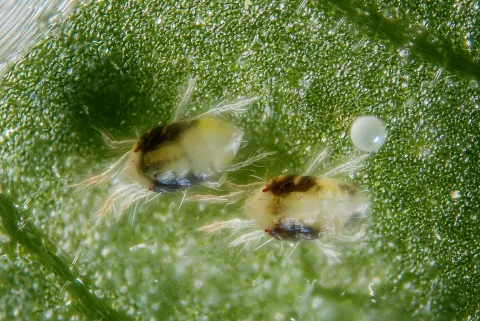
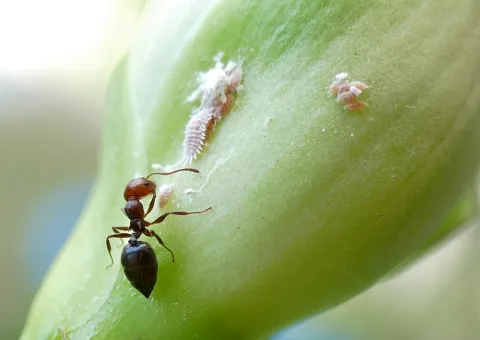
Diseases / Threats
Information
- Lifecycle
- Perennial
- Foliage
- Evergreen
- Exposures
- SunHalf-shade
- Substrates
- Calcareous earthHumus soilSandy soil
- Planting methods
- Open groundIn potsIn tubsPlanter
- Categories
- ShrubIndoorHerbaceous
- Tags
- BeginnerHard to kill
- Origin
- Central Africa
- Hardiness (USDA)
- 10a (-1.1°C ≤ T° < 1.7°C)
- Leaf color
- Dark green
- Flower colors
- WhitePale pink
- Fruit color
- Orange
Discover plants from the same family

Corn plant 'Lemon lime'
Dracaena fragrans 'Lemon lime'

Song of India
Dracaena reflexa var. angustifolia

Find all our tips in the Monstera application








