Dracaena reflexa var. angustifolia, a colorful dragon tree
Dracaena reflexa var. angustifolia
- Exposures
- Sun, Half-shade
- Hardiness (USDA)
- 10a (-1.1°C ≤ T° < 1.7°C)
- Lifecycle
- Perennial
- Foliage
- Evergreen
- Family
- Asparagaceae
- Genus
- Dracaena
- Species
- Dracaena reflexa
Other name:Dracaena marginata
Dracaena reflexa var. Angustifolia comes to us from Madagascar. Previously known as Dracaena marginata, this variety of Dracaena reflexa belongs to the Asparagaceae family. It is distinguished by its two-tone leaves and trunk.
How to recognize Dracaena reflexa var. Angustifolia?
Dracaena reflexa angustifolia is an upright shrub. At maturity, it reaches heights of two to five meters.
The twisted trunk and branches bear leaf scars. Each leaf that dies leaves a lighter mark on the brown wood.
Leaf blades grow in a spiral at the ends of branches and trunks. Leaves are lanceolate and scurved. Green, they are edged with red.
In the wild, Dracaena reflexa angustifolia flowers. It is adorned with clusters of white flowers. The phenomenon is much rarer indoors.
The flowers give rise to round, brown berries. The berries turn orange as they ripen.
Dracaena reflexa var angustifolia is considered a depolluting plant. Above all, however, it is toxic to dogs, cats and humans. Make sure your pets and young children don't ingest its leaves!
Our care tips
Plenty of sun, but without burning the leaves, regular watering, but without drowning the roots... Even if the plant is suitable for beginners, caring for your Song of India requires rigor and moderation.
 Watering
Dragon Trees reflexa var. Angustifolia appreciate constant but moderate humidity. Before watering your plant, make sure it needs it by touching the surface of the potting soil. If two or three centimetres of the surface is dry, you can water.
If you can, use non-calcareous water such as rainwater or filtered water.
Make sure the water doesn't stagnate in the saucer or planter.
If you can, use non-calcareous water such as rainwater or filtered water.
Make sure the water doesn't stagnate in the saucer or planter.
 Misting
Your Song of India is a tropical plant. It appreciates humidity. Spray its foliage with water at room temperature.
Avoid calcareous water, which leaves white marks on the leaves. Prefer rainwater or filtered water.
 Repotting
Every year in the spring, repot your Dracaena reflexa var. Angustifolia to give it more space.
Choose a pierced pot slightly larger than the previous one. First lay a bed of clay balls or gravel to optimize drainage. Top it off with a special potting soil for green plants. This will provide your shrub with nutrients, at least for a few weeks.
You can place the pot in a saucer filled with moist clay balls. This will improve the hygrometry without risk to the roots.
 Cleaning
To improve photosynthesis, clean the foliage with a damp sponge.
 Prune
Remove dry leaves. They exhaust the plant and slow its growth. If you use an instrument (pruning shears, scissors), make sure it's clean.
 Planting
When the risk of frost has passed, it's time to plant.
Dragon Trees reflexa var. Angustifolia tolerate mild winters. If you live in the south of France or by the sea, you can plant them in the ground.
Choose a bright location, but without direct sunlight. Make sure the soil is well drained. If the soil in your garden is heavy or retains moisture, plant them at the top of a mound or on a slope.
After loosening the soil, dig a hole three times the size of your Song of Indiapot. Place a layer of clay balls or gravel and transplant. Fill in with a mixture of ordinary soil and sand, or even potting soil for citrus and Mediterranean plants.
Protect the base with a mineral mulch (pebbles, gravel, pebbles, slate, etc.) before watering abundantly.
 Taking cuttings
Propagation by cuttings is carried out during the strong growth phase, generally in spring and early summer.
Cut off the end of a branch about fifteen centimeters long. Remove all leaves except the top pair.
Prepare a pierced pot with a bed of clay balls at the bottom for drainage. Pour in a mixture of sand and potting soil. Preferably use a horticultural or seedling potting soil, as these are rich in nutrients. Plant your graft in this pot.
Place your cutting in a bright spot away from direct sunlight and water.
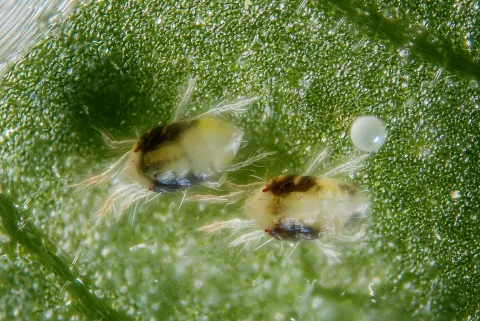
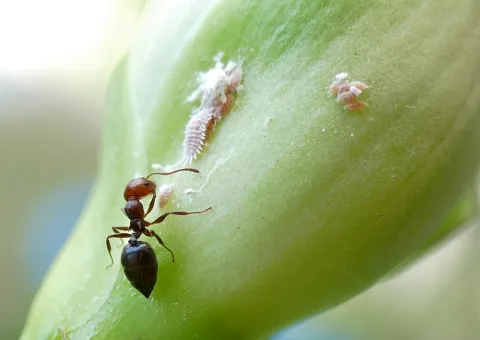
Diseases / Threats
Information
- Lifecycle
- Perennial
- Foliage
- Evergreen
- Exposures
- SunHalf-shade
- Substrates
- Calcareous earthHumus soilSandy soil
- Planting methods
- Open groundIn potsIn tubsPlanter
- Categories
- ShrubIndoorHerbaceous
- Tags
- BeginnerHard to kill
- Origin
- Indian Ocean
- Hardiness (USDA)
- 10a (-1.1°C ≤ T° < 1.7°C)
- Leaf colors
- Dark greenPale pink
- Flower color
- Pale yellow
- Fruit colors
- OrangeBrown
Discover plants from the same family


Find out more
Find all our tips in the Monstera application








