Calathea 'White Star', striped, colorful foliage
Goeppertia majestica ‘White Star’
- Exposures
- Half-shade, Shade
- Hardiness (USDA)
- 11a (4.4°C ≤ T° < 7.2°C)
- Lifecycle
- Perennial
- Foliage
- Evergreen
- Family
- Marantaceae
- Genus
- Goeppertia
- Species
- Goeppertia majestica
Rumor has it that Calathea 'White Star' is a cultivar derived from Calathea majestica. The parent plant, native to Brazil, Colombia and Venezuela, is unknown to the average person. But its descendant is very popular with Marantaceae enthusiasts. Both laymen and purists fall under the spell of its delicately striated foliage.
How to recognize Calathea 'White Star'?
Calathea 'White Star' is taller than goeppertia louisae. It measures up to a metre in height with a 45-centimetre spread. It is an upright perennial.
Its oblong leaves point horizontally at the end of a long petiole. Their dark-green upper surface is streaked with white and cream. The fine, regular stripes run from the midrib to the margins. The underside of the leaf blades is purple, as is often the case with calatheas.
The color of the underside of the foliage is not the only feature that Calathea 'White Star' shares with its cousins. The plant has an organ called the pulvinus. This bulge at the base of the leaf blades enables it to fold its leaves in half when night falls.
Calathea 'White Star' is non-toxic. The plant presents no danger to humans or animals, even when ingested.
Our care tips
Not very demanding, your Goeppertia majestica ‘White Star’ is content with a location without direct sunlight and plenty of humidity.
 Watering
Goeppertia majestica 'White Star It likes to keep its soil moist, but not soggy. Water when the top centimeter of potting soil has dried out.
Use room-temperature, low-mineral water. You can, for example, collect rainwater.
After watering, remove any excess water that has pooled in the saucer or planter. Goeppertia majestica 'White Star hates having its roots sitting in water.
 Misting
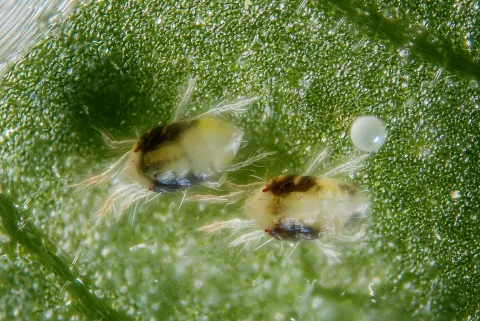
In nature, goeppertia majestica 'White Star benefits from a high degree of humidity. Spray your Calathea 'White Star withrainwater to improve humidity and prevent pest infestation.
Don' t use hard water, such as tap water. It leaves white spots on the foliage.
 Repotting
Every year in the spring, repot your Goeppertia majestica ‘White Star’ to give it more space.
Obtain a pierced pot of a larger size than the previous one. Don't hesitate to choose a ceramic or plastic model. These materials retain moisture and allow you to space out watering. Your Calathea 'White Star also prefers a wide pot to a deep container to give it room to grow.
Line the bottom with gravel or clay balls for drainage. Then pour in potting soil for green plants. You can lighten it by adding perlite.
Plant your subject in the middle and fill in with substrate. Water for the first time to eliminate air bubbles and encourage rooting.
 Fertilization
To promote the growth of your Goeppertia majestica ‘White Star’, apply fertilizer in spring and summer.
During the growing season, feed your Goeppertia majestica ‘White Star’ with a green plant fertilizer.
 Cleaning
To improve photosynthesis, clean the foliage with a damp sponge.
 Prune
Remove wilted and yellowed leaves.
 Taking cuttings
Cutting is carried out during the strong growth phase, generally in spring and early summer.
Take advantage of repotting to divide your Calathea 'White Star. Once your plant has been dug up, locate a rhizome with one or more stems. Each stem should have at least three leaves.
Using your hands or a clean, sharp tool, separate the rhizome from the rest of the plant.
Pour a drainage layer (gravel, clay balls, pozzolan, etc.) of one to two centimeters into a bucket or small pierced pot. Add a draining substrate, such as universal potting soil mixed with sand.
Make a pilot hole and plant the cutting. Do not bury the leaves. Press lightly and water.
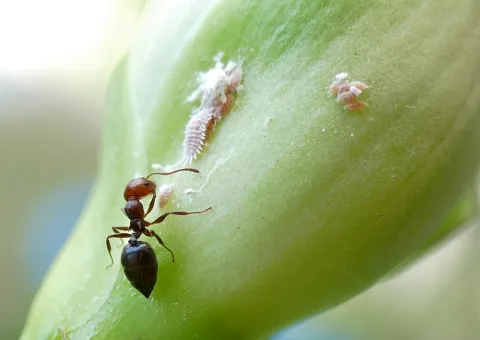
Diseases / Threats
Information
- Lifecycle
- Perennial
- Foliage
- Evergreen
- Exposures
- Half-shadeShade
- Substrate
- Humus soil
- Planting method
- In pots
- Categories
- IndoorRhizomeHerbaceous
- Tags
- Cold-sensitiveThirsty
- Origin
- South America
- Hardiness (USDA)
- 11a (4.4°C ≤ T° < 7.2°C)
- Leaf colors
- Dark greenWhitePurple
Discover plants from the same family
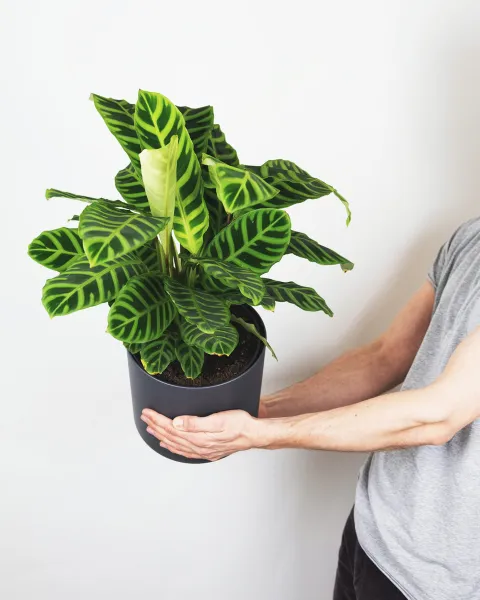
Zebra Calathea
Goeppertia zebrina
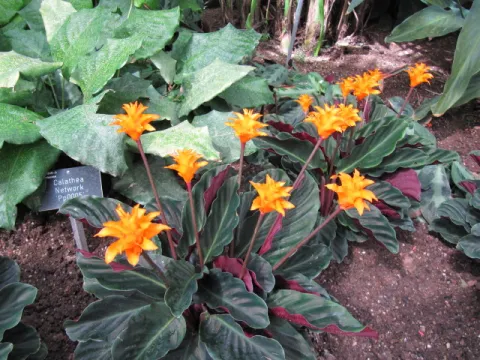
Calathea crocata
Goeppertia crocata
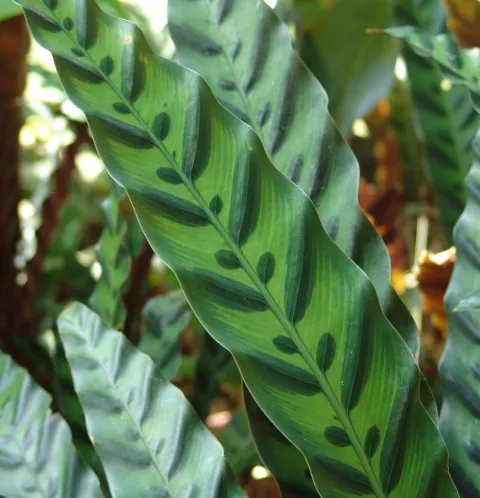
Calathea lancifolia
Goeppertia lancifolia
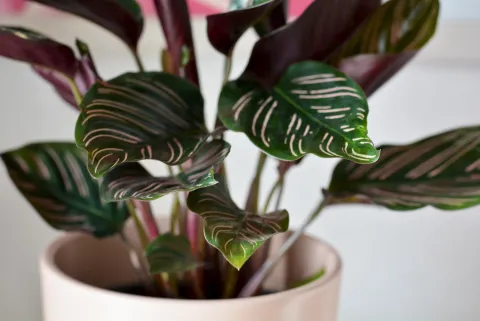
Calathea ornata
Goeppertia ornata
Find out more
Find all our tips in the Monstera application








