Bignone Campsis x tagliabuana

Pink bignone Campsis x tagliabuana

Yellow bignone Campsis x tagliabuana

Bignone fruit Campsis x tagliabuana

Red bignone Campsis x tagliabuana
Contents
Find all our tips in the Monstera application


Campsis × tagliabueana, a bignone with yellow, orange or red flowers
Contents
Find all our tips in the Monstera application
Scientific classification
Family
Bignoniaceae
Type
Bignone - Campsis
Species
Bignone Campsis × tagliabueana - Campsis × tagliabueana
Other name:Bignone tagliabuana
A cross between virginia bignone (Campsis radicans) and campsis grandiflora (Campsis grandiflora), Campsis x tagliabueana is perhaps the most widespread bignone in gardens. This hybrid has given rise to numerous cultivars with yellow, orange or red flowers.
How to recognize Campsis x tagliabueana bignone?
The Campsis x tagliabueana bignone is a shrub with a sarmentose stump. It can reach 10 m in all directions. Its flexible branches are equipped with aerial roots. These act as spikes or tendrils, enabling the plant to climb almost any surface.
The pinnate leaves have up to 11 oval leaflets. Bright green, with paler undersides and pronounced veins.
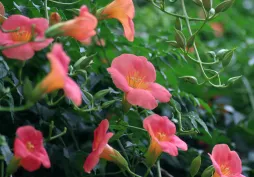
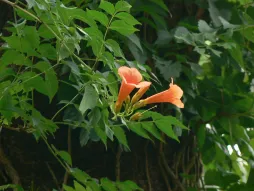
Campsis x tagliabueana is not grown for its deciduous foliage, but for its funnel-shaped flowers. Red, orange or yellow, they bloom in summer, attracting butterflies and pollinators.
They then give way to dehiscent brown pods. These contain the seeds, which are then spread by the wind.
Which variety of Campsis × tagliabueana should I plant in my garden?
There are several varieties of Campsis x tagliabueana. They differ mainly in flower color and shape:
- 'Indian Summer' (or Kundian): a variety with short, yellow flowers, less vigorous than the others;
- Madame Galen': an old French variety, with salmon-orange flowers;
- dancing Flames': a cultivar not exceeding 3 m in all directions, with orange-red flowers
- summer Jazz Gold': a bignone with short, wide-open yellow flowers that reaches 3 m at best.
Is Campsis x tagliabueana bignone toxic?
Yes, bignone is a toxic plant. Ingested, it causes digestive problems, particularly in domestic animals. Its sap can also cause irritation if it comes into contact with the skin. Make sure your dog or cat doesn't nibble your plant, and wear gloves when pruning and repotting.
Our maintenance tips
Is your Campsis × tagliabueana wearing out and flowering less abundantly? Cut back the branches to 30 or 50 cm to give it a new lease of life.
 Watering
Bignone Campsis × tagliabueana like to keep soil moist, but not soggy. Water when the soil surface is dry (two to three centimetres).
Water the substrate with non-calcareous water, such as rainwater, at room temperature.
Allow the water to drain through the drainage holes before replacing the plant. Empty out any water stagnating in the saucer or planter. It may rot the roots.
 Repotting
Install your Campsis × tagliabueana in a perforated pot. You can add a bed of clay balls or gravel to optimize drainage.
If you have provided a trellis or stake, you can arrange it in the pot now.
Line the bottom of your container with a draining substrate. You can use universal potting soil or garden soil with a few handfuls of sand.
Plant your Campsis × tagliabueana. If you want your plant to climb a wall or tree, orient the root ball towards the support. Add substrate, but stop a few centimetres before the edge, to form a watering trough.
Guide the vines towards their support. Pack and water generously to remove air bubbles and encourage rooting.
 Fertilization
You can stimulate the growth of your plant during its growth phase, in spring and summer, with fertilizer.
Fertilize your Bignone Campsis × tagliabueana every month. Use a flowering plant fertilizer to stimulate flowering.
You can stimulate the growth of your plant during its growth phase, in spring and summer, with fertilizer.
Put compost at the foot of your Bignone Campsis × tagliabueana to stimulate its growth.
 Prune
Prune
Your Campsis × tagliabueana is a vigorous plant. You don't have to prune it, but it will prevent the plant from becoming invasive.
Locate the main branches that form the structure against the wall, pergola or support. You don't need to prune them, unless you want to rebalance the silhouette.
Instead, remove
- Dead or weak branches;
- Branches that intertwine in the center and block light;
- Stems growing in the wrong direction;
- Shoots at the base, if you want to control development.
Your Campsis × tagliabueana blooms on this year's shoots. You can therefore cut back the previous year's lateral stems (which have already flowered) above the 2nd or 3rd bud without compromising flowering.
Always use a clean, sharp tool to facilitate healing and prevent the spread of disease.
 Plantation
Once the last spring frosts have passed, you can plant.
Soak the root ball of your Campsis × tagliabueana to rehydrate it. Leave it in the water until there are no more air bubbles.
Dig a hole 40 cm deep. You can place clay balls or gravel at the bottom for better drainage.
Plant your Campsis × tagliabueana, with the surface of the root ball level with the ground. Fill in with garden soil. You can add a little sand if your soil is heavy.
Guide the stems on their supports to show them the way.
Mulch the soil to keep the stems cool. Tamp and water to encourage rooting.
 Cutting
Cutting is carried out during the strong growth phase, generally in spring and early summer.
Locate a healthy, flowerless stem. It should be semi-woody, but still flexible.
Cut a ten- to fifteen-centimetre section just below a node. Use clean, sharp secateurs to facilitate healing.
Remove the lower leaves and keep only the upper pair.
Plant your cutting in a pierced pot lined with potting soil for seedlings and plantations. Spray the substrate with non-calcareous water.
The graft takes better in a stifled environment. Cover the plant with a translucent plastic bag or cloche.
Place your young plant in a bright room where the temperature is between 20 and 25°.
The appearance of new leaves indicates that your cutting is taking root.
Frequently asked questions
The bignone appreciates a sunny, warm exposure to provide abundant flowering all summer long. Preferably placed against a wall facing south or west, sheltered from cold winds. It tolerates part shade, but will often flower less generously. A well-lit location also favors rapid, vigorous growth.
Once installed, bignone generally resists cold well. Depending on the variety, it can withstand temperatures of around -10 to -15°C. However, young plants are more sensitive to hard frosts. In winter, mulch at the base of the plant to protect the roots. In harsh climates, choose a sheltered, sunny spot.
Diseases / Threats
Information
| Lifecycle | Perennial |
| Foliage | Deciduous |
| Exposure | |
| Substrats | |
| Planting methods |
Open ground In pots In tubs |
| Categories | |
| Tags |
Beginner Invasive Flowery Toxic |
| Origins |
Southeast Asia North America |
| Hardiness (USDA) | 8b (-9.4°C ≤ T° < -6.7°C) |
| Leaf color |
|
| Flower colors |
|
Discover plants from the same family
Find out more