Pilea cadierei, zebra foliage with a zesty edge
Pilea cadierei
- Exposures
- Sun, Half-shade
- Hardiness (USDA)
- 11a (4.4°C ≤ T° < 7.2°C)
- Lifecycle
- Perennial
- Foliage
- Evergreen
- Family
- Urticaceae
- Genus
- Pilea
- Species
- Aluminum plant Pilea cadierei
Other name:Pilea Watermelon
Pilea cadierei is a member of the Urticaceae family native to Vietnam. In temperate climates, it survives only indoors. It has become an ornamental plant prized for its graphically patterned foliage.
How to recognize Pilea cadierei, the aluminum plant?
Pilea cadierei is a bushy perennial. In its natural environment, it can reach heights of up to 50 centimetres. In pots, it grows to no more than 30 centimetres.
Pilea cadierei is easily recognized by its evergreen foliage. Dark green, the blades are criss-crossed by four slightly raised silver spots. This characteristic has earned it the nickname of aluminum plant. The oval, lanceolate leaves measure between two and six centimetres. Embossed, they are tough, almost like those of a succulent. The foliage is not unlike that of Peperomia argyreia. To tell the two species apart, just look at their stems: Peperomia's is purple.
If you grow your Pilea cadierei indoors, it's unlikely to flower. In the wild, it blooms between May and June. The inflorescence contains between 5 and 15 white or pink flowers, barely three millimeters long.
If you share your life with cats or dogs, avoid adopting an aluminum plant. Unlike chinese money plant, it is toxic to pets. It should also be handled with care: it belongs to the same family as nettles and, like its cousins, can be urticating.
Our care tips
Easy to care for, the Aluminum Plant needs light and regular watering.
It appreciates the sun so much that it turns towards it. To keep your plant's stem upright, rotate your pot a quarter turn every month.
From May onwards, take your Pilea cadierei out onto your balcony or windowsill. Just be careful not to expose it to direct sunlight or temperatures below 12 degrees.
 Watering
Your Aluminum plant likes its soil to be moist. But it hates excess water. Water when the surface of the substrate is dry (about a centimetre).
Use room-temperature, non-calcareous water, such as rainwater.
Drain any water that collects in the saucer or planter. It may rot the roots.
 Misting
The air in our apartments is too dry for plants used to high humidity. Mist your Pilea cadierei with water at room temperature.
Rainwater is preferable to tap water. Tap water causes white spots on the foliage.
 Repotting
In spring, transfer your Pilea cadierei to a larger pot, so that it can continue to grow.
Choose a pierced pot slightly larger than the previous one. It's best to opt for a clay model: this material promotes even drying of the soil.
Line the bottom with a bed of gravel or clay balls. Add a layer of potting soil with perlite or sand. For example, you can mix potting soil for green plants with sand. Place your subject in the center and fill in with substrate to within a couple of centimeters of the edge. Tamp down and water for the first time to encourage rooting.
 Fertilization
You can stimulate the development of your plant during its growth phase, in spring and summer, with fertilizer.
To promote the growth of your Pilea cadierei, feed the plant with a liquid green plant fertilizer diluted in the water.
 Pinch
Pinch your Pilea cadierei during its growing season.
There may be several reasons why you want to deadhead your Pilea cadierei: to contain its growth, to multiply the plant or to stimulate its development.
Use your fingers or sharp, disinfected secateurs to cut between two knots.
Wear gloves when handling your plant.
Wear gloves when handling your plant.
 Taking cuttings
Propagation by cuttings is carried out during the strong growth phase, generally in spring and early summer.
Remove the shoots that form at the base of the plant with their roots. Proceed delicately, with your hands or a clean knife, to avoid damaging the root system.
In a pierced pot, pour a layer of clay balls for drainage. Add potting soil for seedlings and planting.
Using a pencil, make a pilot hole and plant your cutting.
Water at room temperature to help the plant take root.
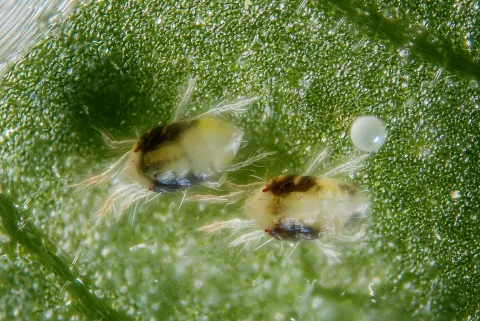
Disease / Threat
Information
- Lifecycle
- Perennial
- Foliage
- Evergreen
- Exposures
- SunHalf-shade
- Substrate
- Humus soil
- Planting method
- In pots
- Categories
- IndoorHerbaceous
- Tags
- BeginnerToxic
- Origins
- South AsiaEast Asia
- Hardiness (USDA)
- 11a (4.4°C ≤ T° < 7.2°C)
- Leaf colors
- Dark greenSilver
- Flower colors
- WhiteRose
Discover plants from the same family


Find out more
Find all our tips in the Monstera application








