Adelonema wallisii, a small plant with marbled foliage
Adelonema wallisii
- Exposures
- Sun, Half-shade
- Hardiness (USDA)
- 11a (4.4°C ≤ T° < 7.2°C)
- Lifecycle
- Perennial
- Foliage
- Evergreen
- Family
- Araceae
- Genus
- Adelonema
- Species
- Adelonema wallisii
Other names:Homalomena wallisii, Curmeria wallisii, Chamaecladon wallisii, Diandriella wallisii
They say that misnaming an object adds to the world's misery. If Albert Camus is right, then Adelonema wallisii contributes significantly to human suffering. This plant, native to Costa Rica and Colombia, is commonly sold under the label “Homalomena wallisii.” While, like Homalomena rubescens, this variety does indeed belong to the Araceae family, it is classified in the genus Adelonema, not Homalomena.
How can you identify Adelonema or Homalomena wallisii?
Adelonema wallisii is a perennial plant with a compact, bushy growth habit. It does not exceed 25 centimeters in height.
The plant has a rhizomatous base from which short, arched stems emerge.
The leathery leaves measure 13 to 20 centimeters. Obovate or elliptical in shape, they have tapered tips. The botanical variety features bright green leaf blades that are either solid green or variegated with light green. It is rarely sold or grown as a houseplant. However, cultivars with foliage marbled with green, white, or yellow (Adelonema wallisii 'Camouflage) are commercially available.
Adelonema wallisii blooms, even indoors. The inflorescence appears on a stem that is even shorter than the leaves. The burgundy spathe and white spadix are often hidden within the foliage.
Like other plants in the Araceae family, Adelonema wallisii is toxic. Its sap contains calcium oxalate crystals. This substance causes skin irritation and digestive problems. You should therefore keep your plant out of reach of your pets and wear gloves when pruning it.
Our care tips
It's easy to tell when your Adelonema wallisii is thirsty: when the leaves start to droop, you need to water!
 Watering
Water your Adelonema wallisii when the potting soil has dried on the surface, for at least three centimetres.
Supply the plant with non-calcareous water at room temperature. Rainwater is best. If you don't have any, you can filter mains water or leave it to stand for 24 hours.
After watering, check the saucer or planter. If stagnant water appears, empty it. It could rot the roots.
 Misting
Spray foliage with non-calcareous water at room temperature. In addition to increasing humidity, misting prevents the appearance of undesirable insects.
 Repotting
Every year in the spring, repot your Adelonema wallisii to give it more space.
In a drilled pot, place a layer of clay balls or gravel to promote drainage. The pot should be deeper and larger than the previous one to accommodate the roots and support the growth of your Adelonema wallisii.
Choose a special potting soil for green plants or houseplants. After pouring in the substrate, plant your plant. Fill in with soil and tamp down to eliminate any air pockets.
 Fertilization
To promote the growth of your Adelonema wallisii, apply fertilizer in spring and summer.
Stimulate the growth of your Adelonema wallisii with green plant fertilizer.
 Cleaning
Remove dust that accumulates on the leaves with a clean, damp cloth.
Warning! The plant is toxic and can cause irritation. Wear gloves while cleaning and wash your hands after touching it.
Warning! The plant is toxic and can cause irritation. Wear gloves while cleaning and wash your hands after touching it.
 Taking cuttings
Propagation by cuttings is carried out during the strong growth phase, generally in spring and early summer.
Carefully dig up your plant. Locate a rhizome with roots and several leaves on its periphery.
Carefully separate it from the others using your hands or a clean, sharp tool.
In a pot with drainage holes, pour in potting soil for houseplants. Make a small hole using a pen or a stick. Plant your cutting in the center
Gently firm the soil to remove air pockets and water with room-temperature water to encourage rooting.
Place your cutting in a bright spot, but out of direct sunlight.
Diseases / Threats
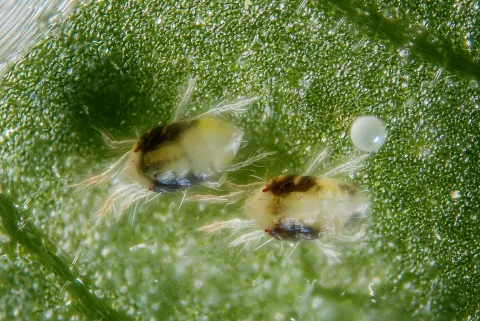
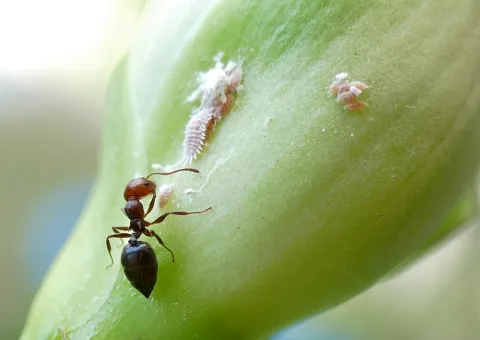
Information
- Lifecycle
- Perennial
- Foliage
- Evergreen
- Exposures
- SunHalf-shade
- Substrate
- Humus soil
- Planting methods
- In potsPlanter
- Categories
- IndoorHerbaceous
- Tag
- Cold-sensitive
- Origins
- Central AmericaSouth America
- Hardiness (USDA)
- 11a (4.4°C ≤ T° < 7.2°C)
- Leaf colors
- Dark greenLight greenYellow
- Flower colors
- WhitePurple
Discover plants from the same family

Adelonema wallisii 'Camouflage
Adelonema wallisii 'Camouflage'


Monstera variegata
Monstera deliciosa variegata

Monstera 'Thai Constellation'
Monstera deliciosa ‘Thai Constellation’
Find out more
Find all our tips in the Monstera application








