Our growing guides


154
Results

Golden polypod
Phlebodium aureum

Phlebodium aureum 'Blue Star
Phlebodium aureum 'Blue Star'

Phlebodium aureum 'Davana
Phlebodium aureum 'Davana'


Pteris of Crete
Pteris cretica

Pteris cretica 'Mayii
Pteris cretica 'Mayii'

Pteris albolineata
Pteris parkeri


Sansevieria spaghetti
Sansevieria cylindrica
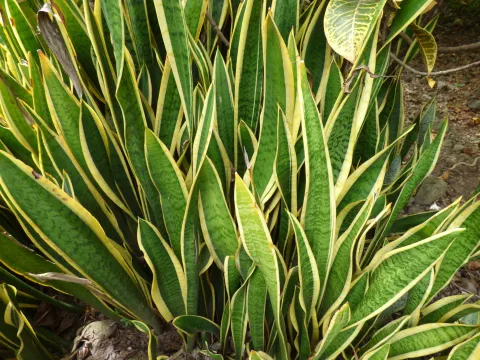
Mother-in-law's language
Sansevieria trifasciata
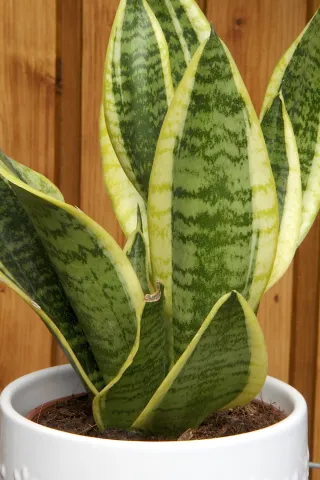
Sansevieria trifasciata 'Futura Simplex
Sansevieria trifasciata 'Futura Simplex'
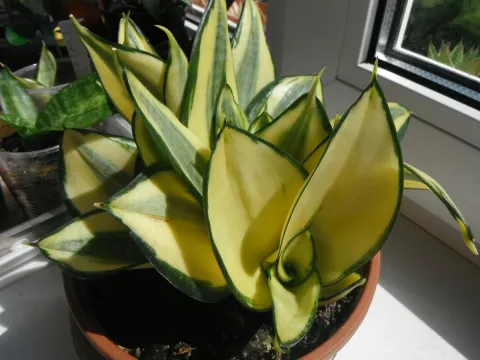
Sansevieria trifasciata 'Golden Hahnii' (Golden Hahnii)
Sansevieria trifasciata 'Golden Hahnii'
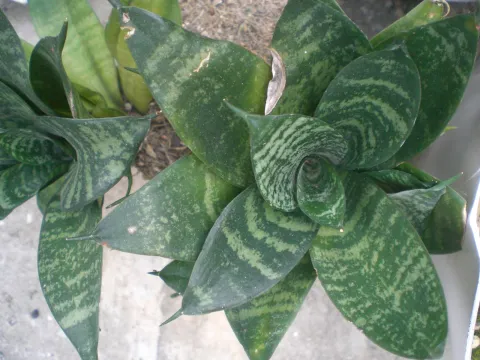
Sansevieria trifasciata 'Hahnii Green Leaves
Sansevieria trifasciata 'Hahnii Green Leaves'

Sansevieria trifasciata 'Laurentii
Sansevieria trifasciata 'Laurentii'

Sansevieria trifasciata 'Moonshine
Sansevieria trifasciata 'Moonshine'

Sansevieria trifasciata 'Super Marginata
Sansevieria trifasciata 'Super Marginata'

Sarracenia venosa
Sarracenia purpurea subsp. venosa

Spider's web houseleek
Sempervivum arachnoideum

Ciliated houseleek
Sempervivum ciliosum

Mountain houseleek
Sempervivum montanum

Chimneyleaf
Sempervivum tectorum

Moonflower
Spathiphyllum wallisii

Spathiphyllum 'Diamond variegata'
Spathiphyllum wallisii 'Diamond variegata'

White bird of paradise
Strelitzia alba
Rhizomes
Rhizomes are a bit like icebergs: we admire the part above water without suspecting what lies hidden from view. If you want to prevent your garden from suffering the same fate as the Titanic, get to know your adversary.
What is a rhizome?
Rhizomes are the underground —and sometimes submerged— stems of perennial plants. They're filled with food reserves, allowing the plants to sustain themselves during dormancy, even when no leaves remain above ground.
Rhizomes adapt to the slope and composition of the soil. While typically elongated and horizontal, they become slanted to continue growing when encountering rock or unstable soil.
They have leaves reduced to scales, a root system, nodes, and buds. These buds produce above-ground stems and flowers. Once the plant has completed its life cycle, it withers and dies. The underground stem then gives rise to another sucker. A single rhizome can produce several suckers at the same time.
Some rhizome-bearing plants spread in clumps and remain close to the parent plant. But others— creeping rhizomes—branch out underground and produce multiple buds. The advantage? The plant reproduces and forms a flower border or hedge in just a few months. The downside? It can become uncontrollable and take over your garden—and your neighbor's.
Rhizome Plants to Grow at Home (or Not)
Indoors, rhizomes are contained within their pots. So you can safely grow a rabbit's-foot fern, a bird of paradise, a {{ link_to_variety("01FKK61NV49P4A64J7AS6PVGFR") }}, or an {{ link_to_variety("01G3XS1HF1FZPR31X46JM13X5W") }} without risking an invasion. Take advantage of your annual repotting to propagate your plant by dividing the clumps.
Don't worry either if you plant non-creeping rhizomes—such as peonies, gladiolus, daylilies, and irises— directly in the ground. Their spread is limited to a radius of about ten centimeters.
If you'd like to plant bamboo, {{ link_to_variety("01FY9YQYXQS62G7AFANHG14VA1") }}, lily of the valley, or mint in your garden, a few precautions are necessary. These creeping rhizomes spread and can become plants. The best approach is to plant them in containers outdoors to control their growth. Another solution is to bury a rhizome barrier to prevent the underground stems from spreading. Without such safeguards, it's difficult to get rid of these unwanted plants. Be prepared to cut, dig, and pull them out.
Packed with starch and protein, rhizomes are often edible. In our vegetable gardens, we grow asparagus, endive, and chicory. In warmer climates, people grow cassava, turmeric, and canna. Potatoes, Jerusalem artichokes, and yams, on the other hand, are rhizomes that have developed into tubers.








