Sansevieria trifasciata 'Moonshine': a succulent with subtle foliage
Sansevieria trifasciata 'Moonshine'
- Exposures
- Sun, Half-shade
- Hardiness (USDA)
- 11a (4.4°C ≤ T° < 7.2°C)
- Lifecycle
- Perennial
- Foliage
- Evergreen
- Family
- Asparagaceae
- Genus
- Sansevieria
- Species
- Mother-in-law's language Sansevieria trifasciata
Other name:Dracaena trifasciata
Sansevieria trifasciata 'Moonshine' is a rhizomatous plant in the Asparagaceae family. While members of the Sansevieria genus grow in the tropical regions of Asia and Africa, this variety of mother-in-law's tongue is a cultivar. So there's no need to venture into the forests of the Congo and Nigeria to add this snake plant to your collection!
How can you recognize Sansevieria trifasciata 'Moonshine'?
Sansevieria trifasciata 'Moonshine' is an upright herbaceous plant. It grows vertically. Although it grows slowly, it can reach 60 to 80 centimeters when fully grown.
Sansevieria trifasciata has leaves arranged in a rosette. They are lanceolate, stiff, and leathery with a sharp tip. It is the color of its foliage that distinguishes Sansevieria trifasciata 'Moonshine' from other sansevierias. Grayish-green, it has a matte, rich appearance. Each leaf is adorned with a thin, darker border ranging from green to gray to black.
Like dracaena ballyi or sansevieria trifasciata 'Hahnii Green Leaves, Sansevieria trifasciata 'Moonshine' blooms in the spring. It then produces small, fragrant flowers that are white or greenish. These are later replaced by orange berries.
According to some, Sansevieria trifasciata 'Moonshine' is said to have air-purifying properties. It is said to convert CO2 into oxygen… at night. While this claim remains to be proven, its toxicity to pets and their owners is well established.
Our care tips
To grow sansevieria trifasciata 'Moonshine indoors, reproduce the conditions of their natural environment! Sun, warmth and little water. You can even take your succulent out to your windowsill or garden in summer.
 Watering
Sansevieria trifasciata 'Moonshine come from arid regions. These plants can tolerate drought, but they still need to be watered.
Water only when the substrate is dry, using rainwater at room temperature. If you don't have any, you can use tap water that you've let sit for 24 hours.
To replenish its reserves, your Sansevieria trifasciata 'Moonshine needs a thorough watering. Water the soil until it is completely moist and water flows out through the pot's drainage holes.
Empty any standing water from the saucer or planter. It could cause the roots to rot.
 Misting
Sansevieria trifasciata 'Moonshine grow in arid regions and do not like humidity. No need to spray them.
 Repotting
In spring, transfer your Sansevieria trifasciata 'Moonshine' to a larger pot, so that it can continue to grow.
Take advantage of repotting to offer your plant a pot in which its roots will flourish and moisture will not settle.
Choose a terracotta pot with holes. Pour a bed of gravel or, better still, pieces of pozzolan into the bottom. Then add a draining potting soil such as a special substrate for cacti and succulents, or a mixture of garden soil and sand. For even more nutrients, top up with leaf compost if available.
After removing your specimen, carefully untangle its roots and install it in its new location. Cover with potting soil and tamp down. Finish with a thin layer of clay balls or pozzolan on the surface to facilitate drainage.
To avoid the risk of stagnant water, avoid saucers and planters. If you use a planter, line the bottom with gravel or clay pebbles.
 Fertilization
You can stimulate the development of your plant during its growth phase, in spring and summer, with fertilizer.
If you want to stimulate the growth of your Sansevieria trifasciata 'Moonshine', mix a liquid fertilizer for cacti and succulents with the water when watering.
 Prune
Remove dry leaves and cut the flowering stem at the base after flowering.
However, it is not advisable to prune your Sansevieria trifasciata 'Moonshine. A cut leaf will not grow back, even if you only trim the tip.
However, it is not advisable to prune your Sansevieria trifasciata 'Moonshine. A cut leaf will not grow back, even if you only trim the tip.
 Planting
Once the last spring frosts have passed, you can plant.
Where's the best place to plant your Sansevieria trifasciata 'Moonshine? A sunny spot at the top of a slope, to encourage rainwater drainage.
Dig a large hole to give the roots room to spread out. As for repotting, place a layer of gravel at the bottom, followed by a layer of substrate. Place your plant in the center and cover with soil, possibly enriched with leaf compost. Press down to eliminate air pockets and water.
 Taking cuttings
Cutting is carried out during the strong growth phase, generally in spring and early summer.
After a few years, young shoots appear at the base. With a sharp knife, dig up one of these "babies", also removing its roots.
Prepare a pierced terracotta pot. Block the hole with a pebble and lay a bed of gravel. Pour in a substrate composed of one third potting soil, one third soil and one third sand to promote drainage. Plant your offshoot, tamp it down and add a layer of sand to the surface.
Place your new succulent in a bright room, but without direct sunlight and with a temperature of at least 18 degrees.
Between two applications of water, check that the substrate has dried out, as you would with a mature plant.
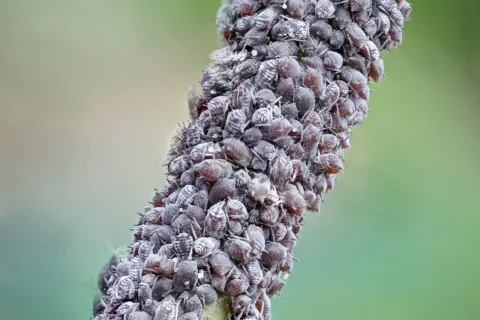
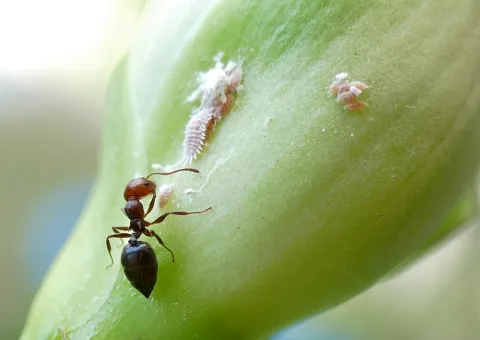
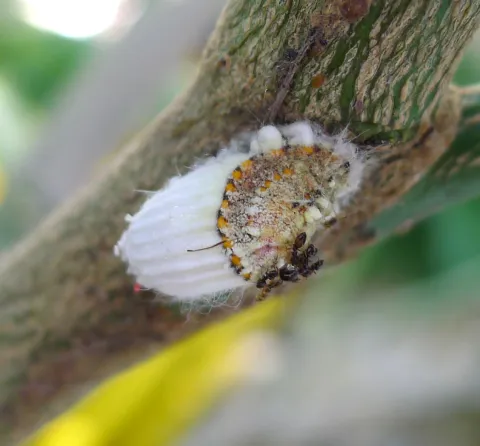
Diseases / Threats
Information
- Lifecycle
- Perennial
- Foliage
- Evergreen
- Exposures
- SunHalf-shade
- Substrates
- Calcareous earthHumus soilSandy soil
- Planting methods
- In potsIn tubsPlanter
- Categories
- IndoorRhizomeHerbaceousSucculent
- Tags
- BeginnerToxic
- Origins
- East AfricaCentral Africa
- Hardiness (USDA)
- 11a (4.4°C ≤ T° < 7.2°C)
- Leaf colors
- Dark greenBlack
- Flower colors
- WhitePale green
- Fruit color
- Orange
Discover plants from the same family
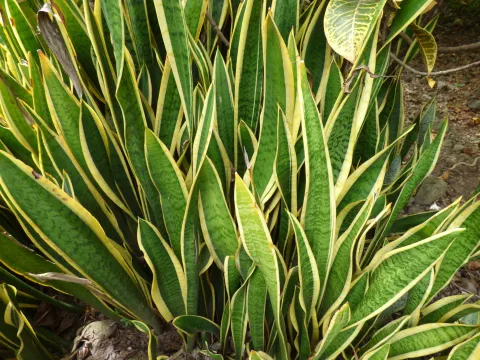
Mother-in-law's language
Sansevieria trifasciata
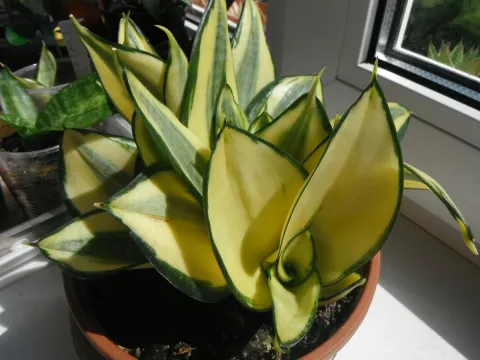
Sansevieria trifasciata 'Golden Hahnii' (Golden Hahnii)
Sansevieria trifasciata 'Golden Hahnii'
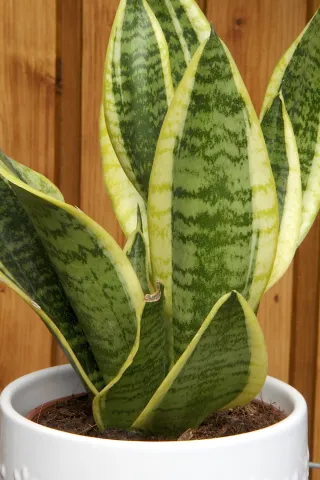
Sansevieria trifasciata 'Futura Simplex
Sansevieria trifasciata 'Futura Simplex'
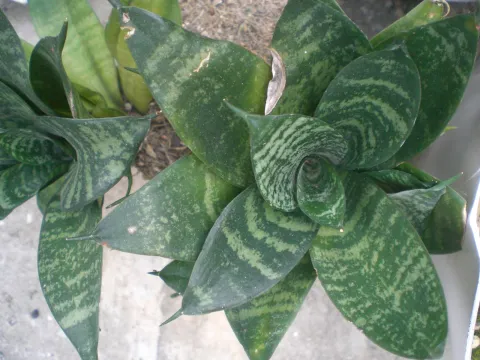
Sansevieria trifasciata 'Hahnii Green Leaves
Sansevieria trifasciata 'Hahnii Green Leaves'
Find all our tips in the Monstera application








