Dionaea muscipula, the most famous of carnivorous plants
Dionaea muscipula
- Exposure
- Sun
- Hardiness (USDA)
- 10b (1.7°C ≤ T° < 4.4°C)
- Lifecycle
- Perennial
- Foliage
- Evergreen
- Family
- Droseraceae
- Genus
- Dionée Dionaea
- Species
- Venus flytrap Dionaea muscipula
It's impossible not to think of the Piranha plant trying to devour Mario or Audrey II, the bloodthirsty creature from *The Little Shop of Horrors*, when you see a *Dionaea muscipula*! With its jaw-shaped traps, this carnivorous plant from the Droseraceae family has become a pop culture icon.
How can you recognize Dionaea muscipula, the Venus flytrap?
Dionaea muscipula is a perennial, rhizomatous carnivorous plant. It grows up to 30 centimeters tall and 20 to 30 centimeters wide.
Its leaves grow in a rosette. During the growing season, they stand upright. In winter, during dormancy, they lie flat.
The leaf blade consists of two parts. The lower part is spatulate and measures about 10 centimeters long. The upper part forms the trap. It consists of two lobes connected by a thick midrib. The edges are fringed with teeth. When the trap snaps shut, these teeth prevent the prey from escaping. In the botanical variety, the foliage is yellow-green with red tips. However, there are cultivars that are entirely green (Venus flytrap 'All Green') or crimson (Venus flytrap 'Red Dragon').
The Venus flytrap blooms in the spring. White flowers in corymbs bloom at the top of a flower stalk over 20 centimeters long.
Dionaea muscipula is harmless to humans and pets. However, it is a delicate plant. Its traps die after being triggered two or three times. Be careful not to set them off unnecessarily!
Our care tips
Dionaea muscipula is not a tropical plant. In its natural habitat, it can withstand hot summers and sub-zero winters. It can be grown outdoors, even at our latitudes. If it freezes in your region, you'll still need to protect your specimen from the cold.
 Watering
Water your plant generously during the growing season.
Dionaea muscipula like to have their feet in water. You need to water them by capillary action at all times.
Get a planter or an unperforated container larger than your plant's pot. Place your Venus flytrap in its pot.
Pour two or three centimetres of rain, demineralized or osmosis water into the larger container. Never use tap or mineral water. You'll kill your plant.
Don't let the largest container run dry. Add water when the level drops.
Reduce watering during dormancy.
The soil must always be kept moist. Water it from above before it dries out.
You can use rainwater. If you don't have any, you can use osmosis water or demineralized water. Never use tap or mineral water. They contain mineral salts that are fatal to your Venus flytrap.
After watering, remove any stagnant water from the saucer.
 Repotting
In spring, transfer your Dionaea muscipula to a larger pot, so that it can continue to grow.
Get a plastic pot with drainage holes. Choose a light-colored one to prevent the roots from getting too hot in the summer.
Fill your container with a potting mix specifically designed for carnivorous plants. You can also make your own growing medium by mixing two-thirds light-colored peat moss, one-third drainage material (river sand, perlite, or vermiculite), and a little sphagnum moss. Moisten the substrate with rainwater and pack it down lightly.
Plant your Venus flytrap. Place the pot on a saucer filled with rainwater.
 Fertilization
Fertilizer is useless. Your Dionaea muscipula feeds on the insects that fall into its traps.
 Prune
Over time, the traps blacken and die. You can remove them with your hands or with clean, sharp scissors.
After flowering, cut off spent flower stalks at the base. You can do this by hand or with a clean, sharp tool such as secateurs or scissors.
 Taking cuttings
Propagation by cuttings is carried out during the strong growth phase, generally in spring and early summer.
For annual repotting, divide your mother plant. Cut off a healthy part with at least one leaf and roots. Use a clean, sharp tool to facilitate healing and prevent disease.
Prepare a pierced plastic pot. Obtain potting soil for carnivorous plants or mix blond peat (2/3) and perlite (1/3). Fill your pot with the substrate, pack lightly and spray the surface with rainwater.
Make a pilot hole with a pick or pen, then plant your cutting, roots down.
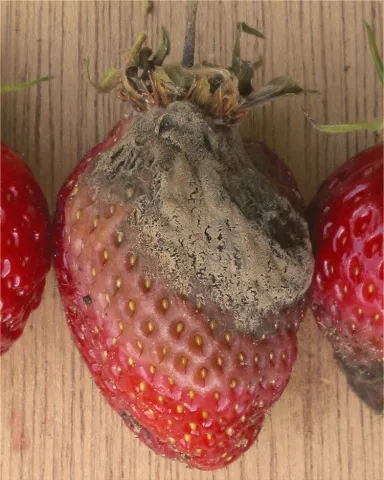
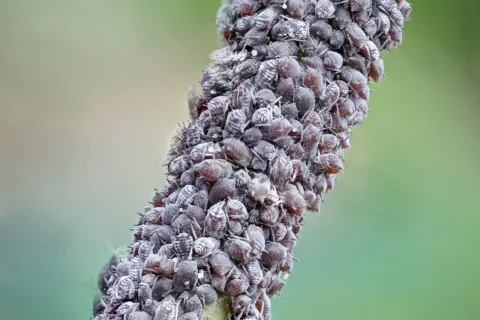
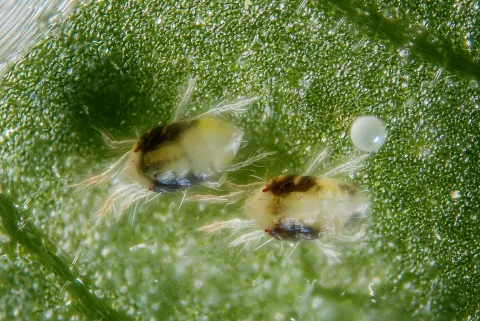
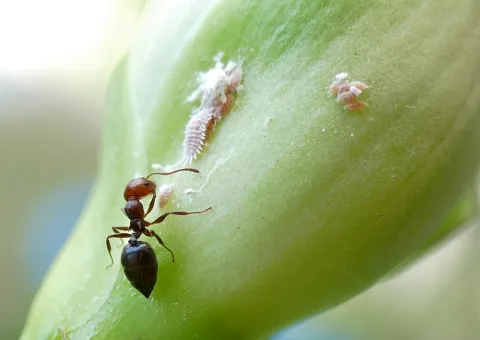
Diseases / Threats
Information
- Lifecycle
- Perennial
- Foliage
- Evergreen
- Exposure
- Sun
- Substrates
- Humus soilSandy soilPeat soil
- Planting method
- In pots
- Categories
- RhizomeHerbaceous
- Tags
- BeginnerSmall pot
- Origin
- North America
- Hardiness (USDA)
- 10b (1.7°C ≤ T° < 4.4°C)
- Leaf colors
- Light greenRedYellow
- Flower color
- White
Discover plants from the same family
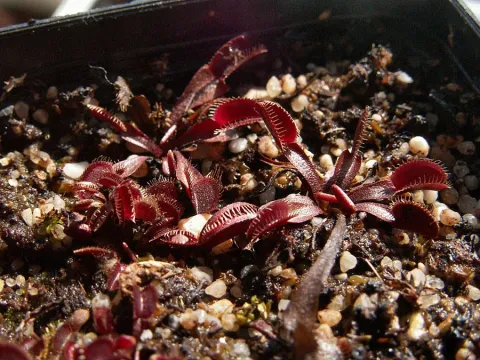
Venus flytrap 'Red Dragon'
Dionaea muscipula 'Red Dragon'
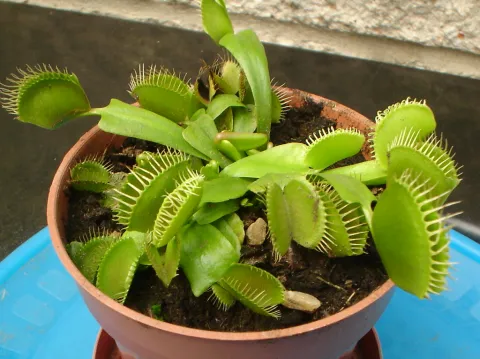
Venus flytrap 'All Green'
Dionaea muscipula 'All Green'


Drosera multifida
Drosera bianata var. multifida
Find out more
- Venus flytrap 'All Green'
- Sarracenia venosa
- 15 small houseplants that don't take up space, even when grown up
- Eight tips for caring for your carnivorous plants
- Plant that's been over-watered: how to save it
- 15 plants for your veranda and loggia
- Why are the leaves falling off my plant?
- Which plants to choose for a closed terrarium?
- Why do the leaves on my plant have brown tips?
- Halloween special: 10 plants to turn your home into a haunted mansion
- 10 high-maintenance plants not for everyone
Find all our tips in the Monstera application








