Syngonium podophyllum 'Pixie', a miniature Syngonium
Syngonium podophyllum 'Pixie'
- Exposures
- Sun, Half-shade
- Hardiness (USDA)
- 12a (10°C ≤ T° < 12.8°C)
- Lifecycle
- Perennial
- Foliage
- Evergreen
- Family
- Araceae
- Genus
- Syngonium
- Species
- Syngonium podophyllum
Native to the forests of Central and South America, Syngonium podophyllum belongs to the Araceae family. With its small size, Syngonium podophyllum 'Pixie' fits into any interior and is a favorite among terrarium enthusiasts.
How can you recognize Syngonium podophyllum 'Pixie'?
Syngonium podophyllum 'Pixie' is characterized by its compact growth habit and small size. While syngonium podophyllum standard Syngonium podophyllum can reach two meters in a pot indoors, the dwarf variety does not exceed 70 centimeters in height and 40 centimeters in width.
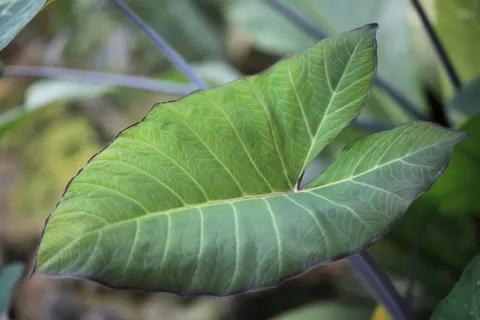
This houseplant doesn't stand out for its size, but it certainly catches the eye with its variegated foliage. The alternate leaves are water-green in the center and feature an emerald-green edge. They have the typical spear-shaped form characteristic of Syngonium leaves. With a little luck and a lot of patience, you'll be able to watch them transform. In mature plants, the leaves become compound and feature three or five lobes.
Syngonium podophyllum 'Pixie' rarely flowers. When it does, tiny white flowers appear.
Like syngonium wendlandii and many other Araceae, this plant is toxic. Its sap causes irritation when touched or ingested. Be sure to wear gloves when pruning your Syngonium podophyllum 'Pixie' and keep it away from pets and infants.
Our care tips
Syngoniums are easy-care plants. But beware: their sap is toxic. Wear gloves when handling them or wash your hands immediately afterwards.
 Watering
Before watering, make sure the substrate is two or three centimetres dry by dipping your fingers into the soil. If this is the case, moisten the root ball with non-calcareous water at room temperature.
To avoid drowning the roots, don't leave stagnant water in the dish.
 Misting
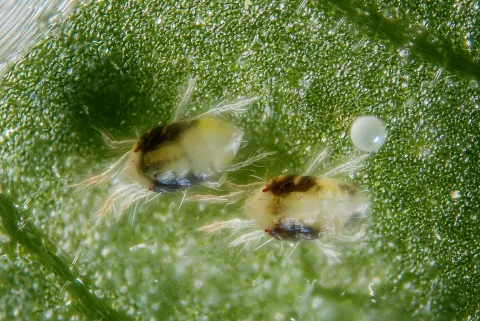
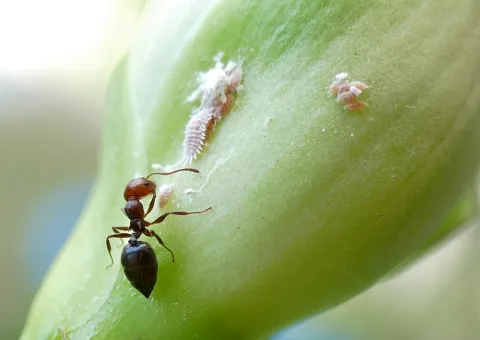
Dry air favors the appearance of mites and other pests. Mist the foliage of your Syngonium podophyllum 'Pixie' to prevent invasions and improve hygrometry.
Use non-calcareous water, such as reclaimed rainwater. Tap water is often too hard and leaves marks on the leaves.
 Repotting
Every year in the spring, repot your Syngonium podophyllum 'Pixie' to give it more space.
Repot your Syngonium podophyllum 'Pixie' in a pot one size larger than the previous one.
If you've decided to give your plant a climbing habit, install your stake now.
Pour in a bed of clay balls or gravel for drainage and a layer of potting soil for houseplants. Plant your Syngonium podophyllum 'Pixie' in the center and add substrate. You can guide the stems along the stake to structure the shape of your plant.
Tamp to remove air bubbles.
If your indoor air is dry, place the pot on a saucer of moist clay balls. Water evaporation improves humidity.
 Fertilization
To promote the growth of your Syngonium podophyllum 'Pixie', apply fertilizer in spring and summer.
Add nutrients with a fertilizer for foliage plants.
 Cleaning
Dust on the leaves hinders photosynthesis. To ensure your Syngonium podophyllum 'Pixie' gets the most light possible, clean its foliage with a clean, damp cloth.
Warning! All parts of the plant are toxic. Wear gloves and wash your hands after touching the foliage.
Warning! All parts of the plant are toxic. Wear gloves and wash your hands after touching the foliage.
 Prune
You can shorten stems that are too long and bald. Simply cut them with a sharp instrument (pruning shears or scissors). Don't forget to disinfect the blades beforehand to prevent disease transmission.
 Taking cuttings
Propagation by cuttings is carried out during the strong growth phase, generally in spring and early summer.
The Syngonium podophyllum 'Pixie' are rhizomatous plants. They multiply by dividing clumps.
Take your Syngonium podophyllum 'Pixie' out of its pot. Using your hands or a clean, sharp tool, separate a shoot with at least four leaves and a rhizome. The more developed your young shoot, the greater your chances of a successful cutting.
Soak your graft in a glass of clear water at room temperature. Remember to change the water when it becomes cloudy. You can also immerse a piece of charcoal to keep it clean.
Place your cutting in a bright spot away from direct sunlight, behind a window with a curtain for example.
Place your cutting in a bright spot away from direct sunlight, behind a window with a curtain for example.
Diseases / Threats
Information
- Lifecycle
- Perennial
- Foliage
- Evergreen
- Exposures
- SunHalf-shade
- Substrate
- Humus soil
- Planting method
- In pots
- Categories
- ClimberIndoorHerbaceousHanging plants
- Tag
- Toxic
- Origins
- Central AmericaSouth America
- Hardiness (USDA)
- 12a (10°C ≤ T° < 12.8°C)
- Leaf colors
- Light greenWhitePale green
- Flower color
- White
Discover plants from the same family


Find out more
Find all our tips in the Monstera application