Sarracenia purpurea, a carnivorous plant from the cold
Sarracenia purpurea
- Exposure
- Sun
- Hardiness (USDA)
- 7b (-15°C ≤ T° < -12.2°C)
- Lifecycle
- Perennial
- Foliage
- Evergreen
- Family
- Sarraceniaceae
- Genus
- Sarracenia
- Species
- Sarracenia purpurea
Other name:Sarracenia purpurea var. typica
It's hard to survive in the bogs of Canada, Alaska or the northern United States. To feed in these hostile territories, Sarracenia purpurea has developed an ingenious trap. This carnivorous plant of the Sarraceniaceae family drowns the prey it captures.
How to recognize Sarracenia purpurea?
Sarracenia purpurea is a carnivorous plant with a passive trap. It has a tapering habit. It reaches a height of 30 centimetres and is equally spreading.
The plant is aculeate. Leaves and petioles grow in a rosette from a creeping rhizome.
The hollow petiole forms the urn. It is surrounded by a leaf blade up to 30 centimetres long. The green leaves turn purple with age.
Not sure whether your carnivorous plant is a Sarracenia purpurea or a Sarracenia venosa? Look at the leaves. Sarracenia purpurea leaves have a rigid margin, whereas sarracenia venosa has a wavy margin. The texture of the foliage can also help you tell the difference. The leaf blades of Sarracenia purpurea are covered with trichomes only on the inside. Sarracenia venosa has hairs on both sides.
Scientists believe that Sarracenia purpurea secretes a nectar that attracts insects. When prey approaches, it slides down the leaf blade and lands in the heart of the water-filled urn. The trichomes, pointing towards the ground, accelerate the fall and prevent them from rising again.
Sarracenia purpurea flowers in spring. It produces only one or two flowers a year, but these can last for several months. The flowers consist of five purple petals, curved inwards. They form a case for the green, star-shaped pistil.
The plant is not toxic. It is dangerous only to insects. It poses no risk to larger animals, such as your cat or dog. As proof, the Quebec province of Newfoundland and Labrador has chosen the Sarracenia purpurea flower as its emblem. Until 1938, it adorned the island's coins.
Our care tips
Sarracenia purpurea can take a long time to digest their prey. To prevent indigestion, check the contents of the urns regularly. If one is one-third full of insects, place a piece of clean cotton inside. This will reduce the size of the reservoir.
 Watering
Water your plant generously during the growing season.
Sarracenia purpurea like to keep their potting soil always moist. Place the pot on a saucer filled with rainwater.
When the level drops, add more rainwater. If you don't have any, you can use demineralized or osmosis water. Never fill the dish with tap or bottled water. The nutrients and minerals it contains will kill your plant.
Substrate dries out quickly in hot weather. In addition to watering by capillary action, water from above. Water the soil with rainwater. Take care not to wet the leaves or fill the urns.
Reduce watering during dormancy.
Keep the substrate slightly moist by watering from above. Pour water onto the potting mix. Avoid wetting the foliage and traps.
Water only with rainwater, demineralized water, or reverse-osmosis water. Never use tap water or bottled water. Sarracenia purpurea cannot tolerate hard water. Tap water would kill your plant.
 Repotting
Obtain a pierced plastic pot twice the size of the previous one.
Fill it with a mixture of blond peat (70%), perlite (15%) and vermiculite (15%). You can also use a commercially available potting soil for carnivorous plants. Lightly pack the soil by tapping your pot on the ground.
Make a pilot hole and plant your Purple pitcher plant. Water to remove air bubbles, but do not pack.
If you wish, you can plant moss at the base to help the substrate retain its freshness.
 Fertilization
Fertilizer is useless. Your Sarracenia purpurea feeds on the insects that fall into its traps.
 Prune
Remove wilted pitchers. As they rot, they risk contaminating the whole plant. Cut them two or three centimeters from the ground. Always use a clean, sharp instrument (scissors or pruning shears).
Also remove pitchers whose lid alone is dry.
 Taking cuttings
Propagation by cuttings is carried out during the strong growth phase, generally in spring and early summer.
Gently dig up your Purple pitcher plant. Locate a rhizome on the periphery, with several roots and even leaves. Separate it using a clean, sharp tool, such as disinfected secateurs.
Choose a plastic pot that is larger than the root ball. The larger the pot, the more your plant will be able to grow. Make sure the pot has drainage holes.
Fill the pot with substrate for carnivorous plants. You can also make your own substrate by mixing two-thirds light peat moss and one-third perlite and vermiculite.
Lightly pack the soil by tapping the container two or three times on the ground. Make a planting hole and plant your Purple pitcher plant. Water it to help the roots establish themselves and remove any air pockets.
You can add moss to the pot to help the soil stay moist.
Diseases / Threats
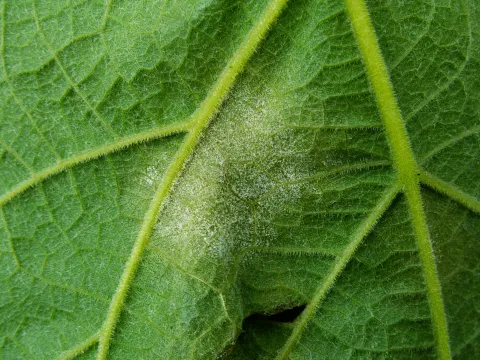
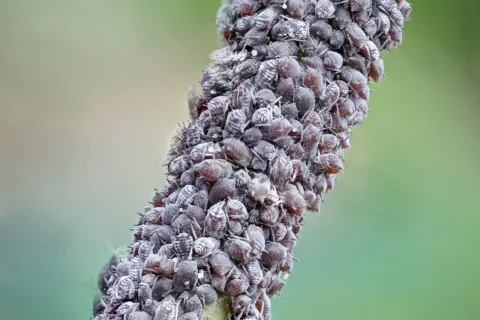
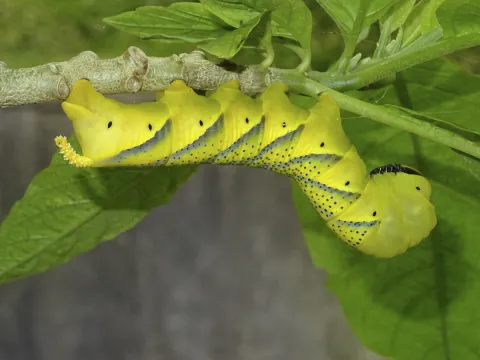
Information
- Lifecycle
- Perennial
- Foliage
- Evergreen
- Exposure
- Sun
- Substrates
- Clay soilSandy soil
- Planting methods
- In potsIn tubsPlanter
- Category
- Flowery
- Tags
- FloweryHardyThirsty
- Origin
- North America
- Hardiness (USDA)
- 7b (-15°C ≤ T° < -12.2°C)
- Leaf color
- Purple
- Flower color
- Purple
Discover plants from the same family
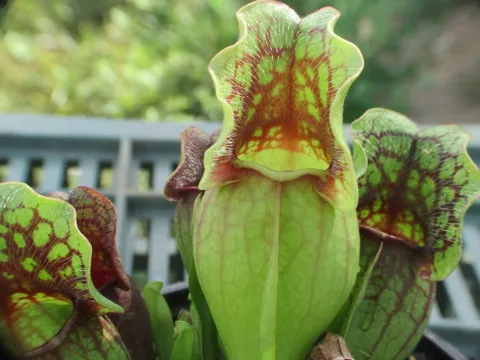
Sarracenia venosa
Sarracenia purpurea subsp. venosa
Find out more
Find all our tips in the Monstera application