Plumeria rubra, the common frangipani tree
Plumeria rubra
- Exposure
- Sun
- Hardiness (USDA)
- 11a (4.4°C ≤ T° < 7.2°C)
- Lifecycle
- Perennial
- Foliage
- Deciduous
- Family
- Apocynaceae
- Genus
- Frangipani Plumeria
- Species
- Plumeria rubra
Other names:Plumeria arborescens, Plumeria acuminata, Plumeria acutifolia, Plumeria angustifolia, Plumeria aurantia, Plumeria bicolor, Plumeria incarnata, Plumeria macrophylla, Plumeria northiana, Plumeria purpurea
Nicaragua's national symbol, the delicately scented flower of Plumeria rubra instantly evokes sunny gardens and exoticism. Appreciated for its generous blooms and vibrant colors, this shrub grows in the Americas from Mexico to Venezuela.
How to recognize the frangipani (Plumeria rubra)?
The frangipani tree (Plumeria rubra) has a spreading, rounded habit. In its natural environment, it can reach a height of twelve meters and a spread of six. It does not exceed three meters in all directions when grown in pots.
Plumeria rubra has a gnarled trunk. It supports numerous thick, twisting branches.
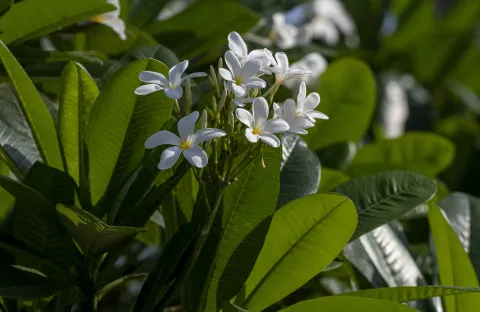
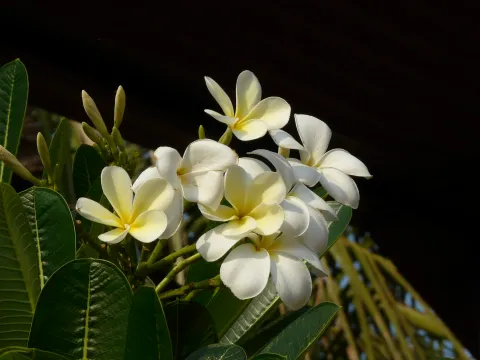
Its deciduous foliage is a brilliant green. The elliptical, succulent leaves can reach 30 cm long and 15 cm wide. They grow at the tips of the branches, as in plumeria obtusa.
Flowering takes place between June and September. The flowers have five petals and measure five centimetres in diameter. Waxy, they can be pink, red, white or yellow, depending on the specimen and cultivar. But the heart is always yellow.
Is frangipani (Plumeria rubra) toxic?
Frangipani is a toxic plant, as it contains alkaloids. The leaves, like the stems, can cause digestive disorders in humans and animals if ingested. The sap, which is white and milky, causes skin irritation in people with sensitive skin. Remember to wear gloves when pruning or repotting your shrub!
The flowers, on the other hand, are edible. They are used to decorate dishes and pastries.
Our care tips
Plumeria rubra is an outdoor plant that needs plenty of light, at least 6 hours of sun a day, to thrive. On the other hand, it is sensitive to cold.
If temperatures fall below 10°C in your area, grow your plant in a pot. This way, you can easily bring it into a conservatory, heated greenhouse or bright interior during the winter.
 Watering
Plumeria rubra They like to keep the potting mix moist, but not soggy. Water when the soil is dry on the surface (about two to three centimeters deep).
Water the substrate with non-hard water—such as rainwater—at room temperature.
Let the water drain out through the drainage holes before returning the plant to its place. Empty any standing water from the saucer or planter. It may cause the roots to rot.
 Misting
Spraying non-calcareous water on the underside and tops of foliage improves humidity, repels dust and repels pests.
 Repotting
Plumeria rubra need a light, perfectly draining substrate. We recommend using :
- 2/3 potting soil for cacti and succulents or Mediterranean plants;
- 1/3 perlite or sand.
Choose a pierced pot, slightly larger than the previous one. A terracotta pot is ideal for aeration and substrate drying.
Fill the pot, install your Plumeria rubra, tamp gently and water to help the plant take root.
 Fertilization
To promote the growth of your Plumeria rubra, apply fertilizer in spring and summer.
Apply a liquid fertilizer for flowering plants every two weeks to encourage flowering.
 Prune
Prune
You can remove wilted flowers as they appear.
Pruning is not necessary. Moreover, too severe pruning prevents summer flowering.
If you wish to control shape or development, prune gradually: part one year, the rest the following year.
 Planting
When the risk of frost has passed, it's time to plant.
Soak the root ball of your Plumeria rubra to rehydrate it. Meanwhile, dig a hole at least 50 cm deep and wide and remove weeds, roots and stones.
Plant your Plumeria rubra, making sure that the collar is level with the ground. Fill in with garden soil enriched with compost. If you're planting several specimens, space them at least three meters apart.
Mulch to protect from the cold and water to encourage rooting.
 Taking cuttings
Cutting is carried out during the strong growth phase, generally in spring and early summer.
Select a healthy, vigorous stem. Take a section about 20 cm long, cutting just below a node.
Run the cutting under water to stop the latex leaking out. Remove all leaves so that the plant can concentrate its energy on rooting.
Leave the cutting to dry for 1-2 weeks, until the wound has healed.
In a pierced pot, pour a light substrate composed of :
- 2/3 potting soil for cacti, succulents or Mediterranean plants
- 1/3 perlite
Moisten the substrate by spraying. Make a pre-hole with your finger or a stick, then insert the cutting.
Place in a well-lit spot, at a temperature of at least 25°C. Keep the substrate slightly but not excessively moist.
When the first leaves appear, the cutting has taken root. You can then reduce watering and grow your Plumeria rubra as a mature plant.
Frequently asked questions
What does frangipani smell like?
The fragrance of frangipani flowers is reminiscent of certain jasmines. It resembles a blend of almond and vanilla.
Is frangipani (Plumeria) a houseplant?
The frangipani is an outdoor plant, as it needs plenty of light. But the shrub doesn't tolerate the cold. That's why you need to bring it inside in winter. As soon as temperatures drop below 10°C, move it into a bright, heated room, such as a greenhouse, veranda or conservatory.
What's the difference between a frangipani flower and a tiare flower?
The frangipani flower has five petals and can be white, yellow, pink or red with a yellow heart. The tiare flower, used to produce monoi, has five to nine petals. They can be white, yellow or white and yellow. The frangipani flower comes from a shrub called Plumeria, while the tiare flower grows on Gardenia taitensis.
Diseases / Threats
Information
- Lifecycle
- Perennial
- Foliage
- Deciduous
- Exposure
- Sun
- Substrates
- Humus soilSandy soil
- Planting methods
- Open groundIn potsIn tubs
- Tags
- FloweryCold-sensitiveToxicEdible flower
- Origins
- Central AmericaSouth America
- Hardiness (USDA)
- 11a (4.4°C ≤ T° < 7.2°C)
- Leaf color
- Dark green
- Flower colors
- WhiteRedRoseYellow
Discover plants from the same family
Find out more
Find all our tips in the Monstera application