Peperomia clusiifolia, a Peperomia with elliptical leaves
Peperomia clusiifolia
- Exposures
- Sun, Half-shade
- Hardiness (USDA)
- 11b (7.2°C ≤ T° < 10°C)
- Lifecycle
- Perennial
- Foliage
- Evergreen
- Family
- Piperaceae
- Genus
- Peperomia
- Species
- Peperomia clusiifolia
Other name:Peperomia obtusifolia var. clusiaefolia
Jamaica has not only given the world the greatest sprinters of all time and reggae. It has also gifted us the Peperomia clusiifolia, a plant in the Piperaceae family with thick, colorful leaves.
How can you recognize Peperomia clusiifolia?
Peperomia clusiifolia is a perennial plant that typically reaches a height of 30 centimeters and a width of 50 centimeters. It is characterized by a compact, bushy growth habit.
The stem is thick and succulent. It is often reddish at the base.
The fleshy, leathery, elliptical leaves are 10 to 15 centimeters long. While peperomia clusiifolia variegata leaves of the botanical Peperomia clusiifolia are dark green, the leaf blades of hybrid varieties such as Peperomia clusiifolia Variegata or peperomia 'Red Margin feature hints of cream, pink, or red. The foliage's resemblance to that of the Clusius plant inspired the plant's name: in Latin, clusiifolia means “with Clusius-like leaves.”
The cream- or green-colored flowers are clustered in cylindrical spikes. Small and inconspicuous, they have almost no scent.
The plant produces berries that contain tiny seeds. These fruits rarely appear indoors or in our latitudes.
Peperomia clusiifolia is safe for pets. It is not toxic, either to the touch or if ingested.
Our care tips
Peperomia clusiifolia behaves almost like a succulent. You don't need to water it much and it gets plenty of light. Avoid direct sunlight, however, as it is too strong for its delicate leaves.
 Watering
Peperomia clusiifolia needs a regular supply of water. But, like many plants, the plant cannot tolerate excess. Check that the potting soil has dried on the surface (two to three centimetres) before watering. If this is the case, use non-calcareous water at room temperature. You only need to moisten the root ball, not the soil.
Don't forget to drain off any stagnant water in the saucer or planter. It could rot the roots.
 Misting
Peperomia clusiifolia love humidity. Spray their foliage to increase humidity and combat pest invasion.
 Repotting
In spring, transfer your Peperomia clusiifolia to a larger pot, so that it can continue to grow.
Obtain a pierced pot one size larger than the previous one. Place a bed of clay balls or non-limestone gravel at the bottom to promote drainage. Then fill with a nutrient-rich potting soil, such as green plant compost, to within three centimetres of the rim. This way, water won't overflow during watering.
To create a close environment that will remind your plant of its natural surroundings, you can place its pot on a saucer filled with wet clay balls. They'll diffuse a much-appreciated humidity!
 Fertilization
You can stimulate the development of your plant during its growth phase, in spring and summer, with fertilizer.
Apply green plant fertilizer in addition to watering.
 Cleaning
Clean the top and bottom of the leaves with a damp sponge. This removes dust and keeps pests at bay.
 Prune
Remove wilted and yellowed leaves.
 Pinch
Pinch your Peperomia clusiifolia during its growing season.
To encourage stem branching, pinch off the terminal buds.
 Taking cuttings
Cutting is carried out during the strong growth phase, generally in spring and early summer.
Take a stem about ten centimeters long, with at least one leaf and one node. Use a clean, sharp tool, such as scissors or pruning shears, to cut below the node.
Place your cutting in a glass filled with water at room temperature. Make sure the nodes are fully submerged; they are where the roots will grow.
Place the glass in a bright spot, but out of direct sunlight. Change the water regularly to keep it clear until roots appear.
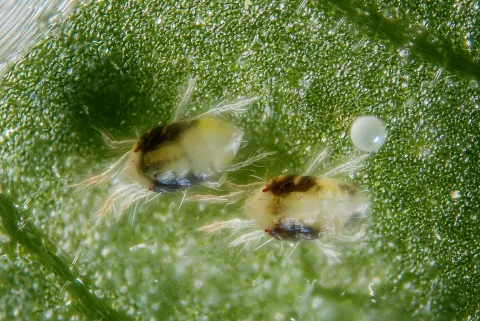
Disease / Threat
Information
- Lifecycle
- Perennial
- Foliage
- Evergreen
- Exposures
- SunHalf-shade
- Substrate
- Humus soil
- Planting method
- In pots
- Categories
- IndoorHerbaceous
- Tag
- Beginner
- Origin
- Central America
- Hardiness (USDA)
- 11b (7.2°C ≤ T° < 10°C)
- Leaf colors
- Dark greenRedRoseCream
- Flower colors
- Pale greenCream
Discover plants from the same family


Peperomia 'Red Margin
Peperomia clusiifolia 'Red Margin'

Peperomia Watermelon
Peperomia argyreia

White cane
Peperomia caperata
Find out more
Find all our tips in the Monstera application








