Parodia lenninghausii, a golden cactus!
Parodia lenninghausii
- Exposure
- Sun
- Hardiness (USDA)
- 11a (4.4°C ≤ T° < 7.2°C)
- Lifecycle
- Perennial
- Foliage
- Deciduous
- Family
- Cactaceae
- Genus
- Parodia
- Species
- Parodia lenninghausii
Other names:Notocactus lenninghausii, Echinocactus lenninghausii, Eriocactus lenninghausii, Eriocephala lenninghausii, Malacocarpus lenninghausii
Parodia lenninghausii is a cactus in the Cactaceae family. Native to Brazil, this succulent plant is distinguished by its golden spines and bright yellow flowers.
How can you identify Parodia lenninghausii?
Parodia lenninghausii is an upright cactus that can reach up to one meter in height in its natural habitat and twelve centimeters in diameter.
It has a shallow, fibrous root system that spreads out around the plant. Over time, it develops offshoots from the base, giving rise to a small cluster of cacti.
Globular in shape and slightly flattened at the top when young, Parodia lenninghausii becomes columnar as it ages. Its dark green stem consists of about 30 ribs, bearing areoles from which numerous yellow, flexible spines emerge.
Significantly less sharp than the spines of Kroenleinia grusonii (Kroenleinia grusonii), they form a golden halo around the plant.
Significantly less sharp than the spines of Kroenleinia grusonii (Kroenleinia grusonii), they form a golden halo around the plant.
Its flowers are a bright lemon yellow and measure up to five centimeters in diameter. They appear in the spring and summer at the top of the plant. Only cacti at least 20 centimeters tall bloom. Their flowers open in the middle of the day and close in the evening.
The round, reddish-brown fruits contain the seeds.
Parodia lenninghausii is not considered toxic to humans or pets.
Our care tips
Your plant needs watering in winter only when the temperature is above 18°C. If it spends the off-season outdoors or in an unheated greenhouse, one watering every two months will be more than enough.
 Watering
Allow the substrate to dry for about five centimetres before watering. Use non-calcareous water, such as rainwater. Moisten the soil without soaking it.
Wait for the water to drain through the drainage holes before putting your plant back in its place. Empty any water stagnating in the dish. It may rot the roots.
 Misting
Your Parodia lenninghausii hates wet foliage. Don't mist the plant.
 Repotting
In spring, transfer your Parodia lenninghausii to a larger pot, so that it can continue to grow.
Fill the bottom of a perforated pot with potting soil for cacti and succulents.
Put on a pair of gloves to protect yourself from thorns. Plant your Parodia leninghausii in the center and add potting soil. Stop filling the pot a few centimetres from the edge to form a watering basin.
Wait at least a fortnight for your plant to root before watering.
 Fertilization
You can stimulate the development of your plant during its growth phase, in spring and summer, with fertilizer.
You don't have to fertilize your plant to make it grow. However, if you want to stimulate its growth, you can give itfertilizer for cacti and succulents.
 Planting
Once the last spring frosts have passed, you can plant.
Select a sunny location. If possible, choose a slope or embankment: water will run off more easily and roots will be less likely to rot.
Dig a hole the size of the root ball. Plant your Parodia lenninghausii in the middle. Fill with a mixture of potting soil and sand. Pack by hand and water to eliminate air pockets.
 Taking cuttings
Propagation by cuttings is carried out during the strong growth phase, generally in spring and early summer.
After a few years, your Parodia leninghausii produces shoots. You can divide them to multiply the plant.
Once the plant has been dug up, separate one of the shoots, with its roots. Beware of thorns! Remember to wear gloves when handling your Parodia leninghausii.
Pour a light, well-drained substrate into a pierced pot. You can use potting soil for cacti and succulents or a mixture of ordinary potting soil and sand.
Plant your cutting, burying the first two centimetres in the soil. Place the cup in partial shade.
Wait ten to fifteen days for the cuttings to root before watering.
Diseases / Threats
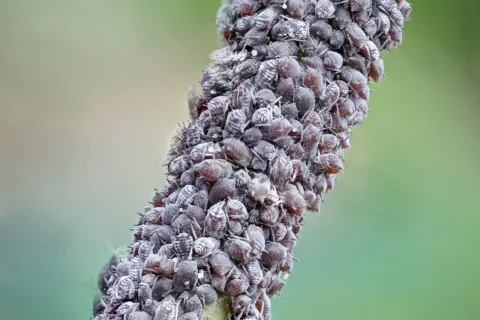
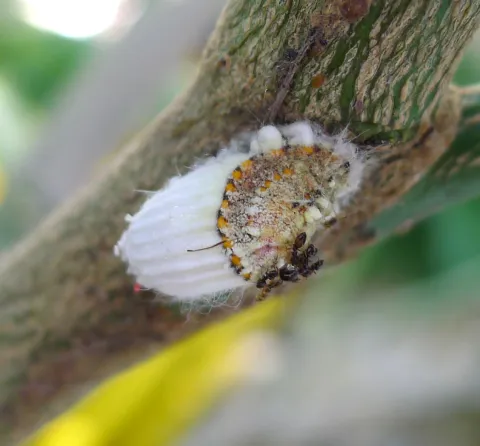
Information
- Lifecycle
- Perennial
- Foliage
- Deciduous
- Exposure
- Sun
- Substrate
- Calcareous earth
- Planting methods
- Open groundIn potsIn tubs
- Category
- Indoor
- Tags
- BeginnerHard to kill
- Origin
- South America
- Hardiness (USDA)
- 11a (4.4°C ≤ T° < 7.2°C)
- Leaf color
- Dark green
- Flower color
- Yellow
- Fruit colors
- RedBrown
Discover plants from the same family

Christmas cactus
Schlumbergera truncata

Prickly pear
Opuntia ficus-indica

Rabbit ear cactus
Opuntia microdasys

Erect prickly pear
Opuntia stricta
Find out more
Find all our tips in the Monstera application








