Abies nordmanniana, Nordmann fir
Abies nordmanniana subsp. nordmanniana
- Exposure
- Half-shade
- Hardiness (USDA)
- 6b (-20.6°C ≤ T° < -17.8°C)
- Lifecycle
- Perennial
- Foliage
- Evergreen
- Family
- Pinaceae
- Genus
- Abies
- Species
- Nordmann fir Abies nordmanniana subsp. nordmanniana
Other names:Abies nordmanniana, Abies leioclada, Picea nordmanniana, Pinus abies var. nordmanniana, Pinus nordmanniana, Pinus abies var. leioclada, Pinus picea var. leioclada
Abies nordmanniana grows in the wild only in Turkey and the northern Caucasus. Resistant to the dry heat of our homes in winter, this tree has become families' favorite Christmas tree, supplanting norway spruce (Picea abies var. Abies).
How can you recognize Abies nordmanniana, the Nordmann fir?
Abies nordmanniana is an evergreen tree that grows up to 50 meters tall. It has a conical or pyramidal crown.
The straight trunk measures up to two meters in diameter. In young Nordmann firs, it is covered with smooth, gray bark. The bark becomes brown, rough, and fissured in mature trees. The branches grow low on the trunk. Rising toward the crown, they are horizontal at the base of the tree.
The linear needles are arranged in two rows. Dark green on the upper surface, they are lighter on the underside. They are no more than three centimeters long and only three millimeters wide, and they are not prickly. The evergreen foliage gives off an orange scent.
The male cones bear pollen and measure one to two centimeters long. The female cones, which are ovoid with a pointed apex, are up to 20 centimeters long and five centimeters wide. They contain brown, triangular seeds.
Abies nordmanniana is not a toxic plant. And since its needles are not prickly, it poses no danger to you or your pets.
Our care tips
Consider the growth of your Nordmann fir before planting it. The largest specimens exceed several dozen meters in height and should therefore be installed where they won't get in anyone's way.
 Watering
Nordmann firs They like to keep the potting mix moist, but not soggy. Water when the soil is dry on the surface (about two to three centimeters deep).
Water the substrate with non-hard water—such as rainwater—at room temperature.
Let the water drain out through the drainage holes before returning the plant to its place. Empty any standing water from the saucer or planter. It may cause the roots to rot.
 Repotting
Choose a pierced terracotta pot. This material ensures more uniform evaporation of water and prevents root rot. The container should be deep so as not to topple under the weight of the plant and allow your Abies nordmanniana subsp. Nordmanniana to grow. Gravel or clay balls can be placed at the bottom to improve drainage.
Pour in a layer of rich potting soil, such as potting soil for acid-loving plants. Plant your Abies nordmanniana subsp. Nordmanniana. The root ball should be three to five centimetres below the edge to form a watering trough. Add potting soil.
Press down and water until the water runs off through the drainage holes to encourage rooting.
 Fertilization
To promote the growth of your Abies nordmanniana subsp. Nordmanniana, apply fertilizer in spring and summer.
Fertilize your Nordmann fir with a conifer fertilizer once a month. Follow the dosage and manufacturer's instructions to avoid damaging the foliage.
 Prune
Your Nordmann fir does not need pruning. On the contrary, pruning could be detrimental to its growth.
You can, however, remove dead branches in early summer using a clean, sharp tool, such as pruning shears.
 Planting
Soak your Nordmann fir to rehydrate the root ball.
Meanwhile, dig a hole twice the size of the root ball. Plant your Nordmann fir. The rootball should be level with the soil. Fill in with a mixture of garden soil and universal potting compost. You can add fertilizer if your soil is poor.
Press down and water thoroughly to help the plant take root.
 Sowing
Once the risk of frost has passed, you can sow your Abies nordmanniana subsp. Nordmanniana seeds.
Your seeds are more likely to germinate if you cold-stratify them.
Fill an airtight bag (such as a freezer bag) with potting soil for seeds and seedlings. Moisten the substrate. Bury your seeds in the substrate, seal the bag, and place it in a location where the temperature is between 0 and 5 °C for three weeks (refrigerator, garage).
Check your seeds regularly to make sure the potting mix stays moist and doesn't rot. As soon as a seed sprouts, you can plant it.
Pour seedling and planting soil into cups. Plant your seed a centimetre deep. Spray the substrate to moisten it.
Place your seedlings in a bright spot where the temperature does not exceed 15°C.
Diseases / Threats
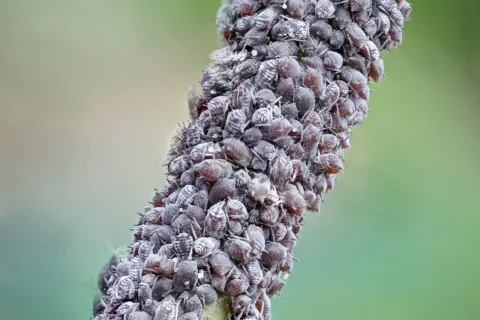
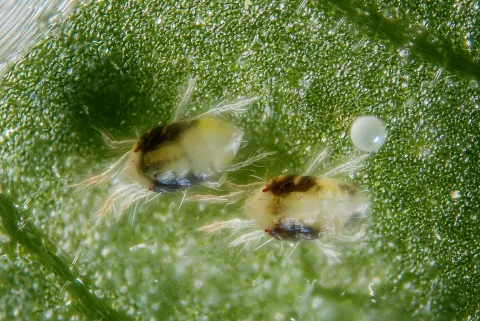
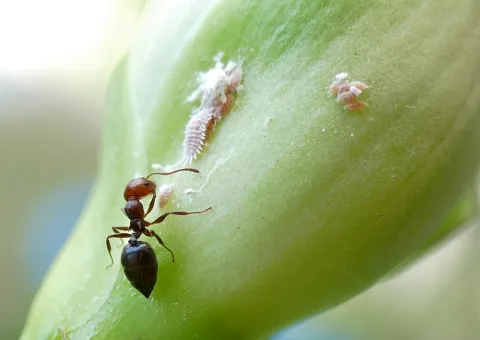
Information
- Lifecycle
- Perennial
- Foliage
- Evergreen
- Exposure
- Half-shade
- Substrates
- Calcareous earthHumus soilSandy soil
- Planting methods
- Open groundIn potsIn tubs
- Category
- Tree
- Tags
- BeginnerHardy
- Origins
- Western AsiaEastern Europe
- Hardiness (USDA)
- 6b (-20.6°C ≤ T° < -17.8°C)
- Leaf color
- Dark green
- Flower color
- Brown
- Fruit color
- Brown
Discover plants from the same family


Find all our tips in the Monstera application








