Nematanthus 'Tropicana', a goldfish plant with striped flowers
Nematanthus 'Tropicana'
- Exposures
- Sun, Half-shade
- Hardiness (USDA)
- 11b (7.2°C ≤ T° < 10°C)
- Lifecycle
- Perennial
- Foliage
- Evergreen
- Family
- Gesneriaceae
- Genus
- Nematanthus
- Species
- Goldfish plant Nematanthus gregarius
With their patterns, the yellow flowers of Nematanthus 'Tropicana' look more like a milk carton than a goldfish. But their puffy shape leaves no room for doubt! The plant is indeed a cultivar derived from Nematanthus gregarius (Nematanthus gregarius).
How can you identify the goldfish plant Nematanthus 'Tropicana'?
Nematanthus 'Tropicana' is a compact, bushy epiphytic perennial. It can grow up to 50 centimeters in all directions.
Nematanthus 'Tropicana' is a subshrub: the plant has a woody base and herbaceous stems. The arching, supple stems are reddish-brown.
The leaves are a solid green. The upper surface is shinier and lighter in color than the underside. The leaf blades are no more than four centimeters long. Oval and fleshy, they have a prominent central vein.
Nematanthus 'Tropicana' blooms year-round. The plant first develops burgundy buds. When the buds open, they reveal dark yellow flowers with orange and purple markings.
The flowers, like the foliage and stems, are not toxic. They are safe for humans and animals that touch or ingest them.
Our care tips
Nematanthus 'Tropicana' plants require plenty of light to flower and thrive. Indoors, place your plant facing a window. From October to April, it won't mind direct sunlight. In summer, place it in semi-shade or in a spot that receives morning and evening light. Best of all? Take your plant outside in summer and place it in the shade of a tree.
 Watering
Keep the soil slightly moist. Water only when the substrate is dry on the surface, for one or two centimeters.
Water with non-calcareous water at room temperature, without soaking the soil.
Thirty minutes after watering, empty any stagnant water from the cup. This will keep the roots dry and prevent them from rotting.
 Misting
Mist foliage to increase humidity and repel pests. Always spray with rainwater. Tap water is too hard and leaves white marks on the leaves.
 Repotting
In spring, transfer your Nematanthus 'Tropicana' to a larger pot, so that it can continue to grow.
Nematanthus 'Tropicana' plants need a light, well-drained substrate. Mix equal parts potting soil for epiphytic plants and potting soil for cacti and succulents.
Obtain a perforated pot. Pour a layer of your mixture into the bottom. Place your Nematanthus 'Tropicana' in the center. Add potting soil and stop two centimetres before the edge to form a watering basin.
Press down and water generously.
 Fertilization
You can stimulate the development of your plant during its growth phase, in spring and summer, with fertilizer.
Fertilize your Nematanthus 'Tropicana' every month. Use a flowering plant fertilizer to stimulate flowering.
 Cleaning
Using a clean, damp cloth, clean the top and bottom of the leaves. This removes dust and limits the appearance of pests.
 Prune
Pruning your Nematanthus 'Tropicana' encourages branching and helps maintain a compact habit.
Using a clean, sharp tool, a pair of scissors or pruning shears for example, cut the stem just above a node. Remove about a third of the length.
You can use this opportunity to remove any yellowed leaves.
 Taking cuttings
Cutting is carried out during the strong growth phase, generally in spring and early summer.
Cut a ten- to fifteen-centimeter stem with a clean, sharp tool. Remove the base leaves, leaving only the upper pairs.
Nematanthus 'Tropicana' plants appreciate well-draining soil. To meet their needs, prepare your own substrate by mixing potting soil for cacti and succulents with potting soil for epiphytic orchids.
Fill a perforated pot with your growing medium. Make a pilot hole and plant your cutting. You can place several stems in the same container for a fuller plant.
Water generously to encourage rooting.
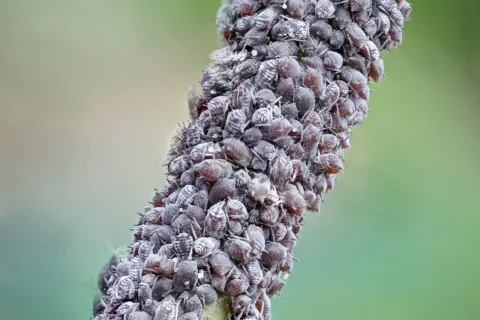
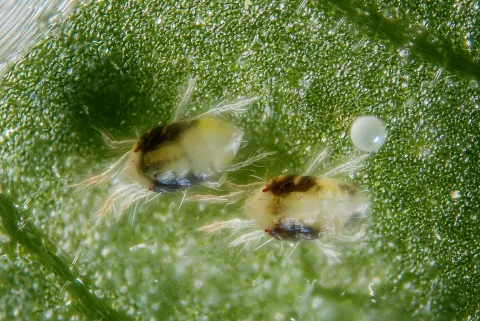
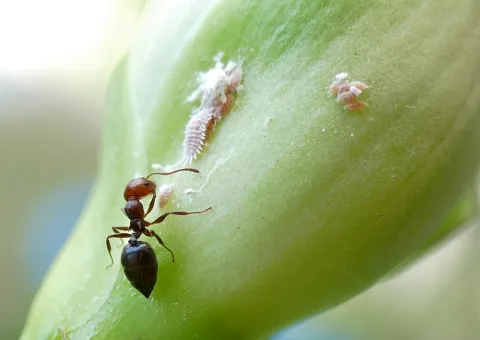
Diseases / Threats
Information
- Lifecycle
- Perennial
- Foliage
- Evergreen
- Exposures
- SunHalf-shade
- Substrates
- Loamy soilSandy soil
- Planting methods
- In potsIn tubsPlanter
- Categories
- IndoorHerbaceousFloweryHanging plants
- Tags
- FloweryCold-sensitive
- Origin
- South America
- Hardiness (USDA)
- 11b (7.2°C ≤ T° < 10°C)
- Leaf colors
- Dark greenLight green
- Flower colors
- RedYellowOrange
Discover plants from the same family

Goldfish plant
Nematanthus gregarius

Nematanthus variegata
Nematanthus gregarius variegata

Nematanthus 'Golden West
Nematanthus gregarius 'Golden West'

Nematanthus 'Black Magic
Nematanthus gregarius 'Black Magic'
Find out more
Find all our tips in the Monstera application








