Tradescantia spathacea, the oyster plant
Tradescantia spathacea
- Exposures
- Sun, Half-shade
- Hardiness (USDA)
- 10a (-1.1°C ≤ T° < 1.7°C)
- Lifecycle
- Perennial
- Foliage
- Evergreen
- Family
- Commelinaceae
- Genus
- Spiderwort Tradescantia
- Species
- Rhoeo Tradescantia spathacea
Other names:Rhoeo spathacea, Tradescantia versicolor, Rhoeo discolor, Ephemerum bicolor
With its rosettes of fleshy leaves, Tradescantia spathacea looks more like a succulent than a spider plant. However, this plant, native to Mexico and Guatemala, does indeed belong to the Commelinaceae family, just like tradescantia 'Nanouk' or tradescantia zebrina 'Discolor Multicolor'
How can you identify Tradescantia spathacea?
Tradescantia spathacea is a perennial plant with a compact, bushy habit. It grows up to 50 centimeters tall and spreads 30 centimeters wide. When planted in the ground, rhoeo produces offshoots and forms a ground cover.
Rosettes of upright leaves emerge from an underground stem. After a few years, the rosettes at the base wither and fall off. A purplish, fleshy stem then appears.
The rosette consists of sheathing leaves that overlap one another. Lanceolate and thick, they can reach 35 centimeters in length. The green upper surface is streaked with purple or pale green, while the underside is purple.
In the wild, flowering occurs year-round. White flowers clustered in cymes bloom at the center of purple bracts. This inflorescence is short-lived and lasts only a few hours.
Like its cousins in the misery family, rhoeo is not a toxic plant. It is harmless to both humans and animals.
Our care tips
The more light your Moses-in-the-cradle receives, the more its colors will shine through. Give it a bright spot, but keep it out of direct sunlight. Its favorite spot? Behind a curtained window. On summer mornings and evenings, you can even put it out on your windowsill.
 Watering
Your Moses-in-the-cradle appreciates constant humidity. Keep the soil fresh at all times. Water when the substrate is 1 cm dry.
Moisten the soil, without soaking it, with non-calcareous water, preferably rainwater, at room temperature. It's best to place your Tradescantia spathacea on a rack over your sink while you water it. As soon as the water begins to drip through the drainage holes, stop watering.
Drain off any excess water stagnating in the cup and planter. It may rot the roots.
 Misting
Fogging helps to increase humidity and prevent attacks by mites or red spiders. Spray foliage with non-calcareous water at room temperature.
 Repotting
In spring, transfer your Tradescantia spathacea to a larger pot, so that it can continue to grow.
In a pierced pot larger than the previous one, place a bed of clay balls, gravel or pebbles. Cover with the substrate. You can mix a special potting soil for green plants or houseplants with sand or compost.
Remove your plant from its container. To help the roots take hold, gently loosen the root bun. Plant in the center of the pot and top up with potting soil.
To improve humidity, place the pot on a dish filled with moist clay balls.
To improve humidity, place the pot on a dish filled with moist clay balls.
 Fertilization
You can stimulate the development of your plant during its growth phase, in spring and summer, with fertilizer.
Add green plant fertilizer to watering water.
 Prune
To control the growth of creepers on your Moses-in-the-cradle, you can prune the stems by about a third. Cut with a clean, sharp tool (pruning shears, scissors...) above a healthy leaf. Pruning also helps maintain a compact habit.
Remove dead leaves at the base.
 Pinch
Pinch your Tradescantia spathacea during its growing season.
Pinch the ends of the stems to force the plant to branch out and maintain a compact habit.
 Taking cuttings
Propagation by cuttings is carried out during the strong growth phase, generally in spring and early summer.
Using a clean, sharp tool, such as scissors or pruning shears, remove a ten- to fifteen-centimeter stem with at least two nodes and three levels of leaves. Remove the lower limbs, leaving only the terminal pair.
Soak your cutting in a glass of water at room temperature. Only the stem end should be immersed. Change the water every three days to keep it clear.
Place your cutting in a bright spot away from direct sunlight.
Place your cutting in a bright spot away from direct sunlight.
Diseases / Threats
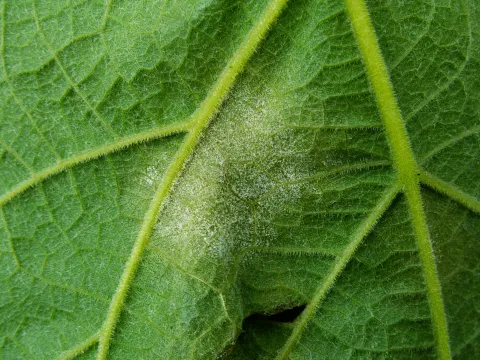
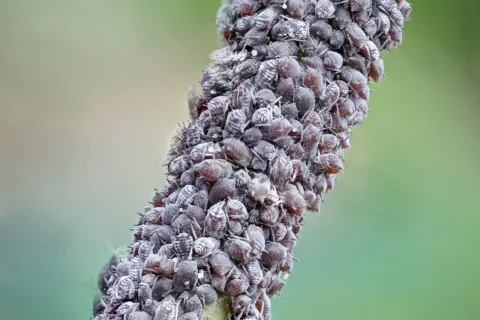
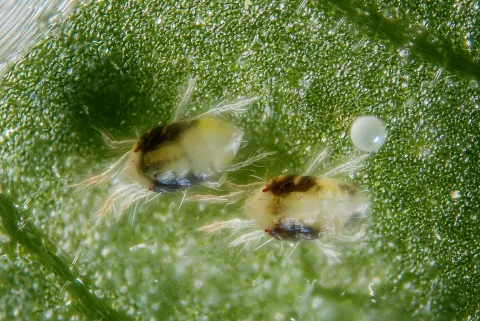
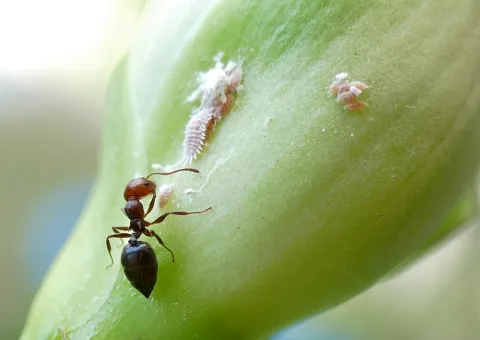
Information
- Lifecycle
- Perennial
- Foliage
- Evergreen
- Exposures
- SunHalf-shade
- Substrates
- Clay soilHumus soilSandy soil
- Planting method
- In pots
- Category
- Herbaceous
- Tags
- BeginnerHard to kill
- Origin
- Central America
- Hardiness (USDA)
- 10a (-1.1°C ≤ T° < 1.7°C)
- Leaf colors
- Dark greenLight greenViolet
- Flower color
- White
Discover plants from the same family
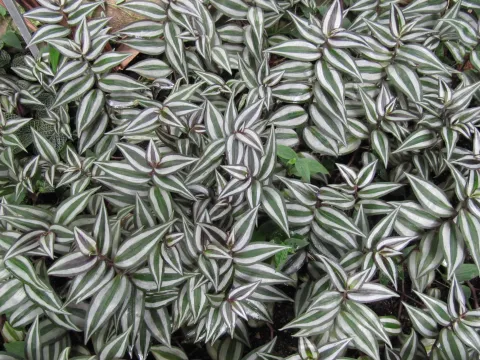
Inch Plant
Tradescantia zebrina
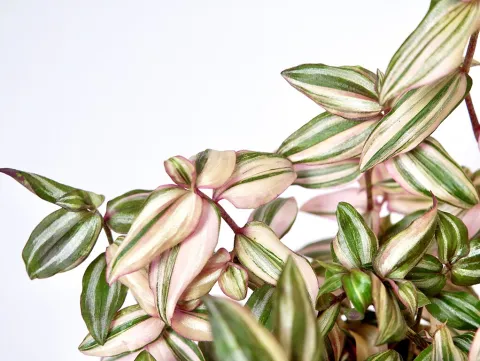
Tradescantia zebrina 'Discolor Multicolor'
Tradescantia zebrina ‘Discolor Multicolor’
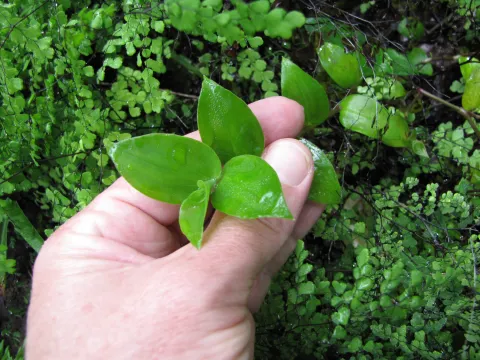
Small-leaf spiderwort
Tradescantia fluminensis
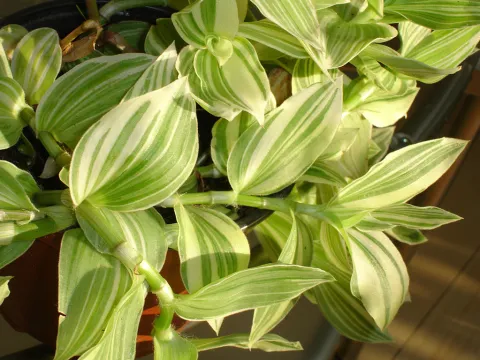
Find out more
Find all our tips in the Monstera application








