Maranta leuconeura Tricolor, a watercolor from Brazil
Maranta leuconeura 'Tricolor'
- Exposures
- Half-shade, Shade
- Hardiness (USDA)
- 12a (10°C ≤ T° < 12.8°C)
- Lifecycle
- Perennial
- Foliage
- Evergreen
- Family
- Marantaceae
- Genus
- Maranta
- Species
- Maranta leuconeura
Other names:Maranta leuconeura var. erythroneura, Maranta leuconeura fascinator
Maranta leuconeura Tricolor grows in the tropical forests of Brazil and South America. Its foliage is so delicately patterned that it looks as if it's been painted by hand, earning it a place of choice in collectors' living rooms.
How to recognize Maranta leuconeura 'Tricolor'?
Maranta leuconeura is a rhizomatous plant, 30 centimetres high. It grows broadly, reaching up to 40 centimetres in width. Its bushy habit distinguishes it from its cousins, calatheas (Goeppertia) and ctenanthes.
Leaves grow in rosettes. They are connected to the short stem by a long petiole. Each leaf blade measures between eight and twelve centimetres. Elliptical, they are velvety and purple on the underside. The green upper surface is veined with pink. Dark green splashes on either side of the midrib complete the picture.
In comparison, the flowering period is dull. It occurs in summer. White bilabiate flowers bloom in spikes.
Maranta leuconeura Tricolor is non-toxic. It is harmless to humans and pets. Some studies have even found it to have depolluting properties.
Maranta leuconeura Tricolor belongs to the prayer plant family. Like maranta kerchoveana or maranta Lemon Lime, it spreads its foliage during the day and raises it towards the moon in the evening.
Our care tips
Not very demanding, your Maranta leuconeura 'Tricolor' is content with a spot out of direct sunlight and plenty of humidity.
 Watering
Maranta leuconeura 'Tricolor' fear excess water. To prevent root rot, allow the substrate to dry between waterings and remove any stagnant water from the saucer.
Water the soil preferably with rainwater. The soil should be moist but not soggy.
 Misting
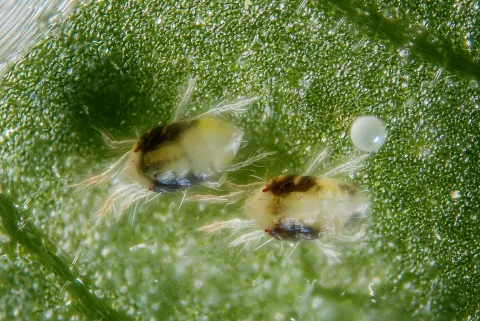
Dry air favors the appearance of mites and other pests. Mist the foliage of your Maranta leuconeura tricolor to prevent infestations and increase humidity.
Use non-calcareous water, such as collected rainwater. Tap water is often too hard and leaves marks on the leaves.
 Repotting
Every year in the spring, repot your Maranta leuconeura 'Tricolor' to give it more space.
Obtain a pot with drainage holes of a larger size than the previous one. Don't hesitate to choose a ceramic or plastic model. These materials retain moisture and allow you to space out watering. Your Maranta leuconeura tricolor also prefers a wide pot to a deep container to give it room to grow.
Line the bottom with gravel or clay balls for drainage. Then pour in potting soil for houseplants. You can lighten it by adding perlite.
Plant your subject in the middle and fill in with substrate. Water for the first time to eliminate air bubbles and encourage rooting.
 Fertilization
To promote the growth of your Maranta leuconeura 'Tricolor', apply fertilizer in spring and summer.
Give your Maranta leuconeura tricolor a green plant fertilizer to support its growth.
Follow the instructions on the product! If you overdose, you could damage its foliage.
 Cleaning
The dust that accumulates on foliage hinders photosynthesis and the growth of your Maranta leuconeura tricolor. You can remove it with a damp cloth or clean sponge.
 Prune
You can remove the yellowed leaves.
 Taking cuttings
Propagation by cuttings is carried out during the strong growth phase, generally in spring and early summer.
Maranta leuconeura 'Tricolor' are rhizomatous plants. They are propagated by dividing the clumps.
Remove your Maranta leuconeura tricolor from its pot. Using your hands or a clean, sharp tool, separate a shoot with at least four leaves and a rhizome. The more developed your young shoot is, the better your chances of successfully propagating it.
Get a pot with holes to suit the size of your seedlings. Line the bottom with clay balls or gravel to improve drainage.
Pour in a rich, light substrate, such as potting soil for seedlings and planting, and plant your cuttings. To help you, you can use a pencil to form a pilot hole.
Water to encourage rooting and eliminate air bubbles.
Diseases / Threats
Information
- Lifecycle
- Perennial
- Foliage
- Evergreen
- Exposures
- Half-shadeShade
- Substrate
- Humus soil
- Planting method
- In pots
- Categories
- IndoorRhizomeHerbaceous
- Tags
- Cold-sensitiveThirsty
- Origin
- South America
- Hardiness (USDA)
- 12a (10°C ≤ T° < 12.8°C)
- Leaf colors
- Dark greenLight greenRedPurple
- Flower color
- White
Discover plants from the same family
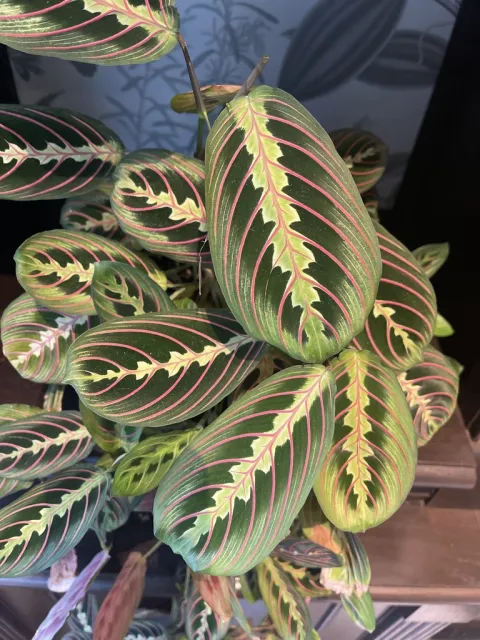
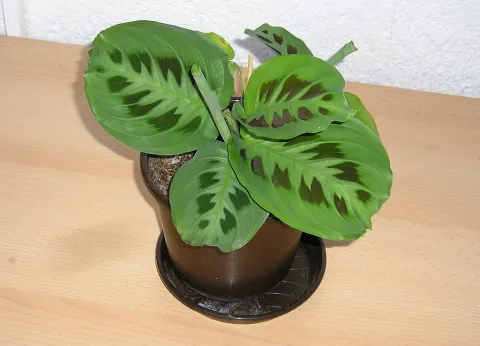
Maranta kerchoveana
Maranta leuconeura 'Kerchoveana'
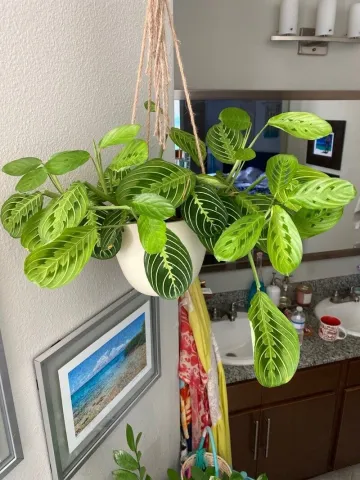
Maranta Lemon Lime
Maranta leuconeura 'Lemon Lime'
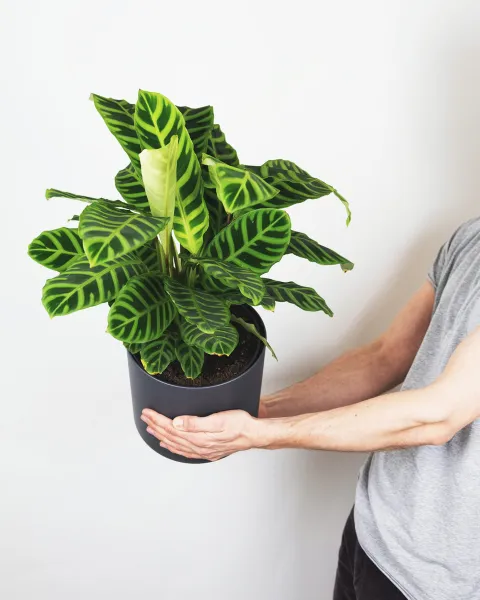
Zebra Calathea
Goeppertia zebrina
Find out more
Find all our tips in the Monstera application