Mandevilla laxa, the Chilean jasmine
Mandevilla laxa
- Exposures
- Sun, Half-shade
- Hardiness (USDA)
- 9a (-6.7°C ≤ T° < -3.9°C)
- Lifecycle
- Perennial
- Foliage
- Deciduous
- Family
- Apocynaceae
- Genus
- Mandevilla
- Species
- Mandevilla laxa
Other names:Amblyanthera bridgesii, Amblyanthera suaveolens, Echites suaveolens, Mandevilla bangii, Mandevilla bridgesii, Mandevilla mandonii, Mandevilla suaveolens, Mandevilla tweedieana
Wrongly nicknamed Chilean jasmine, Mandevilla laxa actually grows from Peru to northern Argentina. Its long, fragrant blooms delight gardeners, bees and foraging insects alike.
How to recognize the Chilean jasmine (Mandevilla laxa)?
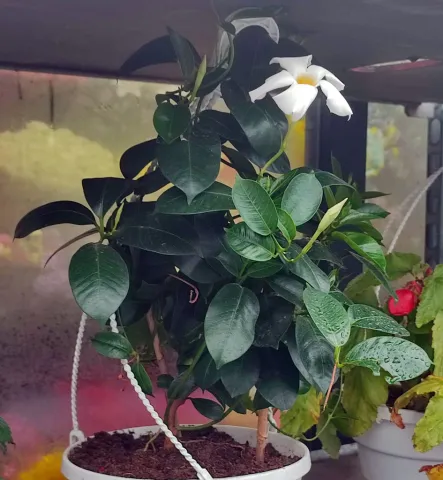
Mandevilla laxa is a climbing, flowering perennial capable of reaching heights of over 5 meters and a spread of 3 meters.
Its voluble stems cling easily to all types of support and become woody at the base over time.
Unlike Dipladenia splendens (Mandevilla splendens), Mandevilla laxa has deciduous foliage. Its elongated, almost heart-shaped green leaves take on orange or bronze hues in autumn, before dropping off in winter.
Flowering lasts several weeks, from June to October. White, funnel-shaped flowers with yellow centers appear in bunches at the tips of the branches. Their fragrance is reminiscent of jasmine, attracting pollinators and bees.
After flowering, the plant produces long, bean-like fruits containing silken seeds.
Is Chilean jasmine (Mandevilla laxa) toxic?
Plants of the Mandevilla genus are toxic on ingestion and contact. They contain a white latex that causes :
- Skin and mucous membrane irritation;
- Digestive disorders.
Make sure your pets don't nibble your plant, and wear gloves when pruning or repotting your Mandevilla laxa.
Our care tips
Mandevilla laxa are cold-weather plants. Grow them in pots so you can bring them inside when it's cold.
You can also plant them in the ground and treat them as annuals: in this case, you'll need to renew them every year.
 Watering
Water your plant generously during the growing season.
Allow the rootball to dry out to one centimeter between waterings. Water generously with non-calcareous water (rainwater, for example) at room temperature.
Drain off any excess water left in the dish or planter. It can rot the roots.
Reduce watering during dormancy.
Potted plants need regular watering. However, to avoid root rot, allow the substrate to dry out between waterings.
You can use mains water. If it's hard, use reclaimed rainwater instead.
Don't forget to remove any stagnant water from the dish.
 Misting
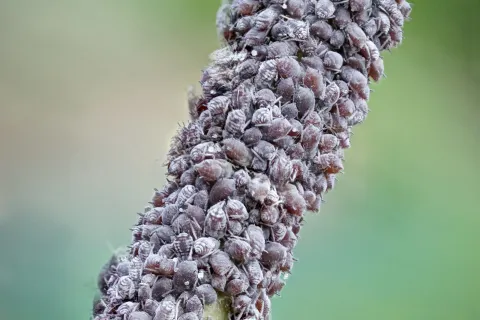
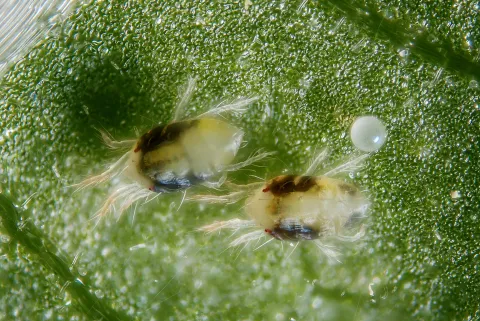
In nature, mandevilla laxa benefits from a high degree of humidity. Spray your Mandevilla laxa withrainwater to improve humidity and prevent pest infestation.
Don' t use hard water, such as tap water. It leaves white spots on the foliage.
 Repotting
Place a drainage layer (clay balls, gravel) at the bottom of a pierced pot.
Pour in a bed of potting soil for flowering plants or geraniums. You can add perlite or sand to lighten it. If you want your plant to climb, install your stake.
Plant your Mandevilla laxa and add substrate. Stop a few centimetres before the edge to form a watering trough.
Water at room temperature to encourage rooting.
 Fertilization
To promote the growth of your Mandevilla laxa, apply fertilizer in spring and summer.
Apply a flowering plant or geranium fertilizer to encourage flowering.
 Prune
Prune
You can remove wilted flowers as they appear.
Cut back the stems to three or four nodes so that your Mandevilla laxa branches out. This will also encourage flowering.
Caution: the plant is toxic! Wear gloves and rinse your shears after pruning!
 Planting
When the risk of frost has passed, it's time to plant.
Leave your Mandevilla laxa root ball to soak.
Dig a hole three times the size of the root ball. If you're planting several specimens, space them 20 to 30 centimetres apart. You can use stakes if you wish to grow your Mandevilla laxa as a climbing plant.
Plant your Mandevilla laxa. Fill in the hole with garden soil enriched with a little compost and water.
 Taking cuttings
Cutting is carried out during the strong growth phase, generally in spring and early summer.
Select a healthy stem at the top. Using clean, sharp pruning shears, remove a section about 15 centimetres long, without flowers and with several nodes.
Remove the leaves at the base. Keep only the top pair.
The plant is toxic. Wear gloves and clean tools after use.
Prepare a pierced pot adapted to the size of your cutting. Fill it with a rich, well-drained substrate. You can use potting soil for seedlings and plantations, for example.
Make a pilot hole with a pencil or pick. Plant your Mandevilla laxa. Water to encourage rooting.
Cuttings are more likely to succeed when smothered. Place your pot in a mini-greenhouse or translucent plastic bag. You can also use a pre-cut bottle.
Mist the substrate regularly to keep it moist, and aerate your cutting for a few minutes each day to prevent rotting.
Remove the cover when the first leaves appear.
Remove the cover when the first leaves appear.
Frequently asked questions
How to keep a Mandevilla laxa in winter?
Although hardier than other Mandevilla plants, Mandevilla laxa needs to be protected from the cold in winter. If you live in a region prone to frost, move it into a bright, frost-free room (veranda, loggia, greenhouse) when temperatures drop below 5°C.
How hardy is Mandevilla laxa?
Mandevilla laxa is one of the hardiest of its kind. It can withstand temperatures down to -6°C and short frosts. What's more, even if the aerial part dies, the plant can grow back from the stump. However, it is advisable to store your plant in a bright, frost-free place during the winter to preserve it.
What's the difference between Mandevilla and Dipladenia?
There is no difference between Mandevilla and Dipladenia. Both terms are synonyms. They refer to flowering plants belonging to the Apocynaceae family. Today, Mandevilla is considered the scientifically correct name.
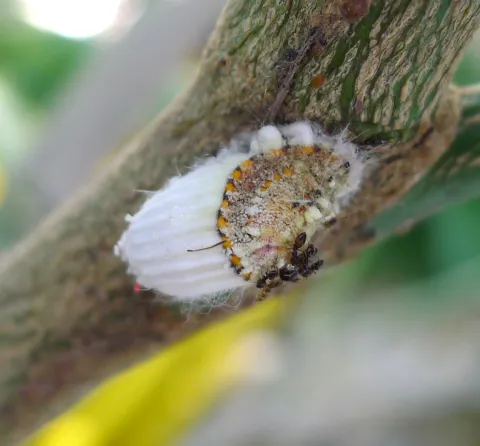
Diseases / Threats
Information
- Lifecycle
- Perennial
- Foliage
- Deciduous
- Exposures
- SunHalf-shade
- Substrate
- Humus soil
- Planting methods
- Open groundIn potsIn tubs
- Tags
- FloweryCold-sensitiveToxic
- Origin
- South America
- Hardiness (USDA)
- 9a (-6.7°C ≤ T° < -3.9°C)
- Leaf color
- Dark green
- Flower colors
- WhiteYellow
Discover plants from the same family
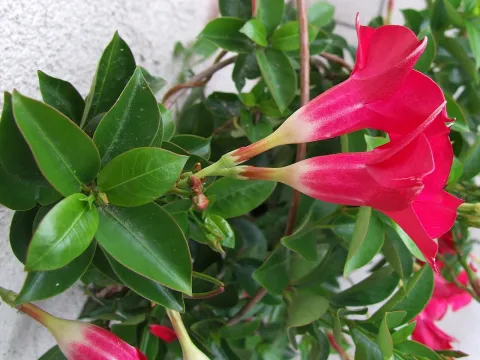
Dipladenia sanderi
Mandevilla sanderi
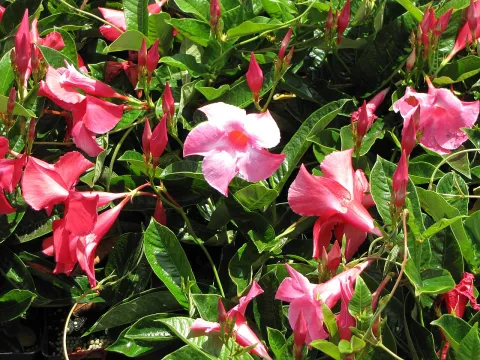
Dipladenia splendens
Mandevilla splendens
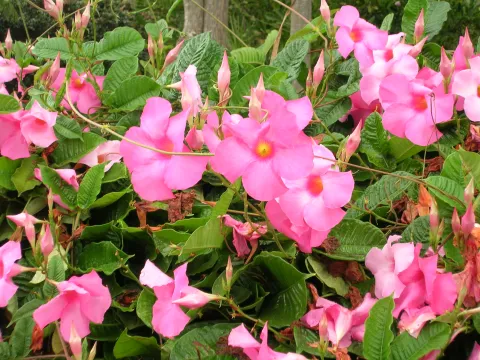
Mandevilla amabilis
Mandevilla × amabilis
Find out more
Find all our tips in the Monstera application