Peperomia ferreyrae, the happy bean
Peperomia ferreyrae
- Exposures
- Sun, Half-shade
- Hardiness (USDA)
- 11a (4.4°C ≤ T° < 7.2°C)
- Lifecycle
- Perennial
- Foliage
- Evergreen
- Family
- Piperaceae
- Genus
- Peperomia
- Species
- Peperomia bean Peperomia ferreyrae
Other name:Peperomi Happy Bean
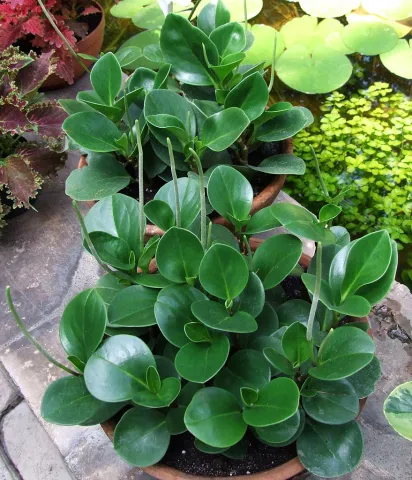
Not all beans grow in the vegetable garden. The Peperomia bean (Latin: Peperomia ferreyrae) is native to the Peruvian forests. But don't count on it to help you meet your daily quota of five fruits and vegetables. The plant is grown solely for its decorative foliage.
How can you recognize Peperomia ferreyrae, also known as Peperomia 'Happy Bean'?
Peperomia ferreyrae is a semi-succulent herbaceous plant with an upright growth habit. It does not grow taller than 30 centimeters.
The thick, green stems are highly branched. They bear alternate, fleshy leaves. The leaf blades measure between three and five centimeters long. They are shaped like a tube or a bean. Bright green in the botanical variety or lime green in the Musifolia variety, they feature a darker stripe on the upper surface of the leaf. This stripe enables the plant to photosynthesize.
Like peperomia scandens, Peperomia ferreyrae blooms in the summer. Flowering stems appear at the tips of the branches. Yellow flowers grow from these stems, clustered in spikes.
Despite its name, the Peperomia haricot is not edible. Its leaves are of no culinary interest, whether in a salad or stir-fry. However, they are not toxic if ingested. You can safely leave your plant within reach of your pets or young children.
Our care tips
The Peperomia bean is an undemanding tropical plant. The main thing is not to overwater it. It also appreciates light, but fears direct sunlight. Finally, it needs warmth. Never leave it in a room where the temperature falls below 13 degrees, and keep it away from draughts.
 Watering
Peperomia beans They like to keep the potting mix moist, but not soggy. Water when the soil is dry on the surface (about two to three centimeters deep).
Water the substrate with non-hard water—such as rainwater—at room temperature.
Let the water drain out through the drainage holes before returning the plant to its place. Empty any standing water from the saucer or planter. It may cause the roots to rot.
 Misting
In our homes, heating dries out the air. To remedy this, mist the foliage of your Peperomia ferreyrae with soft water at room temperature.
 Repotting
Every year in the spring, repot your Peperomia ferreyrae to give it more space.
Choose a pierced pot slightly larger than the previous one. First lay a bed of clay balls or gravel to optimize drainage. Top it off with a special potting soil for green plants. This will provide your shrub with nutrients, at least for a few weeks.
You can place the pot in a saucer filled with moist clay balls. This will improve the hygrometry without risk to the roots.
 Fertilization
To promote the growth of your Peperomia ferreyrae, apply fertilizer in spring and summer.
Addgreen plant fertilizer to watering water.
 Cleaning
To improve photosynthesis, clean the foliage with a damp sponge.
 Prune
Remove or cut back yellowed and wilted leaves. If you use pruning shears or scissors, make sure your tool is clean.
 Pinch
Pinch your Peperomia ferreyrae during its growing season.
Pinch the ends of the stems with your fingers to help the plant branch out and maintain a compact habit.
 Taking cuttings
Propagation by cuttings is carried out during the strong growth phase, generally in spring and early summer.
Locate a secondary stem about ten centimeters long and separate it from the main stem using scissors, a knife or pruning shears. They should be clean and sharp.
Line a small, perforated pot with potting soil for seedlings and cuttings. Using a pen or pick, make a pilot hole. Plant your cutting, taking care not to bury the leaves.
Place your cutting in a sunny spot and spray the substrate regularly with water to keep it moist.
Disease / Threat
Information
- Lifecycle
- Perennial
- Foliage
- Evergreen
- Exposures
- SunHalf-shade
- Substrate
- Humus soil
- Planting method
- In pots
- Categories
- IndoorHerbaceous
- Tags
- BeginnerCold-sensitive
- Origin
- South America
- Hardiness (USDA)
- 11a (4.4°C ≤ T° < 7.2°C)
- Leaf colors
- Light greenChartreuse
- Flower colors
- Pale yellowPale green
Discover plants from the same family

Peperomia Watermelon
Peperomia argyreia

Dumb cane
Peperomia caperata

Peperomia Hope
Peperomia tetraphylla
Find out more
Find all our tips in the Monstera application