Peperomia Hope, a plant made for your home
Peperomia tetraphylla
- Exposures
- Sun, Half-shade
- Hardiness (USDA)
- 11a (4.4°C ≤ T° < 7.2°C)
- Lifecycle
- Perennial
- Foliage
- Evergreen
- Family
- Piperaceae
- Genus
- Peperomia
- Species
- Peperomia tetraphylla
Other names:Peperomia rotundifolia, Peperomia tetraphylla
There's no need to look for Peperomia Hope in the rainforests of Brazil or Venezuela. You won't find it perched on a tree alongside Peperomia argyreia, the White Cane and other species in the Piperaceae family. This perennial plant is a cross between Peperomia deppeana and Peperomia quadrifolia. It was created to decorate our homes.
How to recognize Peperomia Hope?
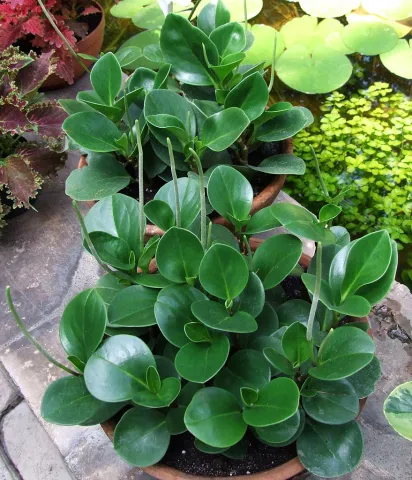
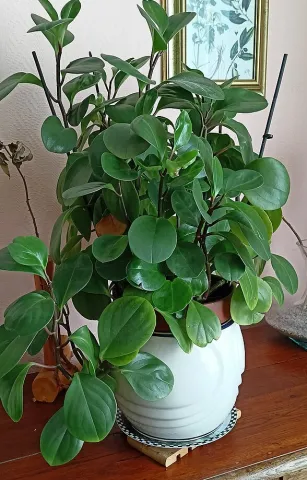
Peperomia Hope is a green plant with a drooping habit. At just fifteen centimetres in diameter and twenty centimetres high, it fits in just about anywhere. But don't expect it to go unnoticed! Its long, drooping vines are ideal for hanging.
The evergreen foliage of Peperomia Hope brightens up our living rooms all year round. The bright green leaves are illuminated by light green streaks. Blades grow in groups of two, three or four along the fleshy stem. Oval, almost round, they are thick like those of succulents.
Its decorative foliage remains the main attraction of Peperomia Hope. Indoors, flowering is almost non-existent. A good way to avoid the nauseating odors that escape from the flowers of certain Peperomia varieties!
Like all Peperomias, Peperomia Hope is non-toxic. You can grow it with young children or animals without fear. Some even claim it has pollution-removing properties. In Brazil, the plant even brings good luck.
Our care tips
Peperomia Hope is an undemanding tropical plant. The main thing is not to overwater it. It also appreciates light, but fears direct sunlight. Finally, it needs warmth. Never leave it in a room where the temperature falls below 13 degrees, and keep it away from draughts.
 Watering
Your Peperomia tetraphylla is more afraid of too much water than of forgetting. You should only water when the surface of the soil is two to three centimetres dry.
When you do water, do so generously. Use non-calcareous water, such as demineralized water or rainwater, always at room temperature.
If you use a planter or saucer, empty any standing water after each watering.
 Misting
The air in our apartments is too dry for plants used to high humidity. Mist your Peperomia tetraphylla with water at room temperature.
Rainwater is preferable to tap water. Tap water causes white spots on the foliage.
 Repotting
In spring, transfer your Peperomia tetraphylla to a larger pot, so that it can continue to grow.
In a pierced pot larger than the previous one, place a bed of clay balls, gravel or pebbles. Cover with the substrate. You can mix a special potting soil for green plants or houseplants with sand or compost.
Remove your plant from its container. To help the roots take hold, gently loosen the root bun. Plant in the center of the pot and top up with potting soil.
To improve humidity, place the pot on a dish filled with moist clay balls.
To improve humidity, place the pot on a dish filled with moist clay balls.
 Fertilization
You can stimulate the development of your plant during its growth phase, in spring and summer, with fertilizer.
Apply green plant fertilizer in addition to watering.
 Cleaning
Using a clean, damp cloth, clean the top and bottom of the leaves. This removes dust and limits the appearance of pests.
 Prune
Cut dead leaves with a sharp, clean tool.
 Pinch
Pinch your Peperomia tetraphylla during its growing season.
Pinch the ends of the stems to force the plant to branch out and maintain a compact habit.
 Taking cuttings
Propagation by cuttings is carried out during the strong growth phase, generally in spring and early summer.
Locate a healthy side shoot with no yellowed leaves. Cut a section about ten to fifteen centimeters long using a clean, sharp tool.
Plant your graft in a pierced pot containing a mixture of rich potting soil (horticultural potting soil, potting soil for seedlings, special potting soil for cuttings, etc.) and sand. Place them in a bright spot, but away from direct sunlight.
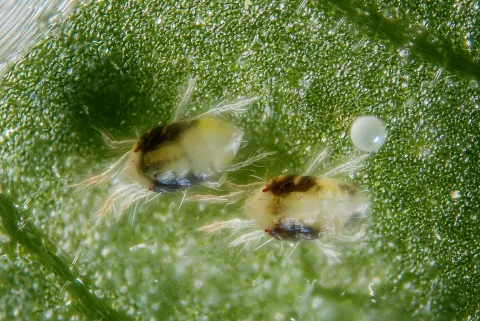
Disease / Threat
Information
- Lifecycle
- Perennial
- Foliage
- Evergreen
- Exposures
- SunHalf-shade
- Substrate
- Humus soil
- Planting method
- In pots
- Categories
- IndoorHerbaceousHanging plants
- Tag
- Beginner
- Hardiness (USDA)
- 11a (4.4°C ≤ T° < 7.2°C)
- Leaf color
- Light green
Discover plants from the same family

Peperomia Watermelon
Peperomia argyreia

Dumb cane
Peperomia caperata
Find out more
Find all our tips in the Monstera application








