Ehretia dicksonii, a flowering tree
Ehretia dicksonii
- Exposures
- Sun, Half-shade
- Hardiness (USDA)
- 7b (-15°C ≤ T° < -12.2°C)
- Lifecycle
- Perennial
- Foliage
- Deciduous
- Family
- Boraginaceae
- Genus
- Ehretia
- Species
- Ehretia dicksonii
Other names:Ehretie dicksonii var dicksonii, Ehretia dicksonii var. japonica, Ehretia dicksonii var. liukiuensis, Ehretia dicksonii var. tomentosa, Ehretia dicksonii var. velutina, Ehretia macrophylla var. tomentosa
While ehretia anacua comes to us from Mexico and Texas, Ehretia dicksonii extends its territory from central China to Japan. In recent years, this member of the Boraginaceae family has conquered the gardens of southern Europe.
How to recognize Ehretia dicksonii?
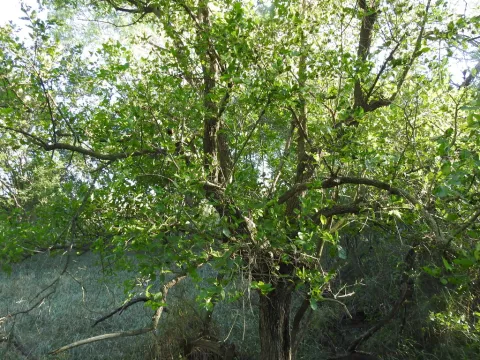
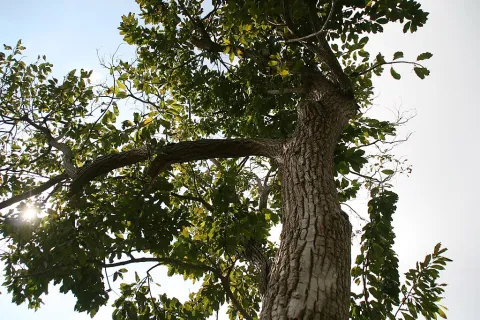
A rounded tree with deciduous foliage, Ehretia dicksonii reaches heights of over fifteen meters in its natural habitat. In our latitudes, it rarely exceeds eight meters.
On the trunk, vertical grooves cut into the light grey bark. This makes the tree recognizable in all seasons, even when the foliage has fallen away.
The thick, downy leaves are also marked. On the dark green leaf blade, the prominent veins draw lighter, raised lines. The oval leaves have finely serrated margins.
Ehretia dicksonii flowers in summer. It then adorns itself with panicles of white flowers. Fragrant, they delight insects and pollinators.
The fruit, an orange drupe, attracts birds. It divides into two parts, each containing two seeds.
The tree is non-toxic to animals and humans alike. The fruit is even edible. However, its rather bland taste makes it unpalatable.
Our care tips
Ehretia dicksonii are easy to care for. After planting, you won't have to do much.
 Watering
Check that the substrate is dry to the depth of five centimeters before watering. If your plant is thirsty, water with cold or lukewarm water. It's best to use rainwater to provide nutrients. If you don't have any, use mains water.
Empty any stagnant water from the dish to prevent root rot.
 Misting
Your Ehretia dicksonii hates wet foliage. Don't mist the plant.
 Repotting
Obtain a perforated pot. Make a drainage layer at the bottom with clay balls or gravel.
Cover with a mixture of potting soil and garden soil. The different varieties of Ehretia dicksonii like well-drained soil. If yours is heavy, add gravel or river sand to lighten it.
Plant your plant at Ehretia dicksonii and fill the pot with your substrate. Water for the first time to eliminate air bubbles and facilitate rooting.
 Planting
When the risk of frost has passed, it's time to plant.
Choose an isolated location, sheltered from the wind. It should be exposed to sun or half-shade.
Soak the rootball in water at room temperature. Meanwhile, dig a planting hole. Plant your Ehretia dicksonii and fill it in.
Press down and water generously to encourage rooting.
Information
- Lifecycle
- Perennial
- Foliage
- Deciduous
- Exposures
- SunHalf-shade
- Substrates
- Clay soilHumus soilLoamy soilSandy soil
- Planting method
- Open ground
- Tags
- Edible fruitBeginnerFlowery
- Origins
- Central AsiaSoutheast Asia
- Hardiness (USDA)
- 7b (-15°C ≤ T° < -12.2°C)
- Leaf color
- Dark green
- Flower color
- White
- Fruit color
- Orange
Discover plants from the same family
Find out more
Find all our tips in the Monstera application