Celosia plumosa, an inflorescence with panache
Celosia plumosa
- Exposure
- Sun
- Hardiness (USDA)
- 11a (4.4°C ≤ T° < 7.2°C)
- Lifecycle
- Annual
- Foliage
- Evergreen
- Family
- Amaranthaceae
- Genus
- Celosia
- Species
- Celosia argentea
Other name:Celosia argentea var. plumosa
In beds, dried or in bouquets, Celosia plumosa flowers are a real treat. This plant of the Amaranthaceae family is actually a form of Celosia argenteaargentea. Botanically, there's no difference between specimens with brain-shaped, spike-shaped or duster-shaped inflorescences.
How to recognize Celosia plumosa?
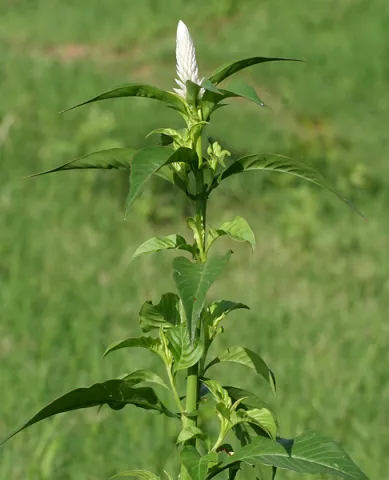
Celosia plumosa grows up to 1.20 m tall. It is an annual plant with a bushy, bushy habit. Some dwarf varieties, such as Celosia plumosa Kimono or Ice Cream, are no taller than 30 cm.
The branched, ridged stems bear lanceolate leaves with wavy margins. Green, the foliage can be tinged with violet or silver highlights.
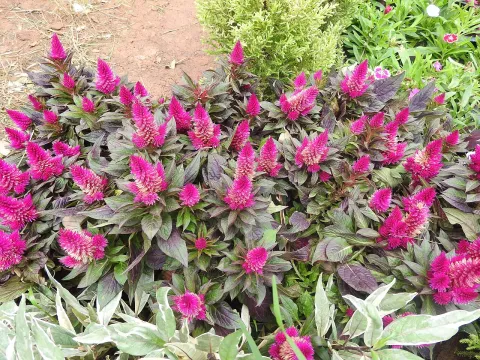
Flowering lasts several months. It begins in early summer and lasts until autumn. The flowers are grouped in panicles and form a downy feather. They attract bees and pollinating insects. Their color varies according to cultivar. The inflorescence can be :
- Yellow, as in Celosia 'Century Yellow' ;
- Purple, as with Celosia 'Red Fire' ;
- Orange, as with Celosia 'Apricot Brandy';
- Pink like Celosia 'Dark Pink plume';
- Violet as in Celosia Caracas.
Is Celosia argentea toxic?
Celosias are not toxic plants. They can be found in any garden, even those frequented by curious children or greedy pets.
Their leaves and flowers are even considered edible. In some African countries, the leaves are frequently eaten cooked, like spinach.
Our care tips
Celosia plumosa are not hardy. Make sure all risk of frost is eliminated before installing your plant outdoors. Outside tropical climates, you'll need to grow it as an annual and replant it every year.
 Watering
Celosia plumosa appreciate moderate, regular watering. Between two applications of water, leave the potting soil to dry out by two or three centimetres. Check this simply by touching the soil.
Always use water at room temperature to avoid thermal shock, which can damage the roots.
Be sure to remove any standing water in the saucer or planter.
 Fertilization
You can stimulate the growth of your plant during its growth phase, in spring and summer, with fertilizer.
Celosia plumosa are greedy plants. Use a flowering plant fertilizer to stimulate growth.
 Prune
Prune
You can remove wilted flowers as they appear.
 Pulling out
Gently remove the plant by pulling at the base of the stem. Then remove the remaining roots to aerate the soil and prevent disease.
 Planting
Once the last spring frosts have passed, you can plant.
Dig a hole slightly larger than the root ball. If planting several plants, space them at least 30 cm apart.
Plant your Celosia plumosa. The top of the rootball should be level with the ground and the collar should not be buried. Fill in with a mixture of garden soil, potting soil and sand.
Water to encourage rooting.
 Sowing
You can start seedlings indoors when the days get longer.
Fill cups with a light, well-draining potting soil, such as seedling and planting soil. Plant 2-3 seeds per pot and press them in 2 cm deep. Water lightly.
Place your seedlings under cover, indoors or in a greenhouse. What's best? A temperature of 18 to 22°C and plenty of light
Water regularly to keep the soil moist, but not soggy. You can also take your seedlings outside for a few hours a day, temperatures permitting, to get them used to the fresh air.
Frequently asked questions
Is celosia plumosa a houseplant?
No. Celosia plumosa is an outdoor plant. It doesn't do well in apartments, which are too dry and dark. Its indoor life is often limited. If you still want to give it a try, be sure to give it plenty of light andprotect it from draughts.
Is celosia plumosa perennial?
Celosia plumosa is an annual plant. It has a short life cycle, generally lasting less than a year. This is even truer outside its natural environment. In fact, the plant cannot tolerate temperatures below 10°C and dies as soon as the first frost appears. However, in tropical climates, when conditions are optimal, celosia plumosa can live for several years.
Can celosia be grown in pots?
Yes, you can grow celosia in a pot, tub or window box. Choose a perforated container to ensure good drainage and nutrient-rich soil. Adapt the size of your pot to the size of your plant (or vice versa) to give your Celosia plumosa room to grow.
Diseases / Threats
Information
- Lifecycle
- Annual
- Foliage
- Evergreen
- Exposure
- Sun
- Substrate
- Humus soil
- Planting methods
- Open groundIn potsIn tubsPlanter
- Categories
- HerbaceousFlowery
- Tags
- BeginnerFloweryCold-sensitive
- Origins
- West AfricaEast AfricaCentral Africa
- Hardiness (USDA)
- 11a (4.4°C ≤ T° < 7.2°C)
- Leaf color
- Light green
- Flower colors
- RedRoseYellowOrangeFuchsiaVioletPale pinkPurpleLilac
Discover plants from the same family
Herbst Iresine
Iresine diffusa f. herbstii
Find out more
Find all our tips in the Monstera application