Our growing guides


414
Results

Begonia 'Ferox
Begonia rex 'Ferox'


Hawaiian palm
Brighamia insignis


Caladium bicolore
Caladium bicolor

Caladium Red Flash
Caladium bicolor 'Red Flash'

Caladium Rosebud
Caladium bicolor 'Rosebud'

Caladium White Christmas
Caladium bicolor 'White Christmas'

Caladium White Queen
Caladium bicolor 'White Queen'


Callisie odorante
Callisia fragrans


Creeping Callisia
Callisia repens

Hybrid Cambria
Cambria hybride


Old man's head cactus
Cephalocereus senilis

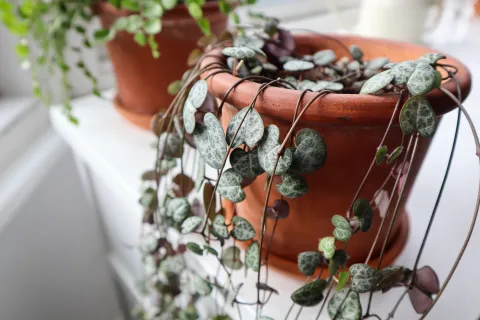
Chain of hearts
Ceropegia woodii
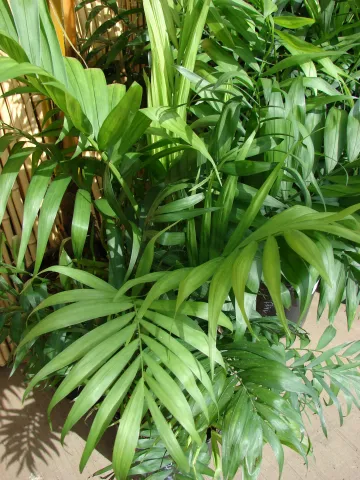
Dwarf palm
Chamaedorea elegans


Chlorophytum 'Bonnie
Chlorophytum comosum 'Bonnie'

Chlorophytum 'Variegatum'
Chlorophytum comosum 'Variegatum'
Indoor plants
Growing indoor plants is nothing new. Three thousand years ago, wealthy Egyptians were already decorating their courtyards with potted plants. Their very early taste for decoration may not be the only reason. Had they already realized that caring for plants provided a sense of well-being?
Houseplants: Description
Wild plants do not exist. In nature, they grow in the tropical forests of South America or Asia and in the desert regions of southern Africa. While they cannot withstand our winters or frost, they adapt to the temperatures in our apartments and to being grown in pots.
There are several types of houseplants: succulents, herbaceous plants, flowering plants, shrubs…They differ in terms of their root system (bulb, rhizome…), their stem (stipe, stem, acaulescent…), their leaves (lanceolate, lobed, elongated…), and their flowers.
If you had started your collection of houseplants in the 15th century, you would have had to be resourceful and spend a fortune to obtain a few seeds from Asia or the New World to sow in your greenhouse. Nowadays, there are countless varieties available, and new cultivars are constantly being developed to highlight the beauty of foliage or extend the brilliance of a bloom.
Which indoor plant should you choose?
The transition from the great outdoors to the living room requires a few adjustments. Each species has its own specific needs when it comes to watering, exposure, and care. For example, Echeveria needs a bright spot to thrive, while ferns prefer shade and humidity.
You should also consider your practical limitations: do you really have room for a two-meter Monstera, or would you be better off with a dwarf snake plant? No matter how much time, skill, or resources you have, you'll always find a plant to bring some greenery into your home. From the hardy ZZ plant to the delicate porcelain flowers, there's bound to be one that's right for you.
Be careful, though. Some houseplants are toxic if touched or ingested. If you share your living room with a baby or a cat that suffers from pica, go for a Calathea instead of an Alocasia!








