Yucca gigantea, elephant's foot Yucca
Yucca gigantea
- Exposures
- Sun, Half-shade
- Hardiness (USDA)
- 9a (-6.7°C ≤ T° < -3.9°C)
- Lifecycle
- Perennial
- Foliage
- Evergreen
- Family
- Asparagaceae
- Genus
- Yucca
- Species
- Yucca gigantea
Other name:Yucca elephantipes
Yucca gigantea belongs to the Asparagaceae family. This plant has a false trunk capable of storing water. A good way to withstand the climate of its native Mexico and forgotten watering.
How to recognize Yucca gigantea, or elephant's foot Yucca?
Yucca gigantea is an upright shrub. Depending on growing conditions, it can reach heights of five to nine meters.
Its light-brown trunk is streaked with white. Single or multiple, it widens at the base as the plant ages, as in beaucarnea recurvata.
A crown of rigid blue-green leaves sits atop the stipe and branches. The long, narrow leaf blades are terminated by a brown spine.
Yucca gigantea flowers in spring and summer. It is adorned with panicles of delicately scented white flowers. Not only do they attract insect pollinators, they also delight gourmets. They are edible, and can be used to garnish dishes.
But only the flowers can be eaten. The shrub is toxic to humans and animals, especially cats. Its leaves contain saponins, a substance that causes severe digestive disorders when swallowed.
Our care tips
Plenty of sun, but without burning the leaves, regular watering, but without drowning the roots... Even if the plant is suitable for beginners, caring for your Yucca gigantea requires rigor and moderation.
 Watering
Water your Yucca gigantea when the potting soil has dried on the surface, for at least three centimetres.
Supply the plant with non-calcareous water at room temperature. Rainwater is best. If you don't have any, you can filter mains water or leave it to stand for 24 hours.
After watering, check the saucer or planter. If stagnant water appears, empty it. It could rot the roots.
 Misting
Spray foliage with non-calcareous water at room temperature. In addition to increasing humidity, misting prevents the appearance of undesirable insects.
 Repotting
Every year in the spring, repot your Yucca gigantea to give it more space.
In a drilled pot, place a layer of clay balls or gravel to promote drainage. The pot should be deeper and larger than the previous one to accommodate the roots and support the growth of your Yucca gigantea.
Choose a special potting soil for green plants or houseplants. After pouring in the substrate, plant your plant. Fill in with soil and tamp down to eliminate any air pockets.
 Cleaning
Dust prevents the plant from photosynthesizing. Clean the leaves of your Yucca gigantea with a soft, clean cloth.
 Prune
Cut back dry stems and wilted leaves. You can use a pair of scissors or pruning shears. Remember to clean them beforehand to prevent the spread of disease.
 Planting
When the risk of frost has passed, it's time to plant.
Yucca gigantea tolerate mild winters. If you live in the south of France or by the sea, you can plant them in the ground.
Choose a bright location, but without direct sunlight. Make sure the soil is well drained. If the soil in your garden is heavy or retains moisture, plant them at the top of a mound or on a slope.
After loosening the soil, dig a hole three times the size of your Yucca giganteapot. Place a layer of clay balls or gravel and transplant. Fill in with a mixture of ordinary soil and sand, or even potting soil for citrus and Mediterranean plants.
Protect the base with a mineral mulch (pebbles, gravel, pebbles, slate, etc.) before watering abundantly.
 Taking cuttings
Cutting is carried out during the strong growth phase, generally in spring and early summer.
Saw off the stipe about ten centimeters above the surface. Keep the head to make a head cutting and then divide the false trunk into sections of about 20 centimetres. When cutting, do so at an angle so that water doesn't pool on the scar, and always use a clean, disinfected tool.
Mark the top and bottom of each graft, either with tape or a discreet pencil mark.
Line a small, perforated pot with potting soil for seedlings and cuttings. Using a pen or pick, make a pilot hole. Plant your cutting, taking care not to bury the leaves.
Place your cutting in a sunny spot and spray the substrate regularly with water to keep it moist.
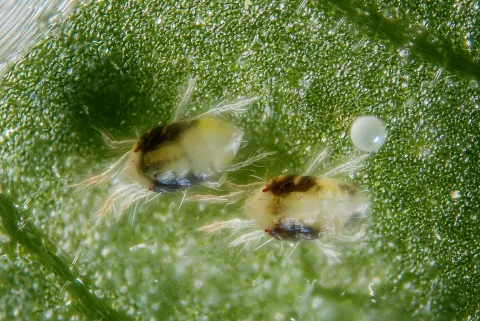
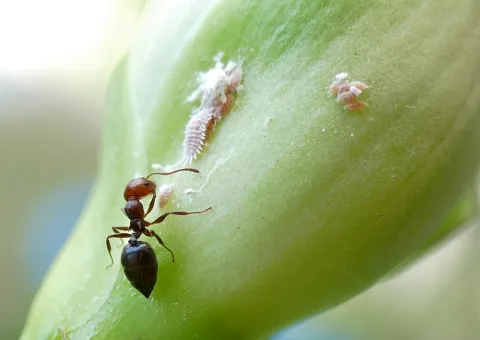
Diseases / Threats
Information
- Lifecycle
- Perennial
- Foliage
- Evergreen
- Exposures
- SunHalf-shade
- Substrates
- Calcareous earthHumus soilSandy soil
- Planting methods
- Open groundIn potsIn tubsPlanter
- Tags
- BeginnerHard to kill
- Origin
- Central America
- Hardiness (USDA)
- 9a (-6.7°C ≤ T° < -3.9°C)
- Leaf color
- Light green
- Flower color
- White
Discover plants from the same family

Aloe Yucca
Yucca aloifolia

Superb Yucca
Yucca gloriosa
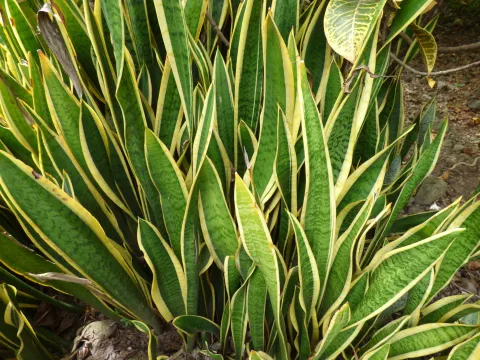
Mother-in-law's language
Sansevieria trifasciata
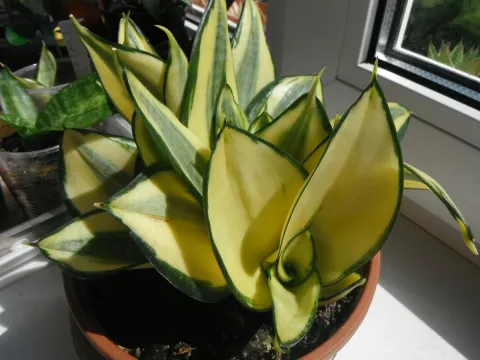
Sansevieria trifasciata 'Golden Hahnii' (Golden Hahnii)
Sansevieria trifasciata 'Golden Hahnii'
Find all our tips in the Monstera application