Lagerstroemia speciosa, the summer lilac
Lagerstroemia speciosa
- Exposures
- Sun, Half-shade
- Hardiness (USDA)
- 8a (-12.2°C ≤ T° < -9.4°C)
- Lifecycle
- Perennial
- Foliage
- Deciduous
- Family
- Lythraceae
- Genus
- Lilac Lagerstroemia
- Species
- Summer lilac Lagerstroemia speciosa
Other names:Munchausia speciosa, Lagerstroemia munchhausia
The summer lilac (Lagerstroemia speciosa) is a shrub in the Lythraceae family native to China and Southeast Asia. Often confused with indian Lilac (Lagerstroemia indica), it is distinguished by its height and its flowers, which darken toward the end of the day.
How can you recognize the summer lilac (Lagerstroemia speciosa)?
The summer lilac (Lagerstroemia speciosa) is a tree with a spreading habit and a rounded crown. While most specimens do not exceed seven meters in height, the largest can reach 20 meters.
On the trunk and branches, the gray bark peels away to reveal an iridescent yellow.
The deciduous foliage is dark green. It turns a deep orange in the fall before falling. The leathery leaves are oval and pointed.
Lagerstroemia speciosa blooms in summer. The panicles of flowers with crinkled petals begin to bloom in July and last through September. The pink, violet, or purple blooms attract bees and other pollinating insects.
Is the Lilac (Lagerstroemia speciosa) toxic?
Lagerstroemia speciosa is not known to be toxic. It is considered safe for humans and animals. However, it is not an edible plant. Ingesting the leaves or flowers can cause digestive upset, particularly in dogs and cats.
Our care tips
Pruning is not mandatory, but it promotes abundant flowering. Your Summer lilac blooms on the current year's growth. Therefore, severe pruning will not affect its flowering.
 Watering
Water your plant when the surface of the substrate is dry to the extent of three centimeters.
Use non-calcareous water at room temperature, such as rainwater or filtered mains water.
After watering, drain off any water that collects in the saucer or planter. It can rot the roots.
 Repotting
Obtain a perforated pot. Make a drainage layer at the bottom with clay balls or gravel.
Cover with a mixture of potting soil and garden soil. The different varieties of Summer lilac like well-drained soil. If yours is heavy, add gravel or river sand to lighten it.
Plant your plant at Lagerstroemia speciosa and fill the pot with your substrate. Water for the first time to eliminate air bubbles and facilitate rooting.
 Fertilization
You can stimulate the growth of your plant during its growth phase, in spring and summer, with fertilizer.
Fertilize your Summer lilac every month. Use a flowering plant fertilizer to stimulate flowering.
 Prune
Use clean, sharp pruning shears.
Start by cutting away dead wood, suckers at the base, and twigs that are too thin or spindly.
Next, remove any branches that cross each other in the center of the shrub to open up the structure.
Finally, you can prune back the branches to stimulate flowering:
- For young plants (that haven't reached their final size): prune back to the previous year's growth.
- On older plants, cut the branches back by one-third.
Always prune at an angle, just above a bud, to encourage regrowth.
 Planting
Soak your Summer lilac to rehydrate the root ball.
Meanwhile, dig a hole twice the size of the root ball. Plant your Summer lilac. The rootball should be level with the soil. Fill in with a mixture of garden soil and universal potting compost. You can add fertilizer if your soil is poor.
Press down and water thoroughly to help the plant take root.
 Taking cuttings
Cutting is carried out during the strong growth phase, generally in spring and early summer.
To propagate your Summer lilac, use a T-shaped cutting.
Find a healthy shoot that is 10 to 15 cm long, free of flowers, and semi-woody—that is, one whose base is beginning to turn into hard wood while the tip remains flexible.
Using a clean, sharp tool, cut your cutting , leaving a small piece of the main branch at the base where the shoot is attached. It is this section of old wood that will allow the future roots to develop vigorously.
Fill a pot with drainage holes or a small pot with potting mix for seeds and cuttings. Make a small hole with your finger or a pen. Plant your Summer lilac. Moisten the potting mix.
Cuttings root better when kept warm and humid. Cover them with a clear plastic bag or a plastic bottle, or place them in a mini-greenhouse.
Ventilate for a few minutes each day and water the soil regularly to keep it moist.
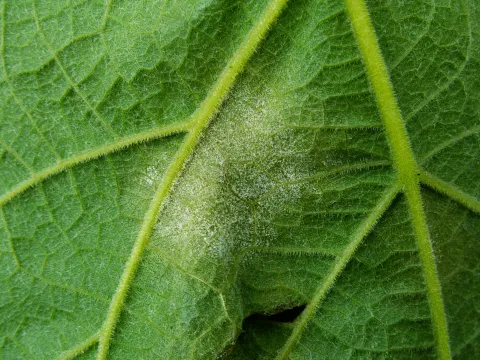
Disease / Threat
Information
- Lifecycle
- Perennial
- Foliage
- Deciduous
- Exposures
- SunHalf-shade
- Substrate
- Humus soil
- Planting methods
- Open groundIn potsIn tubs
- Tags
- BeginnerFlowery
- Origin
- Southeast Asia
- Hardiness (USDA)
- 8a (-12.2°C ≤ T° < -9.4°C)
- Leaf color
- Dark green
- Flower colors
- RoseVioletPurple
Discover plants from the same family
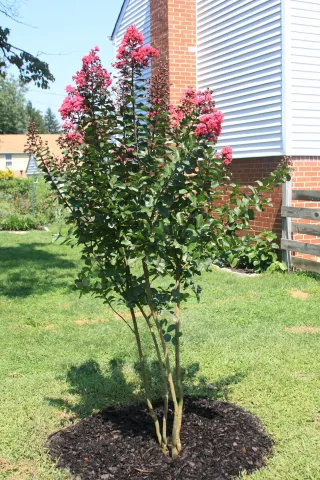
Indian lilac
Lagerstroemia indica
Find out more
Find all our tips in the Monstera application








