Adiantum raddianum, a fern with triangular foliage
Adiantum raddianum
- Exposure
- Half-shade
- Hardiness (USDA)
- 10b (1.7°C ≤ T° < 4.4°C)
- Lifecycle
- Perennial
- Foliage
- Semi-evergreen
- Family
- Pteridaceae
- Genus
- Maidenhair fern Adiantum
- Species
- Raddi's maidenhair fern Adiantum raddianum
Other names:Adiantum rubellum, Adiantum cuneatum
Native to South American forests, Adiantum raddianum belongs to the Pteridaceae family. This plant with its delicate leaves is one of the most common indoor ferns in our latitudes.
How to recognize Adiantum raddianum capillary?
Adiantum raddianum is a bushy fern. It reaches 50 centimetres in height and 80 centimetres in width.
The triangular fronds measure up to 30 centimetres long and 15 centimetres wide. Arched when young, they droop when mature. The dark, almost black stem and rachis contrast with the pale green pinnae. Rounded, they resemble tiny fans.
The type species has given rise to hybrids and cultivars, such as Adiantum raddianum "fragrans", with its light, highly dissected foliage, orAdiantum raddianum "White Fritz Luth", with its white and pale-green fronds.
Like other ferns, Raddi's capillary does not flower. In summer, it produces brown spores. These are found on the underside of the leaf blades, in sporangia clustered at the margin of the pinnules.
Adiantum raddianum is not a toxic plant. But unlike Maidenhair fern, it has no known medicinal properties. It is mainly cultivated for the delicacy of its foliage.
Our care tips
In their natural environment, the Adiantum raddianum are hardy plants. Indoors, they are more difficult to care for due to lack of humidity. To keep your fern in top form, you need to ensure regular watering without overwatering.
 Watering
The Adiantum raddianum like to keep roots cool. Water when the substrate surface is dry (about one centimetre) with water at room temperature. Preferably use non-calcareous water, such as rainwater.
After watering, don 't let the water stagnate in the dish or pot, as it may rot the roots.
 Misting
Your Adiantum raddianum appreciates moisture on its foliage. Spray it regularly with non-calcareous water to improve humidity.
 Repotting
In spring, transfer your Adiantum raddianum to a larger pot, so that it can continue to grow.
Choose a shallow drilled pot. Its width should be slightly greater than that of the root ball. Place a bed of clay balls or gravel at the bottom for drainage.
The Adiantum raddianum plants need light, draining soil. For the substrate, mix potting soil for green plants, sand and peat. You can also use leaf compost, peat moss and sphagnum moss.
Pour in the substrate and plant your Raddi's maidenhair fern, without burying it too deeply.
Place the pot on a saucer filled with clay balls to increase humidity.
 Fertilization
You can stimulate the development of your plant during its growth phase, in spring and summer, with fertilizer.
Apply a liquid fertilizer for green plants to stimulate growth.
 Prune
To encourage the growth of your Raddi's maidenhair fern, prune regularly.
Remove dry fronds with clean, sharp pruning shears.
 Planting
Once the last spring frosts have passed, you can plant.
Choose a shady spot, along a wall or under a tree for example.
Soak the base of your Raddi's maidenhair fern while you dig a hole twice the size of the root ball.
Place a layer of compost at the bottom of the hole. If your garden soil is poor, you can enrich it with peat or leaf compost.
Plant your Raddi's maidenhair fern. The rootball should be level with the soil. Tamp gently and water to encourage rooting.
Apply organic mulch to keep the soil cool and retain moisture.
 Taking cuttings
Propagation by cuttings is carried out during the strong growth phase, generally in spring and early summer.
Take adiantum raddianum out of its pot. Using a clean, sharp knife, remove a rhizome with roots and fronds.
In a pot with drainage holes, sized appropriately for your cutting, pour in a layer of clay pellets to allow excess water to drain.
Next, add a layer of substrate. You can use a commercially available fern potting mix. You can also make your own mixture using potting soil, sand, and heather soil.
Plant your Raddi's maidenhair fern in the center and fill the pot with substrate. Firm it down and water to encourage rooting.
Plant your Raddi's maidenhair fern in the center and fill the pot with substrate. Firm it down and water to encourage rooting.
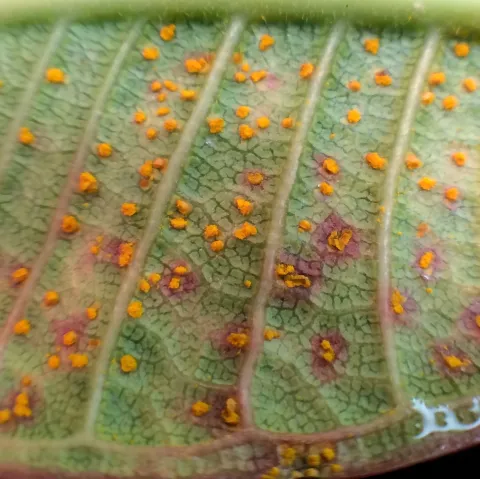
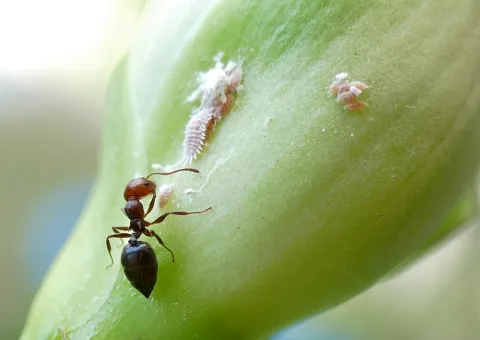
Diseases / Threats
Information
- Lifecycle
- Perennial
- Foliage
- Semi-evergreen
- Exposure
- Half-shade
- Substrates
- Calcareous earthHumus soil
- Planting methods
- Open groundIn pots
- Categories
- IndoorRhizomeHerbaceousHanging plants
- Tags
- Cold-sensitiveThirsty
- Origin
- South America
- Hardiness (USDA)
- 10b (1.7°C ≤ T° < 4.4°C)
- Leaf color
- Light green
Discover plants from the same family
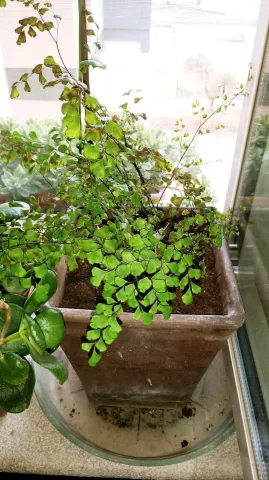
Maidenhair fern
Adiantum capillus-veneris
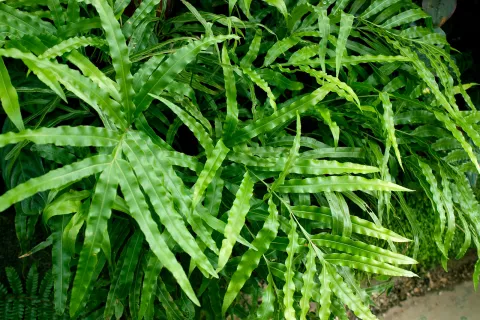
Cretan brake
Pteris cretica


Pteris albolineata
Pteris parkeri
Find out more
Find all our tips in the Monstera application








