Microsorum punctatum, a fern that knows no borders
Microsorum punctatum
- Exposure
- Half-shade
- Hardiness (USDA)
- 9b (-3.9°C ≤ T° < -1.1°C)
- Lifecycle
- Perennial
- Foliage
- Evergreen
- Family
- Polypodiaceae
- Genus
- Microsorum
- Species
- Microsore punctata Microsorum punctatum
Although Microsorum punctatum is found in all tropical regions of the world, it appears that this fern of the Polypodiaceae family is native to New Caledonia. Or Malaysia. Or Mozambique. But no matter where its ancestors first appeared, it has crossed borders to establish itself everywhere—including in our homes.
How can you recognize Microsorum punctatum?
Microsorum punctatum is an epiphytic or terrestrial plant. This bushy fern grows to a maximum height of 60 centimeters and has a similar spread.
It has a rhizome covered with brown scales. Short and creeping, it grows underground.
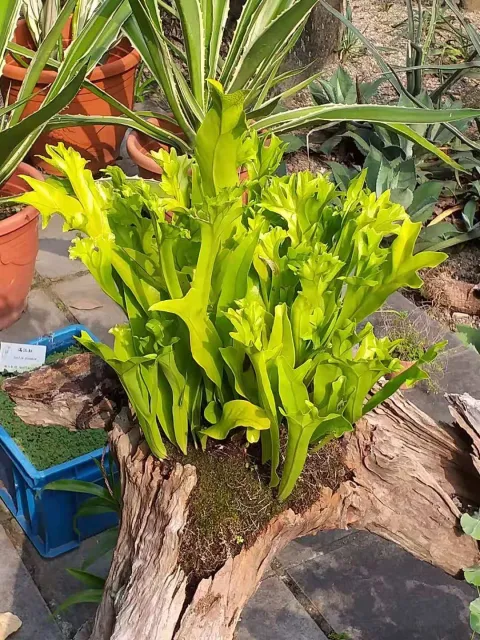
The fronds can reach 55 centimeters long by 5 centimeters wide. They are leathery and pale green, like those of Microsorum musifolium. However, they lack any patterns; only the midrib is distinct. The botanical variety has simple, lanceolate fronds with rounded tips. In cultivars, such microsorum punctatum 'Grandiceps, the frond splits at the apex.
The plant reproduces via its sporangia. These are clustered in ochre-colored sori and distributed randomly on the underside of the fronds.
Microsorum punctatum is not toxic. It is even used in traditional medicine for its diuretic properties.
Our care tips
Microsorum punctatum have a reputation for being easy to care for. This is true, provided they are given a high level of humidity and very regular watering.
 Watering
Allow the rootball to dry out to one centimeter between waterings. Water generously with non-calcareous water (rainwater, for example) at room temperature.
Drain off any excess water left in the dish or planter. It can rot the roots.
 Repotting
In spring, transfer your Microsorum punctatum to a larger pot, so that it can continue to grow.
Get a pot with drainage holes that's larger than the previous one. You can choose a terracotta pot. Since it's heavier, it will prevent your Microsorum punctatum from tipping over.
Fill the pot with a light, well-draining substrate. You can use orchid potting substrate or a substrate for houseplants enriched with peat moss, perlite, and coconut fiber.
Plant your microsorum punctatum in the center and add more substrate. The rhizomes should not be buried too deeply. Water it to help it take root.
Place the pot on a saucer filled with moist clay pellets to increase humidity.
 Fertilization
You can stimulate the development of your plant during its growth phase, in spring and summer, with fertilizer.
Fertilize your Microsorum punctatum with a green plant fertilizer to support growth. Remember to halve the dose prescribed by the manufacturer.
 Prune
To encourage the growth of your Microsorum punctatum, prune regularly.
There's no need to prune the foliage. Remove only dry fronds with clean, sharp pruning shears.
 Taking cuttings
Cutting is carried out during the strong growth phase, generally in spring and early summer.
Locate a rhizome with one or two fronds. Cut it with clean, sharp secateurs.
Prepare a pierced pot. Fill it with a light, well-draining substrate. You can choose orchid potting soil, for example, or make up your own mix of potting soil for green plants, peat moss, coconut fibre and perlite.
Plant your cutting without burying the rhizome deeply. Water to facilitate rooting.
Place the pot on a dish of moist clay balls to increase humidity.
Disease / Threat
Information
- Lifecycle
- Perennial
- Foliage
- Evergreen
- Exposure
- Half-shade
- Substrate
- Humus soil
- Planting method
- In pots
- Tag
- Cold-sensitive
- Origins
- West AfricaSoutheast AsiaOceaniaAustralia
- Hardiness (USDA)
- 9b (-3.9°C ≤ T° < -1.1°C)
- Leaf color
- Light green
Discover plants from the same family
Microsorum punctatum 'Grandiceps
Microsorum punctatum 'Grandiceps'
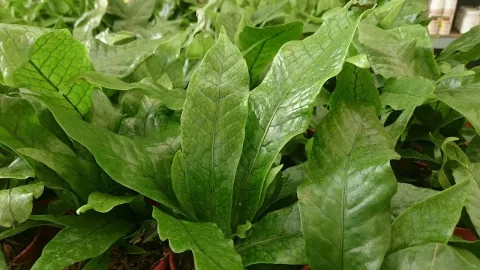
Alligator fern
Microsorum musifolium
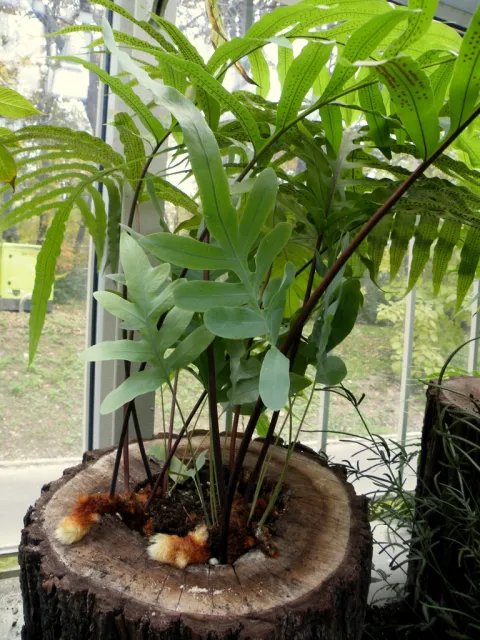
Golden polypod
Phlebodium aureum
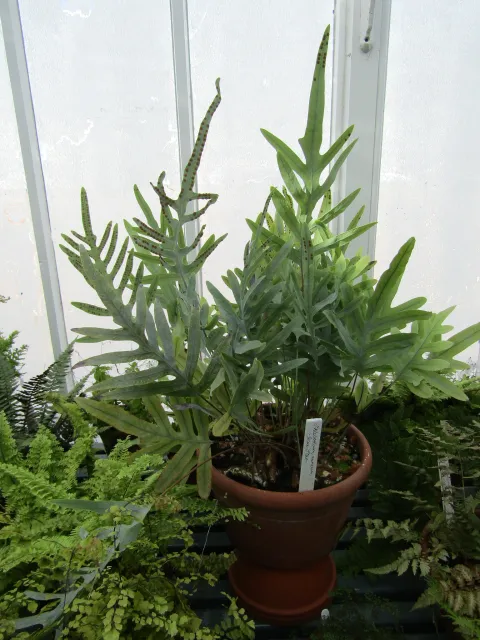
Phlebodium aureum 'Blue Star
Phlebodium aureum 'Blue Star'
Find out more
Find all our tips in the Monstera application