Mentha x rotundifolia, a scented mint
Mentha × rotundifolia
- Exposure
- Half-shade
- Hardiness (USDA)
- 7b (-15°C ≤ T° < -12.2°C)
- Lifecycle
- Perennial
- Foliage
- Deciduous
- Family
- Lamiaceae
- Genus
- Mint Mentha
- Species
- Mentha × rotundifolia
Other name:Mentha spicata var. rotundifolia
Sometimes called round-leaf mint, Mentha rotundifolia is a spontaneous hybrid of Mentha longifolia and fragrant Mint (Mentha suaveolens). A great traveler, it grows wild in certain European countries (France, Belgium, Spain and Italy), as well as in Morocco, Turkey and even Turkmenistan.
How to recognize Mentha x rotundifolia?
Mentha x rotundifolia is an herbaceous perennial. With a height of 60 cm and a spread of 30 cm, it has an upright habit.
The medium-green, oval leaves have toothed margins. They are embossed and downy on the underside. They are opposite each other on either side of the rigid stem. When crumpled, they give off a minty scent.
The small, mauve flowers are grouped in clusters. They appear at the top of the stem in summer. Highly melliferous, they attract bees and other foraging insects. The fruits are achenes grouped in fours.
Mentha rotundifolia is non-toxic. Its aromatic leaves can be used to garnish dishes and drinks. But it's best not to overuse it! Consumed in excessive quantities, this variety of mint causes digestive disorders in humans and animals.
Our care tips
Mentha × rotundifolia are very invasive. We advise against planting them in the ground. Plant them in pots to prevent the roots from spreading. If you wish, you can bury the pot.
 Watering
Before watering, make sure the substrate is two or three centimetres dry by dipping your fingers into the soil. If this is the case, moisten the root ball with non-calcareous water at room temperature.
To avoid drowning the roots, don't leave stagnant water in the dish.
 Repotting
Soak the rootball of your Mentha × rotundifolia in a bucket of water at room temperature.
Obtain a pierced pot. Line the bottom with a drainage layer (clay balls or gravel). Pour in potting soil for herbs.
Plant your Mentha × rotundifolia and add substrate. Stop a few centimetres below the edge to form a watering basin.
Water copiously.
 Fertilization
To promote the growth of your Mentha × rotundifolia, apply fertilizer in spring and summer.
Use a fertilizer for aromatic plants to stimulate growth. Follow the dosage prescribed by the manufacturer to avoid damaging roots or foliage.
 Harvest
Cut a stem about 15 centimeters long and remove the leaves. They can be eaten fresh or dried.
 Prune
Prune
Cut flowers to prevent seeds from spreading.
Using clean pruning shears or a pair of scissors, cut back the stems to 10 cm above the ground to encourage plant renewal.
 Planting
Soak your Mentha × rotundifolia to rehydrate the roots.
Meanwhile, dig a hole three times the size of the root ball. Mentha × rotundifolia can spread where you least expect it. Install a root barrier to prevent the roots from invading your entire garden.
Plant your Mentha × rotundifolia. The root ball should be level with the ground. Fill in with a mixture of universal potting soil and garden soil. Water to encourage growth.
Your Mentha × rotundifolia likes humidity. You can mulch the base to keep the soil cool and limit watering.
 Taking cuttings
Dig up the plant. Locate a rhizome with several stems. Separate it from the other roots. You can use your hands or a clean, sharp tool adapted to the size of the plant.
Pour a drainage layer (clay balls, gravel) into a pierced pot adapted to the size of your cutting. Then add potting soil for herbs.
Plant your Mentha × rotundifolia. Tamp gently and water to encourage rooting.
Disease / Threat
Information
- Lifecycle
- Perennial
- Foliage
- Deciduous
- Exposure
- Half-shade
- Substrate
- Humus soil
- Planting methods
- Open groundIn potsIn tubsPlanter
- Categories
- RhizomeHerbaceous
- Tags
- BeginnerInvasiveHard to killMedicinal
- Origins
- North AfricaWestern AsiaSouthern EuropeWestern Europe
- Hardiness (USDA)
- 7b (-15°C ≤ T° < -12.2°C)
- Leaf color
- Light green
- Flower color
- Violet
Discover plants from the same family
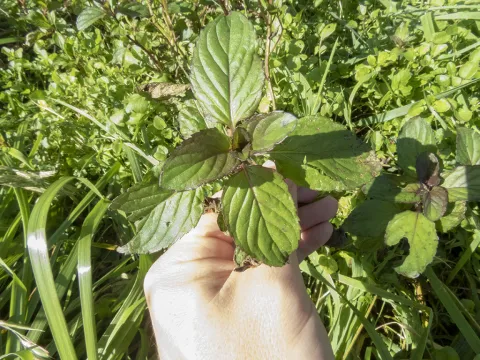
Peppermint
Mentha × piperita
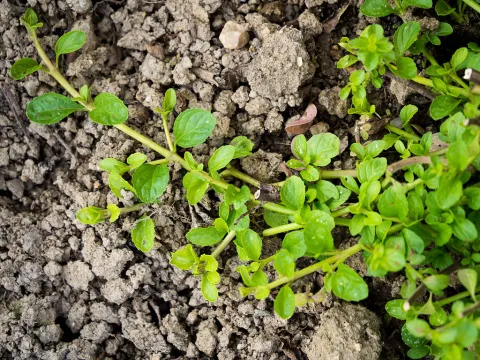
Mint Pouliot
Mentha pulegium
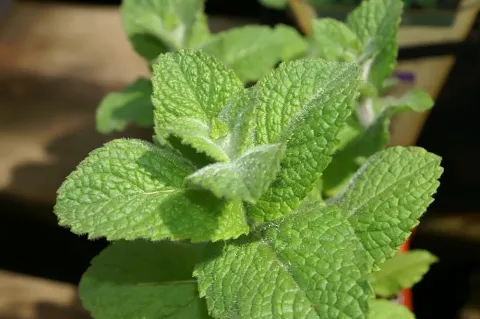
Fragrant mint
Mentha suaveolens
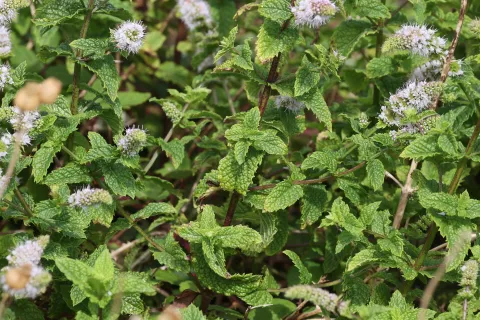
Spearmint
Mentha spicata
Find out more
Find all our tips in the Monstera application