Gerbera jamesonii, a giant daisy
Gerbera jamesonii
- Exposure
- Sun
- Hardiness (USDA)
- 9b (-3.9°C ≤ T° < -1.1°C)
- Lifecycle
- Perennial
- Foliage
- Semi-evergreen
- Family
- Asteraceae
- Genus
- Gerbera
- Species
- Gerbera jamesonii
Gerbera jamesonii is one of the five best-selling cut flowers. If you'd like to make your own colorful bouquets, plant a few specimens in your garden. But beware, this plant of the Asteraceae family is native to South Africa and Eswatini. Not very frost-resistant, it can be grown as an annual in most regions.
How to recognize Gerbera jamesonii?
Gerbera jamesonii is an herbaceous perennial. When in flower, it can reach a height of 75 centimetres.
Green foliage forms a tuft at the foot of the hollow stem. The hairy, leathery leaves grow in a rosette. They are lanceolate and measure up to 40 centimetres long and 14 centimetres wide.
In South Africa, the giant daisy blooms between September and December. In the northern hemisphere, it blooms from April to October. The botanical Gerbera jamesonii produces red or orange flowers. But it has given rise to numerous cultivars with single or double, pink, white or yellow flowers.
At first glance, the flower looks like a single blossom, with numerous narrow petals and a dense center. In reality, it's a capitulum-like inflorescence, made up of a multitude of small flowers. In the center, the flowers are fertile and produce seeds. On the peripheral disk, what we think of as petals are actually rays. They are arranged in two rows and attract pollinators. They act as a landing strip when they come to feed on the center.
Is the giant daisy (Gerbera jamesonii) toxic?
Gerbera jamesonii is not toxic. It poses no danger to humans or animals. On the contrary! Giant daisies are very popular with pollinators.
Our care tips
Gerbera jamesonii are exhausted after a few years. Remember to renew your plants every four years to keep them in full bloom.
 Watering
Water your Gerbera jamesonii when the soil is dry on the surface, using non-calcareous water. The soil should remain slightly moist and fresh, especially in summer. But it must not be waterlogged, otherwise the roots may rot.
 Misting
Spraying non-calcareous water on the underside and tops of foliage improves humidity, repels dust and repels pests.
 Repotting
Every year in the spring, repot your Gerbera jamesonii to give it more space.
Obtain a perforated pot. Place a bed of clay balls or gravel at the bottom for drainage.
Then pour in a layer of soil. Choose a rich substrate, such as potting soil for flowering plants. Plant gerbera jamesonii and fill in.
Press down and water copiously to eliminate air bubbles and facilitate rooting.
 Fertilization
Gerbera jamesonii are greedy plants. Feed them with a flowering plant fertilizer to support their growth.
 Prune
Prune
Remove the flowers when they have wilted to encourage the plant to bloom again.
 Sowing
Once the risk of frost has passed, you can sow your Gerbera jamesonii seeds.
Get a bowl or a dish. Fill it with a mixture of loam (1/3), universal potting soil (1/3) and sand (1/3). You can also use potting soil for seedlings and plantations. Plant your seeds under half a centimetre of soil.
Place your seedlings in a bright, warm spot, where the temperature doesn't fall below 18°C.
Mist the substrate regularly to keep it moist.
Diseases / Threats
Information
- Lifecycle
- Perennial
- Foliage
- Semi-evergreen
- Exposure
- Sun
- Substrate
- Humus soil
- Planting methods
- Open groundIn potsPlanter
- Category
- Flowery
- Tags
- BeginnerFlowery
- Origin
- South Africa
- Hardiness (USDA)
- 9b (-3.9°C ≤ T° < -1.1°C)
- Leaf color
- Light green
- Flower colors
- WhiteRedRoseYellowOrange
Discover plants from the same family
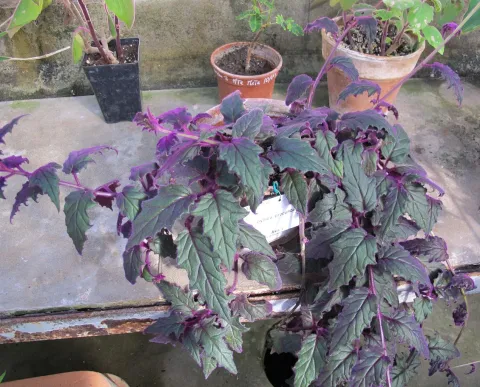
Velvet plant
Gynura aurantiaca
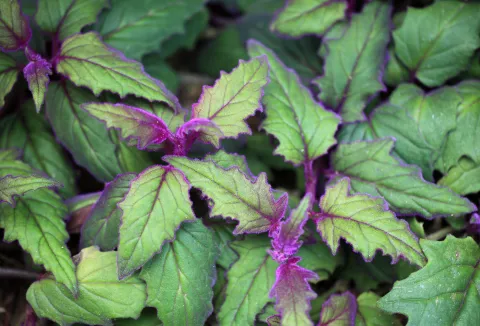
Gynura 'Purple Passion
Gynura aurantiaca 'Purple Passion'
Find all our tips in the Monstera application