Fatsia japonica variegata, a variegated Japanese aralia
Fatsia japonica variegata
- Exposures
- Sun, Half-shade
- Hardiness (USDA)
- 8b (-9.4°C ≤ T° < -6.7°C)
- Lifecycle
- Perennial
- Foliage
- Evergreen
- Family
- Araliaceae
- Genus
- Fatsia
- Species
- Japanese Aralia Fatsia japonica
Fatsia japonica variegata is a cultivar of Fatsia japonica. Appreciated for its green and white foliage, it is less hardy than the botanical variety. But you can still plant it outdoors.
How to recognize Fatsia japonica variegata?
Fatsia japonica variegata is a bushy shrub with a rounded crown. It grows to a maximum height of two meters, with a spread of almost the same length when grown in pots.
The simple, branched trunk supports the limbs. Spirally arranged, they are borne on long petioles.
The palmate leaves have at least seven lobes. Dark green and varnished, they are variegated with white or cream.
Flowering occurs in late summer and autumn. Umbels of cream flowers bloom at the tips of branches. Their nectar attracts bees and other pollinating insects.
When fertilized, the flowers give rise to round berries. Initially green, they turn black as they ripen.
Birds love them. But the fruit is toxic to humans and other animals. The foliage of Fatsia japonica variegata, like its stems, presents no danger.
Our care tips
Resistant to pollution, sea spray and cold, fatsia japonica variegata can be grown outdoors and indoors. If yours is a houseplant, try giving it a winter rest in an unheated room, such as a veranda or loggia. This will speed up its growth.
 Watering
Fatsia japonica variegata require regular watering. But it must be moderate, otherwise the roots will rot. The substrate must remain moist but never soggy.
Water your plant with soft, non-calcareous water at room temperature. Once you've finished, drain off any water that accumulates in the saucer or planter.
Water your plant with soft, non-calcareous water at room temperature. Once you've finished, drain off any water that accumulates in the saucer or planter.
 Misting
Your Fatsia japonica variegata is a tropical plant. It appreciates humidity. Spray its foliage with water at room temperature.
Avoid calcareous water, which leaves white marks on the leaves. Prefer rainwater or filtered water.
 Repotting
Every year in the spring, repot your Fatsia japonica variegata to give it more space.
Obtain a perforated pot. Line the bottom with clay balls or gravel to improve drainage.
Then pour in a layer of potting soil for green plants. You can lighten it with a little river sand or vermiculite. Plant your Fatsia japonica variegata in the center and fill the pot with the substrate.
Water copiously to ensure the roots adhere to the soil.
You can place the pot on a saucer of moist clay balls to increase humidity.
 Fertilization
To promote the growth of your Fatsia japonica variegata, apply fertilizer in spring and summer.
To promote the growth of your Fatsia japonica variegata, use a green plant fertilizer.
 Prune
Remove dead leaves. Using clean, sharp pruning shears, trim back dead branches. You can also shorten the stems to control the shape of your Fatsia japonica variegata
 Planting
When the risk of frost has passed, it's time to plant.
Choose a location that is sunny but sheltered from the wind. It should be at least one meter away from other trees and walls to allow your Fatsia japonica variegata to grow.
Soak the rootball. Meanwhile, dig a hole two to three times the size of the rootball. Plant fatsia japonica variegata in the center and fill in. Don't hesitate to amend the soil with sand and compost if it's poor or heavy.
Water generously to encourage rooting. You can mulch the soil with mineral or organic matter to keep it cool. This will reduce the need for watering.
 Taking cuttings
Cutting is carried out during the strong growth phase, generally in spring and early summer.
Dig up one of the shoots forming at the foot of the main plant. Remove the leaves at the base.
Plant your graft in a pierced pot lined witha rich, light substrate, such as potting soil with sand.
Install the cutting in a mini greenhouse. If you don't have one, you can cover it with a translucent bottle. Remember to aerate regularly and mist the soil if it dries out.
Diseases / Threats
Information
- Lifecycle
- Perennial
- Foliage
- Evergreen
- Exposures
- SunHalf-shade
- Substrate
- Humus soil
- Planting methods
- Open groundIn potsIn tubs
- Category
- Shrub
- Tags
- FloweryHardyThirsty
- Origin
- East Asia
- Hardiness (USDA)
- 8b (-9.4°C ≤ T° < -6.7°C)
- Leaf colors
- Dark greenWhiteCream
- Flower color
- Cream
- Fruit color
- Black
Discover plants from the same family
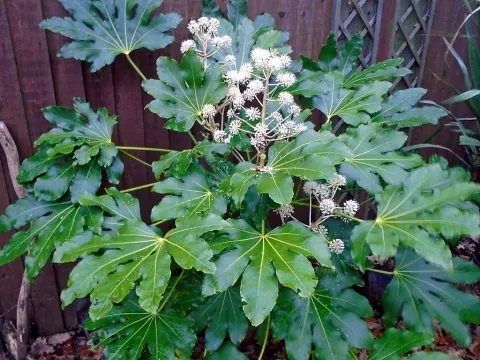
Japanese Aralia
Fatsia japonica
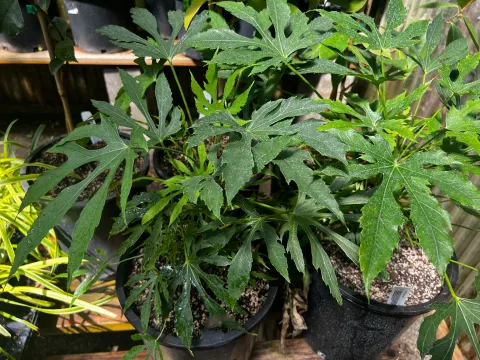
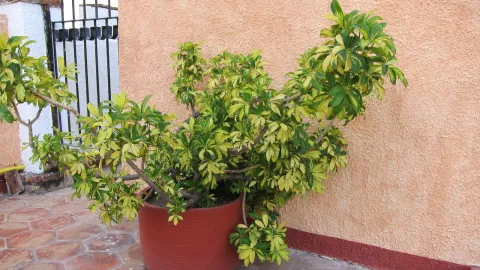
Schefflera arboricola
Heptapleurum arboricola
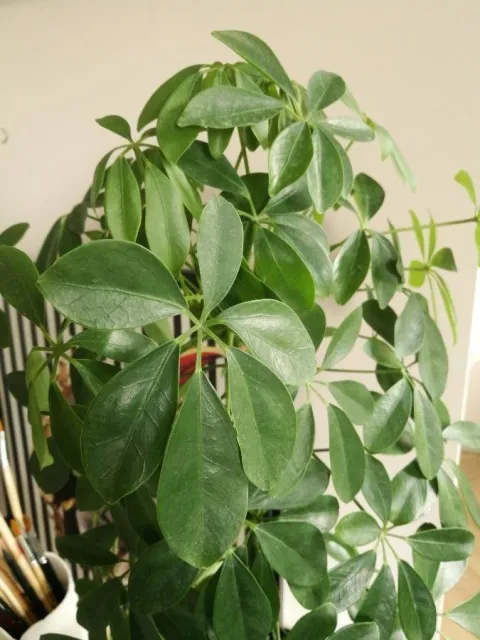
Schefflera actinophylla
Heptapleurum actinophyllum
Find out more
Find all our tips in the Monstera application