Euphorbia trigona 'Rubra', the burgundy false candle cactus
Euphorbia trigona 'Rubra'
- Exposure
- Sun
- Hardiness (USDA)
- 11b (7.2°C ≤ T° < 10°C)
- Lifecycle
- Perennial
- Foliage
- Evergreen
- Family
- Euphorbiaceae
- Genus
- Euphorbia
- Species
- Euphorbia trigona
The Euphorbia family comprises over 2,000 different species. These include horticultural varieties such as Euphorbia trigona 'Rubra'. Like the botanical variety, euphorbia trigona, this cultivar looks like a candle cactus. But it stands out for its burgundy foliage and stems.
How to recognize Euphorbia trigona 'Rubra'?
Euphorbia trigona 'Rubra' grows up to 1.5 meters tall. It is a succulent plant with a bushy edge.
Euphorbia trigona 'Rubra' is easily recognized by its branched, three-sided stems. Green with red reflections, they become completely burgundy in bright sunlight.
The stems are embellished with purple, teardrop-shaped leaves and brown thorns. They are arranged in vertical rows at the stem crest.
Like many cultivars, Euphorbia trigona 'Rubra' does not flower. Even in full soil and in a favorable climate, it does not produce flowers.
Euphorbia trigona 'Rubra' is a poisonous plant. Its sap contains latex, which is irritating to the skin and mucous membranes. But its thorns generally keep curious children and greedy animals at bay.
Our care tips
Euphorbia trigona 'Rubra is an easy-care plant. But, contrary to appearances, it's not a cactus. It needs regular watering and a little fertilizer to thrive.
But be careful! The plant contains latex, which is irritating to the skin, and is adorned with thorns. Remember to wear gloves when handling it.
 Watering
Euphorbia trigona 'Rubra live in desert regions. They tolerate drought, but dread excess water. The substrate must remain completely dry for a few days between waterings.
When watering, use water at room temperature to avoid stressing the plant.
Roots run deep. You therefore need to moisten the entire root ball. Pour in water until the excess runs out through the drainage hole. Stop watering and empty any water that accumulates in the saucer or planter. It may rot the roots.
 Misting
Euphorbia trigona 'Rubra grow in arid regions and do not like humidity. No need to spray them.
 Repotting
In spring, transfer your Euphorbia trigona 'Rubra' to a larger pot, so that it can continue to grow.
Take advantage of repotting to offer your plant a pot in which its roots will flourish and moisture will not settle.
Choose a terracotta pot with holes. Pour a bed of gravel or, better still, pieces of pozzolan into the bottom. Then add a draining potting soil such as a special substrate for cacti and succulents, or a mixture of garden soil and sand. For even more nutrients, top up with leaf compost if available.
After removing your specimen, carefully untangle its roots and install it in its new location. Cover with potting soil and tamp down. Finish with a thin layer of clay balls or pozzolan on the surface to facilitate drainage.
To avoid the risk of stagnant water, avoid saucers and planters. If you use a planter, line the bottom with gravel or clay pebbles.
 Fertilization
You can stimulate the development of your plant during its growth phase, in spring and summer, with fertilizer.
Fertilize your Euphorbia trigona 'Rubra' with a fertilizer for cacti and succulents. You can also use a fertilizer for green plants, provided you halve the dose indicated by the manufacturer.
 Taking cuttings
Cutting is carried out during the strong growth phase, generally in spring and early summer.
Take thetip of a healthy stem with a clean, sharp knife. Your cutting should be at least fifteen centimetres long.
Run your cutting under water and spray the wound with water to stop the latex leaking out.
Leave your stem to air-dry until a wedge forms. This takes between 48 hours and two weeks.
Obtain a pierced terracotta pot. Fill it with sand or potting soil for cacti and succulents.
Plant your cutting deeply so that it doesn't tilt or fall over. You'll need to bury it at least eight centimetres deep.
Place your new plant in a room with a minimum temperature of 20 degrees. Find a bright spot away from direct sunlight.
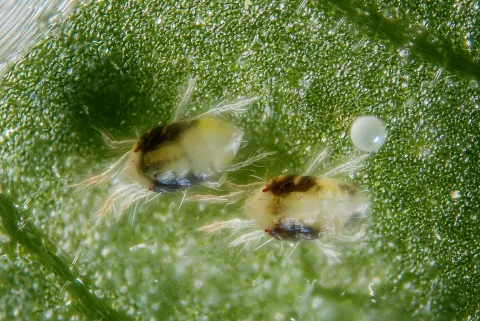
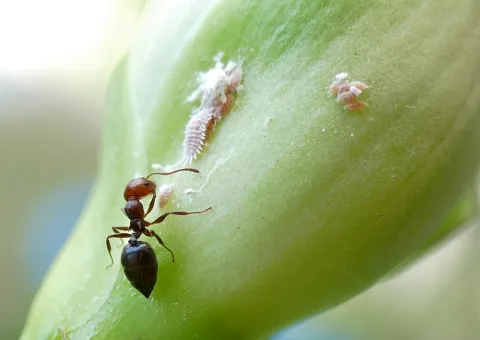
Diseases / Threats
Information
- Lifecycle
- Perennial
- Foliage
- Evergreen
- Exposure
- Sun
- Substrates
- Calcareous earthSandy soil
- Planting methods
- In potsIn tubs
- Tags
- BeginnerLarge potToxic
- Origin
- Central Africa
- Hardiness (USDA)
- 11b (7.2°C ≤ T° < 10°C)
- Leaf colors
- BrownPurple
Discover plants from the same family


Christmas star
Euphorbia pulcherrima

Milky Euphorbia
Euphorbia lactea

Euphorbia lactea 'White Ghost
Euphorbia lactea 'White Ghost'
Find out more
Find all our tips in the Monstera application








