Echeveria prolifica, an exuberant succulent
Echeveria prolifica
- Exposures
- Sun, Half-shade
- Hardiness (USDA)
- 10a (-1.1°C ≤ T° < 1.7°C)
- Lifecycle
- Perennial
- Foliage
- Evergreen
- Family
- Crassulaceae
- Genus
- Echeveria
- Species
- Echeveria prolifica
Echeveria prolifica comes to us from the arid, semi-desert regions of Mexico. This variety of the Crassulaceae family stands out for its foliage and rapid growth. In pots or in the wild, it multiplies to cover the earth with its colors.
How to recognize Echeveria prolifica?
Echeveria prolifica grows to a height of 15 to 20 centimetres. It grows in rosettes two to three centimetres in diameter. This compact perennial has long stolons. These take root and produce new plants.
The leaves of this succulent are fleshy, oval and tapered at the tip. Green to blue, they turn pink when they receive sufficient light. As with echeveria elegans and echeveria agavoides, the foliage is covered with bloom. This thin, waxy layer protects the plant from the sun and wind, which are very intense in its native environment.
Echeveria prolifica flowers in spring and summer. Bell-shaped yellow flowers bloom on a 25-centimetre stem. They develop bracts which, when they fall off, root to give rise to a new plant.
Echeveria prolifica is non-toxic. You can therefore adopt it if you live with pets or young children.
Our care tips
Echeveria prolifica are non-hardy succulents. In most regions, they are grown indoors. But this succulent loves the sun. If you have a garden, a balcony or even a windowsill, put it outside in summer. It will appreciate gradual exposure to natural light. However, keep it out of direct sunlight, which can burn the leaves.
 Watering
Succulents store water in their leaves and roots. They don't need to be watered frequently. On the contrary, too much water or poorly draining soil can rot the roots.
To avoid killing your plant, water it only when the substrate is two or three centimetres dry in summer and completely dry during the cold seasons. Preferably use rainwater or non-calcareous water at room temperature.
Finally, make sure there's nostanding water in the dish.
 Misting
Echeveria prolifica grow in arid regions and do not like humidity. No need to spray them.
 Repotting
Every year in the spring, repot your Echeveria prolifica to give it more space.
Choose a pierced terracotta pot two or three centimetres larger than the previous one. Place a bed of gravel or clay balls at the bottom to optimize drainage. Fill to within two or three centimetres of the rim with potting soil for cacti and succulents.
Before repotting your Echeveria prolifica, clean it: remove dry leaves from the base and wilted flowers. Make a hole in the center of the pot, using your fingers or a pen, and plant your succulent. All roots should be buried.
Press down to remove air bubbles. You can cover the surface with perlite or sand. This will prevent direct contact between substrate and foliage.
 Fertilization
To promote the growth of your Echeveria prolifica, apply fertilizer in spring and summer.
Apply a cactus and succulent fertilizer to support growth. Be sure to follow the manufacturer's recommended dosage to avoid damaging the foliage.
 Prune
Remove wilted flower stems. Cut flush with a clean, sharp tool (scissors, pruning shears, etc.), taking care not to damage the leaves.
 Planting
When the risk of frost has passed, it's time to plant.
Select a sunny location. If possible, choose a slope or embankment: water will run off more easily and roots will be less likely to rot.
Dig a hole the size of the root ball. Plant your Echeveria prolifica in the middle. Fill with a mixture of potting soil and sand. Pack by hand and water to eliminate air pockets.
 Taking cuttings
Cutting is carried out during the strong growth phase, generally in spring and early summer.
Locate one of the young shoots that has formed at the foot of the main plant. Take care to remove it with its roots.
Obtain a pierced terracotta pot. This material promotes uniform drying of the substrate and reduces the risk of root rot. Pour a bed of clay balls or gravel in the bottom. If the hole is too large and the marbles escape, fill it with a pebble.
For the substrate, prepare a mixture of one-third soil, one-third potting compost and one-third sand. Line the pot with it. Plant your cutting in the center and press down.
Place your succulent in a room where the temperature doesn't fall below 18 degrees. Find a bright spot away from direct sunlight, behind a curtain for example.
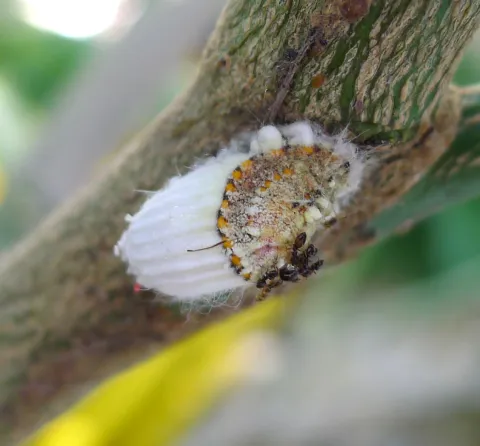
Disease / Threat
Information
- Lifecycle
- Perennial
- Foliage
- Evergreen
- Exposures
- SunHalf-shade
- Substrates
- Humus soilSandy soil
- Planting methods
- Open groundIn potsPlanter
- Tags
- BeginnerHard to kill
- Origin
- Central America
- Hardiness (USDA)
- 10a (-1.1°C ≤ T° < 1.7°C)
- Leaf colors
- Light greenRose
- Flower color
- Yellow
Discover plants from the same family


Find all our tips in the Monstera application








