Dracaena reflexa var. angustifolia, a colorful dragon tree
Dracaena reflexa var. angustifolia
- Exposures
- Sun, Half-shade
- Hardiness (USDA)
- 10a (-1.1°C ≤ T° < 1.7°C)
- Lifecycle
- Perennial
- Foliage
- Evergreen
- Family
- Asparagaceae
- Genus
- Dracaena
- Species
- Dracaena reflexa
Other name:Dracaena marginata
Dracaena reflexa var. Angustifolia originates from Madagascar. Previously known as Dracaena marginata, this variety of Dracaena reflexa belongs to the Asparagaceae family. It is distinguished by its two-toned leaves and trunk.
How can you recognize Dracaena reflexa var. Angustifolia?
Dracaena reflexa var. Angustifolia is an upright shrub. When mature, it grows to a height of two to five meters.
The twisted trunk and branches bear leaf scars. Each leaf that dies leaves a lighter mark on the brown wood.
The leaf blades grow in a spiral pattern at the tips of the branches and the trunk. The leaves are lanceolate and recurved. They are green with red edges.
In the wild, Dracaena reflexa var. Angustifolia blooms, adorned with clusters of white flowers. This phenomenon is much rarer when grown indoors.
The flowers develop into round, brown fruits. The berries turn orange as they ripen.
Dracaena reflexa var. Angustifolia is considered an air-purifying plant. However, it is primarily toxic to dogs, cats, and humans. Make sure your pets and young children do not ingest its leaves!
Our care tips
Plenty of sun, but without burning the leaves, regular watering, but without drowning the roots... Even if the plant is suitable for beginners, caring for your Song of India requires rigor and moderation.
 Watering
Dragon Trees reflexa var. Angustifolia They prefer consistent but moderate moisture. Before watering your plant, check to see if it needs water by touching the surface of the potting soil. If the top two to three centimeters are dry, you can water it.
If possible, use soft water such as rainwater or filtered water.
Also make sure that water does not pool in the saucer or planter.
If possible, use soft water such as rainwater or filtered water.
Also make sure that water does not pool in the saucer or planter.
 Misting
Your Song of India is a tropical plant. It appreciates humidity. Spray its foliage with water at room temperature.
Avoid calcareous water, which leaves white marks on the leaves. Prefer rainwater or filtered water.
 Repotting
Every year in the spring, repot your Dracaena reflexa var. Angustifolia to give it more space.
Choose a pierced pot slightly larger than the previous one. First lay a bed of clay balls or gravel to optimize drainage. Top it off with a special potting soil for green plants. This will provide your shrub with nutrients, at least for a few weeks.
You can place the pot in a saucer filled with moist clay balls. This will improve the humidity without risk to the roots.
 Cleaning
To improve photosynthesis, clean the foliage with a damp sponge.
 Prune
Remove dry leaves. They exhaust the plant and slow its growth. If you use an instrument (pruning shears, scissors), make sure it's clean.
 Planting
When the risk of frost has passed, it's time to plant.
Dragon Trees reflexa var. Angustifolia tolerate mild winters. If you live in the south of France or by the sea, you can plant them in the ground.
Choose a bright location, but without direct sunlight. Make sure the soil is well drained. If the soil in your garden is heavy or retains moisture, plant them at the top of a mound or on a slope.
After loosening the soil, dig a hole three times the size of your Song of India's pot. Place a layer of clay balls or gravel and transplant. Fill in with a mixture of ordinary soil and sand, or even potting soil for citrus and Mediterranean plants.
Protect the base with a mineral mulch (pebbles, gravel, stones, slate, etc.) before watering abundantly.
 Taking cuttings
Propagation by cuttings is carried out during the strong growth phase, generally in spring and early summer.
Cut off the end of a branch about fifteen centimeters long. Remove all leaves except the top pair.
Prepare a pierced pot with a bed of clay balls at the bottom for drainage. Pour in a mixture of sand and potting soil. Preferably use a horticultural or seedling potting soil, as these are rich in nutrients. Plant your scion in this pot.
Place your cutting in a bright spot away from direct sunlight and water.
Diseases / Threats
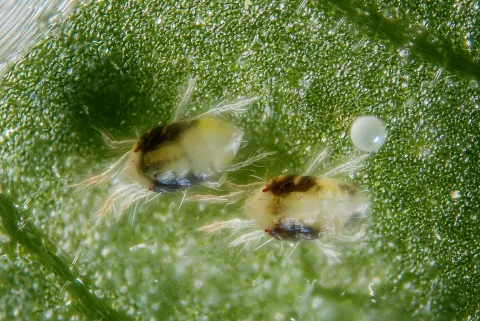
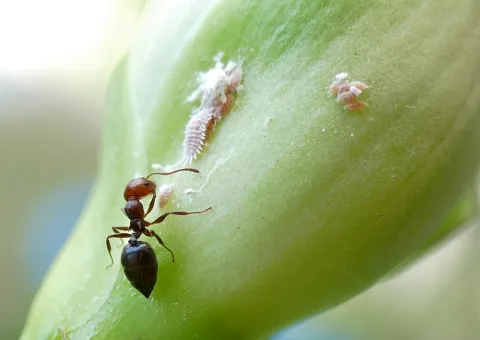
Information
- Lifecycle
- Perennial
- Foliage
- Evergreen
- Exposures
- SunHalf-shade
- Substrates
- Calcareous earthHumus soilSandy soil
- Planting methods
- Open groundIn potsIn tubsPlanter
- Categories
- ShrubIndoorHerbaceous
- Tags
- BeginnerHard to kill
- Origin
- Indian Ocean
- Hardiness (USDA)
- 10a (-1.1°C ≤ T° < 1.7°C)
- Leaf colors
- Dark greenPale pink
- Flower color
- Pale yellow
- Fruit colors
- OrangeBrown
Discover plants from the same family
Find out more
Find all our tips in the Monstera application