Codiaeum variegatum Petra, a green, yellow and red croton
Codiaeum variegatum 'Petra'
- Exposures
- Sun, Half-shade
- Hardiness (USDA)
- 12a (10°C ≤ T° < 12.8°C)
- Lifecycle
- Perennial
- Foliage
- Evergreen
- Family
- Euphorbiaceae
- Genus
- Croton Codiaeum
- Species
- Croton Codiaeum variegatum
Codiaeum variegatum 'Petra' is not native to Jordan. It is a cultivar, a variety obtained in the laboratory from the botanical Codiaeum variegatum. But its green and yellow foliage is dotted with red, reminiscent of the stones of the famous shrine.
How to recognize the Petra croton, Codiaeum variegatum 'Petra'?
The Petra croton reaches a height of 1.5 meters. It is an upright perennial shrub with a single or branched stem.
Its glossy, leathery leaves are broader than those of other varieties. Oblong, with pointed tips. The green blades are enhanced by yellow veins and red margins.
Codiaeum variegatum 'Petra' is grown for its decorative, evergreen foliage. Indoors, the plant rarely flowers. But don't be surprised if star-shaped yellow flowers appear.
If you let them fade, the flowers turn into fruit: a round, black berry.
Some studies claim that the Petra croton has depolluting properties. Although Codiaeum variegatum can purify your home, it is toxic to you, your children and your pets. Its sap contains a highly irritating white latex. It causes mouth burns when ingested and eczema if it comes into contact with the skin. Always wear gloves when handling your plant!
Our care tips
Once you've installed your Croton Petra, don't move it again. The plant hates change. Give it a bright spot, but don't stick it up against the glass. In winter, the temperature difference between day and night could kill the plant.
 Watering
The Petra Crotons can withstand neither drought nor excess water.
Before watering, check the condition of the potting soil. The surface must be at least one centimeter dry.
Before watering, check the condition of the potting soil. The surface must be at least one centimeter dry.
 Misting
The Petra Crotons like humidity. Mist your plant with non-calcareous water at room temperature. Avoid spraying tap water. It leaves white marks on the foliage.
As well as improving hygrometry, spraying helps to prevent pest infestations.
 Repotting
In spring, transfer your Codiaeum variegatum 'Petra' to a larger pot, so that it can continue to grow.
Obtain a pierced pot two or three times the size of the previous one. Line the bottom with clay balls or gravel to promote drainage.
Then pour in a layer of potting soil for green plants. Plant your Croton Petra in the center of the pot and add substrate.
Press down to remove air bubbles and water with room-temperature water to accelerate rooting.
The plant is toxic. Remember to wear gloves and wash your hands after repotting.
 Fertilization
You can stimulate the development of your plant during its growth phase, in spring and summer, with fertilizer.
Give your Croton Petra a green plant fertilizer to support its growth.
Follow the instructions on the product! If you overdose, you could damage its foliage.
 Cleaning
Dust accumulating on the leaves slows down the photosynthesis process. To keep your Croton Petra growing, clean the leaf blades with a damp sponge.
Remember that the Petra Crotons are toxic. Wear gloves or wash your hands after handling your plant.
Remember that the Petra Crotons are toxic. Wear gloves or wash your hands after handling your plant.
 Prune
The Petra Crotons are toxic. Wear gloves when handling them.
If you want to control the shape of your Croton Petra, prune branches that have grown too large using clean, sharp pruning shears.
Has your plant lost a lot of leaves? Cut the bare stems back to the base. Always cut above a node to facilitate healing.
 Taking cuttings
Propagation by cuttings is carried out during the strong growth phase, generally in spring and early summer.
Remove a lateral stem of about fifteen centimeters with clean, sharp pruning shears. The plant is toxic. Wear gloves during the operation and wash your hands afterwards.
Remove the leaves at the bottom and keep only one or two pairs at the top. You can dip the tip in cutting hormone to increase your chances of success.
Plant your graft in a pierced pot filled with potting soil for seedlings and cuttings. Bury the stem, but not the leaves.
Stem cuttings are done in a smothered state. Cover the pot with a translucent plastic bag or place it in a mini greenhouse. Place in semi-shade, in a room with a temperature of at least 24 degrees.
Aerate for a few minutes each day, and spray the substrate if it dries out.
Diseases / Threats
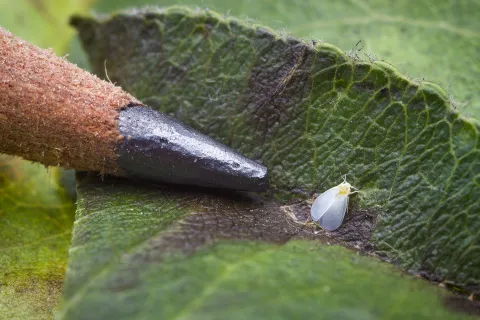
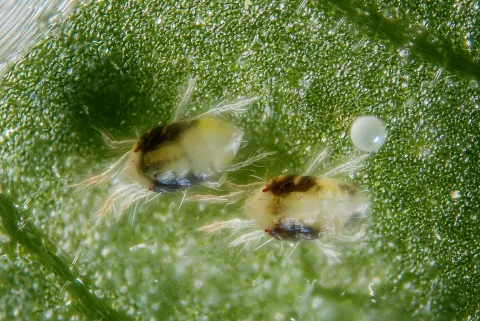
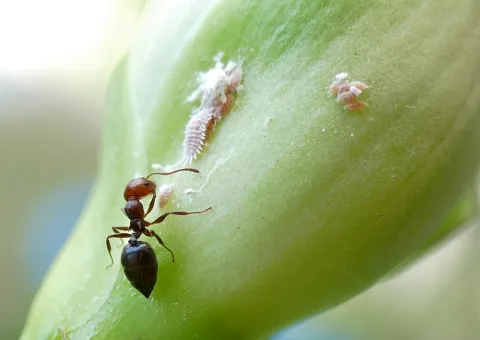
Information
- Lifecycle
- Perennial
- Foliage
- Evergreen
- Exposures
- SunHalf-shade
- Substrate
- Humus soil
- Planting method
- In pots
- Tags
- Cold-sensitiveThirstyToxic
- Origins
- Southeast AsiaOceania
- Hardiness (USDA)
- 12a (10°C ≤ T° < 12.8°C)
- Leaf colors
- Dark greenRedYellow
- Flower color
- Yellow
- Fruit color
- Black
Discover plants from the same family

Croton
Codiaeum variegatum

Gold Dust Croton
Codiaeum variegatum 'Gold Dust'

Croton Norma
Codiaeum variegatum 'Norma'

Christmas star
Euphorbia pulcherrima
Find all our tips in the Monstera application








