Plumbago zeylanica, the white-flowered plumbago
Plumbago zeylanica
- Exposure
- Sun
- Hardiness (USDA)
- 11b (7.2°C ≤ T° < 10°C)
- Lifecycle
- Perennial
- Foliage
- Semi-evergreen
- Family
- Plumbaginaceae
- Genus
- Plumbago
- Species
- Plumbago zeylanica
Other names:Plumbago scandens, Plumbago americana, Plumbago canescens, Plumbago floridana, Plumbago juncea
Despite its name, Plumbago zeylanica is not only native to ancient Ceylon. This tropical shrub can be found in many warm regions, from South America to Asia, Africa and Australia. Appreciated for its elegant, generous white blossoms all summer long, it adapts easily to a variety of garden uses, both in pots and in the ground.
How to recognize the Ceylon plumbago (Plumbago zeylanica)?
Plumbago zeylanica is a shrub that grows up to 2 meters tall and has the same wingspan. Depending on growing conditions, it can adopt a bushy, climbing or creeping habit.
The bright green leaves are larger than those of Plumbago auriculata. They reach 9 cm in length and 4 cm in width. They may be oval, elliptical or spatulate. In the tropics, Plumbago zeylanica's foliage lasts all year round. In fact, it is semi-persistent and disappears when the mercury falls below 0°C.
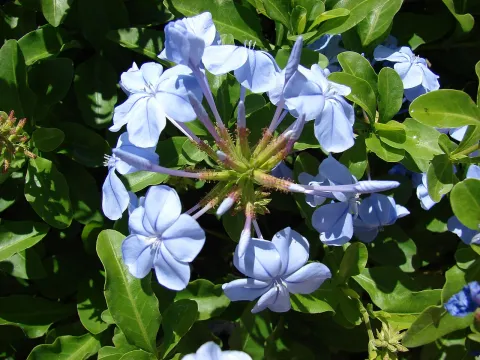
In summer, the shrub is adorned with immaculate white, five-petaled flowers. They are grouped in bunches at the ends of the branches. Once flowering is complete, they give way to capsule-shaped fruits containing small, reddish-brown seeds.
Is Ceylon plumbago (Plumbago zeylanica) toxic?
Plumbago zeylanica is not considered a toxic plant. It is even said to have medicinal virtues, notably antiseptic.
Our care tips
If you have decided to trellis your Ceylon plumbago against a wall or pergola, install it at least 30 centimetres from its support. This will give it room to develop its stump.
 Watering
Plumbago zeylanica It likes to keep its soil moist, but not soggy. Water when the top centimeter of potting soil has dried out.
Use room-temperature, low-mineral water. You can, for example, collect rainwater.
After watering, remove any excess water that has pooled in the saucer or planter. Plumbago zeylanica hates having its roots sitting in water.
 Repotting
Obtain a pierced pot. It should be slightly larger than the previous container or the root ball of your Ceylon plumbago.
Line the bottom with clay balls or gravel to improve drainage. Then pour in potting soil for Mediterranean plants. Plant your Ceylon plumbago and add substrate until you reach the top of the root ball. Remember to leave a few centimetres between the soil and the top of the pot to form a watering trough. Water to help the plant take root.
Have you decided to trellis your Ceylon plumbago on a trellis, wall or pergola? You'll need to guide and tie the branches so that they take hold. Use flexible ties (raffia, special plant ties) to avoid damaging the branches.
 Fertilization
To promote the growth of your Plumbago zeylanica, apply fertilizer in spring and summer.
Apply a liquid fertilizer for flowering plants to promote the appearance of flower buds.
 Prune
Prune
Pruning is not compulsory, but it stimulates flowering and allows you to work out the shape of your Ceylon plumbago. Using a clean, sharp instrument:
- Remove old wood and dry stems;
- Cut back stems to 30 cm from the base.
 Planting
Soak the root ball of your Ceylon plumbago to rehydrate it. Meanwhile, dig a hole three times as big. If you're planting several specimens, space them at least 1.5 m apart.
Place pebbles, gravel or clay balls at the bottom to improve drainage, and a layer of garden soil enriched with compost or potting soil. Plant your Ceylon plumbago. The top of the rootball should be level with the ground.
Fill the planting hole with a mixture of garden soil and compost (or universal potting soil). You can add sand or perlite if your soil is heavy.
If you have chosen to trellis your Ceylon plumbago, guide the branches onto the support. They can't hang on their own. You need to tie them up with flexible ties (raffia, special plant ties).
 Taking cuttings
Cutting is carried out during the strong growth phase, generally in spring and early summer.
Locate a young shoot of the year, still supple but without flower buds.
Using a clean, sharp tool (pruning shears, scissors, etc.), remove a section at least 10 cm long. Cut just above a node.
You can dip the end of the stem in cuttings hormone to increase your chances of success.
Remove the lower leaves. Keep only one or two leaves at the top.
Plant your graft in a pierced pot lined witha rich, light substrate, such as potting soil with sand.
Install the cutting in a mini greenhouse. If you don't have one, you can cover it with a translucent bottle. Remember to aerate regularly and mist the soil if it dries out.
Frequently asked questions
Does Plumbago grow fast?
Plumbago is a fast-growing plant, especially in the right conditions. In warm, sunny climates, it can gain several dozen centimeters per year. Its vigor depends on exposure, heat and watering. In the open ground, it develops more rapidly than in pots.
How to keep a Plumbago in winter?
Plumbago fears frost and must be protected as soon as temperatures drop below 5°C. In pots, place it in a bright, cool room, such as a veranda. In the ground, mulch generously and cover with a winter veil. Reduce watering during this resting period.
Is plumbago an invasive plant?
No. Plumbago is not invasive. It grows vigorously, but is easy to control with regular pruning. It does not produce aggressive shoots or uncontrolled seedlings in most climates. It integrates easily without crowding out other plants, whether in pots or in the ground.
Where to put a Plumbago?
Plumbago appreciates a very sunny position, sheltered from the wind. Ideally, place it against a warm wall or on a well-exposed terrace. It also requires light, well-drained soil.
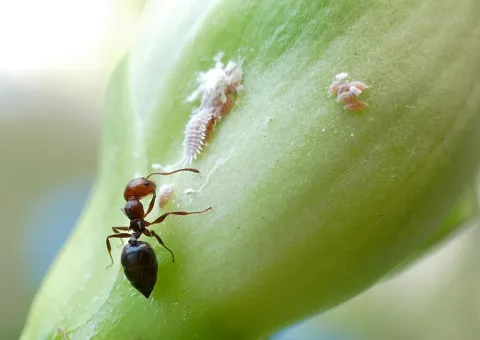
Diseases / Threats
Information
- Lifecycle
- Perennial
- Foliage
- Semi-evergreen
- Exposure
- Sun
- Substrates
- Calcareous earthHumus soilSandy soil
- Planting methods
- Open groundIn potsIn tubs
- Tags
- FloweryCold-sensitive
- Origins
- South AfricaWest AfricaEast AfricaCentral AfricaSouth AsiaSoutheast AsiaAustraliaCentral AmericaSouth America
- Hardiness (USDA)
- 11b (7.2°C ≤ T° < 10°C)
- Leaf color
- Light green
- Flower color
- White
Discover plants from the same family
Find out more
Find all our tips in the Monstera application