Phlebodium aureum, the golden polypod
Phlebodium aureum
- Exposure
- Half-shade
- Hardiness (USDA)
- 11b (7.2°C ≤ T° < 10°C)
- Lifecycle
- Perennial
- Foliage
- Evergreen
- Family
- Polypodiaceae
- Genus
- Phlebodium
- Species
- Golden polypody Phlebodium aureum
Other names:Polypodium aureum, Polypodium leucotomos
Phlebodium aureum is found along the eastern coast of the American continent, from Georgia to Brazil. This fern with blue fronds thrives in humid environments, such as marshes and cloud forests. But it can also thrive in your kitchen or bathroom.
How can you identify the golden polypody, Phlebodium aureum?
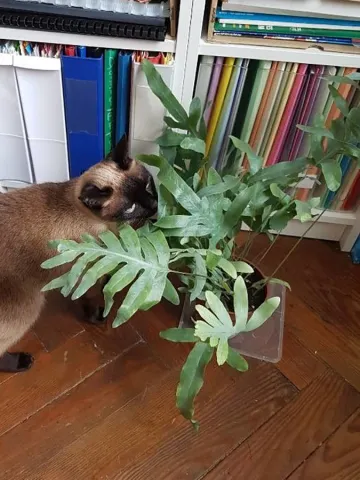
The golden polypody is a bushy epiphytic fern. This variety, along the Phlebodium pseudoaureum, is among the most imposing of the Phlebodium genus. The largest specimens exceed one meter in height and 60 centimeters in spread.
Phlebodium aureum is sometimes nicknamed “rabbit's foot” because of its roots. The rhizomes that protrude above the surface are covered with brown scales and resemble small, hairy feet.
The petioles often reach 60 centimeters in length. Green when young, they turn golden as they age. They support arched, triangular fronds. The fronds measure between 30 centimeters and 1.5 meters long and 10 to 50 centimeters wide. Deeply lobed, a frond contains up to 50 segments. The blue-green pinnae are linear and lanceolate, with serrated edges.
Phlebodium aureum produces neither flowers nor fruit. This fern reproduces via spores. These appear in the summer and are grouped in sporangia. These pale spots are visible on the underside of the fronds, on either side of the midrib.
The golden polypody is not toxic. It is even believed to have air-purifying and medicinal properties. In South America, the plant is used in traditional medicine to treat skin conditions and asthma.
Our care tips
Phlebodium aureum It doesn't like direct sunlight or the cold. Find a bright spot for your plant, sheltered from the strongest rays and drafts. It also hates having its roots sitting in water. When watering, moisten the substrates on the sides, around the foliage.
 Watering
The Phlebodium aureum require regular watering. But it must be moderate, otherwise the roots will rot. The substrate must remain moist but never soggy.
Water your plant with soft, non-calcareous water at room temperature. Once you've finished, drain off any water that accumulates in the saucer or planter.
Water your plant with soft, non-calcareous water at room temperature. Once you've finished, drain off any water that accumulates in the saucer or planter.
 Misting
If the air in your home is dry, spray the leaves of your plant with non-calcareous water at room temperature.
 Repotting
In spring, transfer your Phlebodium aureum to a larger pot, so that it can continue to grow.
Get a pierced pot one size larger than the previous one. Phlebodium aureum has shallow roots. The plant grows mainly in width. You can therefore choose a pot that is wider than it is tall.
Line the bottom with clay balls. For the substrate, prepare a mixture containing two-thirds potting soil for green plants and one-third sand. You can add a little perlite to lighten it. Pour a little of your potting soil into the pot.
Plant your Blue star fern in the center and top up with substrate. The rhizomes should be flush with the surface and the roots buried. Water copiously with non-calcareous water at room temperature.
 Fertilization
You can stimulate the development of your plant during its growth phase, in spring and summer, with fertilizer.
Apply green plant fertilizer to stimulate growth.
 Prune
To encourage the growth of your Blue star fern, prune regularly.
Remove dry or brown fronds to prevent them from rotting and bringing disease. Cut them off at the base with clean, sharp pruning shears or scissors.
 Planting
Once the last spring frosts have passed, you can plant.
Choose a shady spot, along a wall or under a tree for example.
Soak the base of your Blue star fern while you dig a hole twice the size of the root ball.
Place a layer of compost at the bottom of the hole. If your garden soil is poor, you can enrich it with peat or leaf compost.
Plant your Blue star fern. The rootball should be level with the soil. Tamp gently and water to encourage rooting.
Apply organic mulch to keep the soil cool and retain moisture.
 Taking cuttings
Propagation by cuttings is carried out during the strong growth phase, generally in spring and early summer.
Take advantage of repotting to multiply the plant by dividing it. Once you've dug up your Phlebodium aureum, locate a rhizome with aerial stems and several fronds. Separate it from the main plant using your hands or a clean, sharp knife.
In a perforated pot, pour a bed of clay balls to optimize drainage.
Then add a rich, draining substrate, such as a mixture of potting soil for green plants, sand and peat. Plant your cutting in the center and fill in with the substrate. Water to remove air bubbles and facilitate rooting.
Diseases / Threats
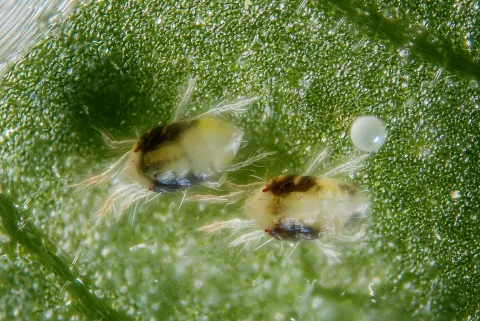
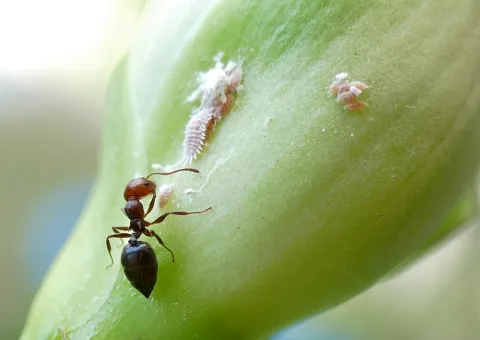
Information
- Lifecycle
- Perennial
- Foliage
- Evergreen
- Exposure
- Half-shade
- Substrates
- Calcareous earthHumus soil
- Planting methods
- Open groundIn pots
- Categories
- IndoorRhizomeHerbaceous
- Tags
- BeginnerCold-sensitive
- Origins
- North AmericaCentral AmericaSouth America
- Hardiness (USDA)
- 11b (7.2°C ≤ T° < 10°C)
- Leaf colors
- Dark greenBlueSilverGlaucous green
Discover plants from the same family
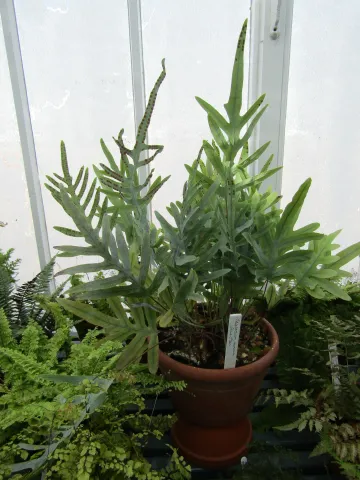
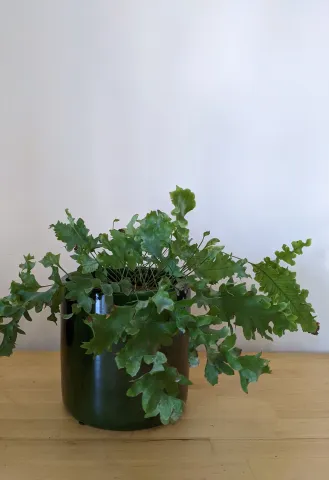
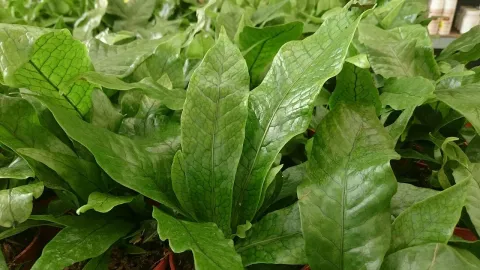
Alligator fern
Microsorum musifolium
Find all our tips in the Monstera application








