Begonia aconitifolia, a begonia with angel wings
Begonia aconitifolia
- Exposure
- Half-shade
- Hardiness (USDA)
- 11a (4.4°C ≤ T° < 7.2°C)
- Lifecycle
- Perennial
- Foliage
- Evergreen
- Family
- Begonias Begoniaceae
- Genus
- Begonia
- Species
- Begonia aconitifolia
Other names:Begonia kimusiana, Begonia faureana, Begonia faureana var. argentea, Begonia faureana var. metallica, Begonia sceptrum
Some see its asymmetrical leaves as the wings of an angel. But you don't have to be touched by grace to appreciate the foliage of Begonia aconitifolia. This plant, native to Brazil, is a collector's delight.
How to recognize Begonia aconitifolia?
Begonia aconitifolia is a perennial with an upright, splayed habit. It can reach a height of 1.5 m.
Like Begonia maculata, Begonia aconitifolia belongs to the bambusiform group of begonias. It has thick, green, sometimes reddish stems with spaced internodes.
Its asymmetrical leaves have seven lanceolate lobes. Their shape, reminiscent of an angel's wings, has earned the plant the nickname Begonia Wings or Begonia Angel Wings in some markets. Blades are dark green, with lighter spots (white, pink, silver or pale green). They have purple undersides and serrated margins.
Begonia aconitifolia is primarily grown for its decorative evergreen foliage. But its flowering is also appreciated. Fragrant, white or pink flowers bloom in bouquets. As with Begonia x elatior, flowering takes place in autumn in its natural environment.
Is Begonia aconitifolia toxic?
Begonias are toxic if ingested, and Begonia aconitifolia is no exception. All parts, especially the roots, are toxic. The sap causes digestive problems and irritation of the mucous membranes. Keep your plant out of the reach of pets and young children.
Sap can also cause skin irritation in sensitive individuals. Wear gloves when pruning or repotting.
Our care tips
Begonia aconitifolia are tropical plants. They need high humidity but don't like wet foliage. You shouldn't mist them or water their leaves. And to keep their shape harmonious, remember to turn the pot a quarter turn every month.
 Watering
Water when the surface of the substrate is dry, using room-temperature, non-calcareous water. If you can, use rainwater. If you don't have rainwater, water with mains water that has been left to stand.
After watering, empty any stagnant water from the saucer. It could rot the roots.
 Misting
Your Begonia aconitifolia hates wet foliage. Don't mist the plant.
 Repotting
Every year in the spring, repot your Begonia aconitifolia to give it more space.
Begonia aconitifolia like to be cramped. Re-pot when the substrate has become too poor or if the roots escape from the container. Choose a pierced terracotta pot two or three centimetres larger than the root ball. Line the bottom with a bed of clay balls for drainage.
Your plant needs a light, rich, draining substrate. You can use potting soil for green or flowering plants with a little perlite. Pour in a layer of soil and place your specimen in the center. Fill in with the rest of the mixture, tamp down and water for the first time.
To increase humidity, place your pot on a dish filled with moist clay balls.
 Fertilization
To promote the growth of your Begonia aconitifolia, apply fertilizer in spring and summer.
Feed your Begonia aconitifolia with a fertilizer for green or flowering plants.
 Prune
Prune
Remove wilted flowers.
If you want your plant to keep a compact habit, don't hesitate to prune it. Cut above a node with a clean, sharp tool, such as secateurs or scissors.
 Taking cuttings
Cutting is carried out during the strong growth phase, generally in spring and early summer.
Take a fifteen-centimeter section of stem or liana with at least three leaves.
Immerse your stem in a glass of water at room temperature. Place the cutting in a sunny, draught-free spot. Remember to change the water to keep it clear.
When the roots are at least three centimetres long, you can repot your young shoot.
Diseases / Threats
Information
- Lifecycle
- Perennial
- Foliage
- Evergreen
- Exposure
- Half-shade
- Substrate
- Humus soil
- Planting method
- In pots
- Tags
- FloweryCold-sensitiveToxic
- Origin
- South America
- Hardiness (USDA)
- 11a (4.4°C ≤ T° < 7.2°C)
- Leaf color
- Light green
- Flower colors
- WhiteRose
Discover plants from the same family
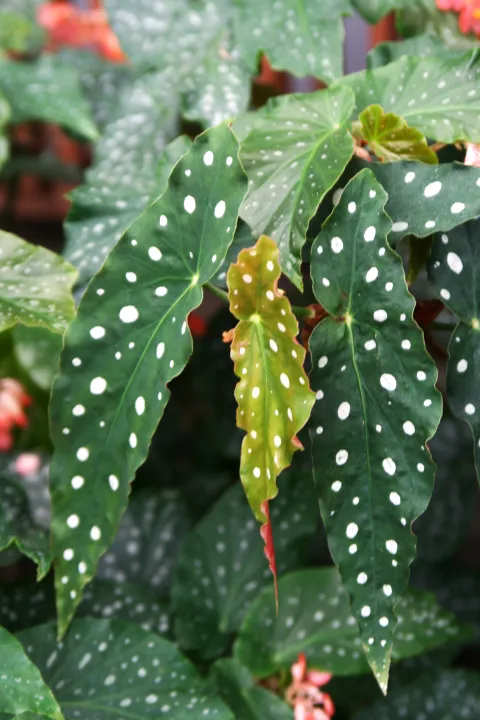
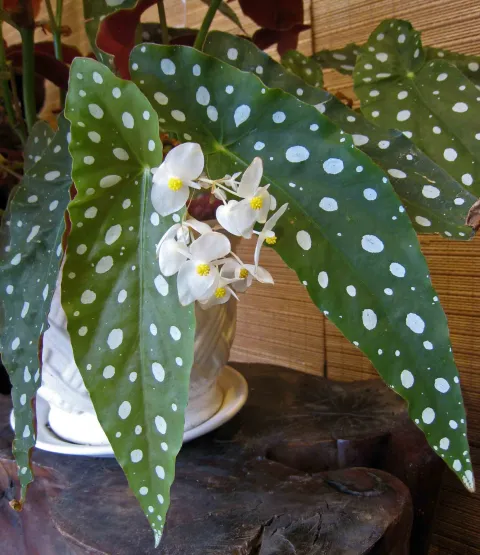
Begonia maculata 'Wightii'
Begonia maculata ‘Wightii’
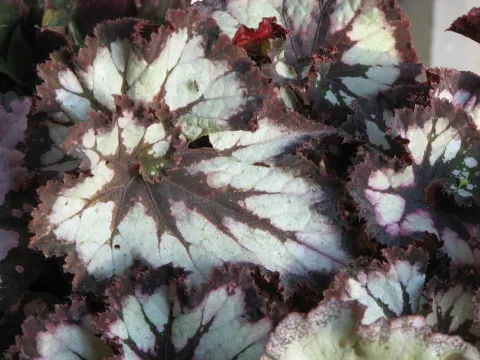
Royal Begonia
Begonia rex
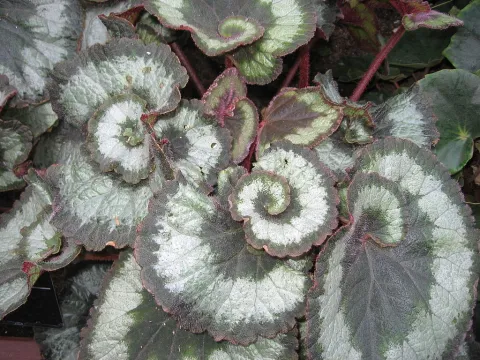
Begonia 'Escargot
Begonia rex 'Escargot'
Find all our tips in the Monstera application