Anthurium scherzerianum, corkscrew-shaped bloom
Anthurium scherzerianum
- Exposure
- Half-shade
- Hardiness (USDA)
- 11b (7.2°C ≤ T° < 10°C)
- Lifecycle
- Perennial
- Foliage
- Evergreen
- Family
- Araceae
- Genus
- Anthurium
- Species
- Anthurium scherzerianum
Officially, two species of flamingo live in Costa Rica: the pink flamingo and the lesser flamingo. But flora lovers like to add a third to the list: the Anthurium scherzerianum. This plant of the Araceae family is nicknamed the pink flamingo flower because of its spectacular bloom.
How to recognize the pink flamingo, Anthurium scherzerianum?
Anthurium scherzerianum is a perennial with a compact habit. With proper care, it can reach a height of 70 cm and a spread of 30 cm.
Its shiny, dark-green leaves are up to 20 centimetres long. While the leaves of anthurium andraeanumandraeanum are heart-shaped, those of Anthurium scherzerianum are lanceolate.
But Anthurium scherzerianum is not only cultivated for its evergreen foliage. The plant flowers all year round. It is adorned with large, oval, red spathes. They contain a red, curved spadix. This characteristic has earned it the nickname pig tail plant.
The pink flamingo plant is toxic. Its sap contains calcium oxalate crystals, dangerous for humans, dogs and cats. Remember to wear gloves when pruning or repotting, and keep it out of reach of young children and pets.
Our care tips
Light, heat, and humidity are the secret to watching your Anthurium scherzerianum thrive.
 Watering
Anthurium scherzerianum appreciate freshness. Their soil must be kept slightly moist in spring and summer. But the plant doesn't like excess. Be careful not to soak the substrate!
Provide water at room temperature, without lime. You can, for example, collect rainwater or use filtered water.
Once you've watered your Anthurium scherzerianum, empty any stagnant water from the saucer or planter. It may rot the roots.
 Misting
Anthurium scherzerianum like humidity. Mist your plant with non-calcareous water at room temperature. Avoid spraying tap water. It leaves white marks on the foliage.
As well as improving hygrometry, spraying helps to prevent pest infestations.
 Repotting
In spring, transfer your Anthurium scherzerianum to a larger pot, so that it can continue to grow.
Re-pot in a perforated pot. It should be two or three centimeters wider than the plant.
At the bottom, place a bed of clay balls or gravel to promote drainage. You can cover with drainage felt so that the potting soil doesn't mix with the marbles. This avoids clogging the holes that facilitate water drainage.
Choose a light substrate such as orchid potting soil combined with perlite. You can also make a mixture of heather soil, sand, leaf compost and charcoal. Pour on a first layer of potting soil and plant your specimen. Then add substrate until you reach two or three centimetres below the rim of the pot.
Pack the soil lightly so as not to suffocate the roots. From the third day, when the roots have healed, start watering your plant.
Place your pot on a saucer filled with moist clay balls. The evaporation of the water will improve the hygrometry without risking root rot.
 Fertilization
You can stimulate the development of your plant during its growth phase, in spring and summer, with fertilizer.
Feed your Anthurium scherzerianum with a special liquid fertilizer for flowering plants.
 Cleaning
Photosynthesis is slowed down by dust accumulating on the leaves. To help your Anthurium scherzerianum make the most of its exposure, clean the foliage with a clean, damp cloth.
Dusting also helps prevent pest attacks.
 Prune
Remove dried or yellowed leaves.
 Taking cuttings
Propagation by cuttings is carried out during the strong growth phase, generally in spring and early summer.
Using your hands or a clean, sharp tool, separate one of the shoots that has formed at the base of the plant. Choose a young shoot with roots.
Place the offshoots in a perforated pot. Pour clay balls or small pebbles into the bottom to form a drainage layer. Top up with light potting soil, such as orchid potting soil combined with perlite.
 Wintering
The plant needs a winter period to flower from one year to the next.
Reduce watering and stop fertilizing. Place your plant in a room that is four or five degrees cooler. But remember, the temperature must always remain above 15°.
Diseases / Threats
Information
- Lifecycle
- Perennial
- Foliage
- Evergreen
- Exposure
- Half-shade
- Substrates
- Humus soilSandy soil
- Planting method
- In pots
- Tags
- BeginnerFloweryToxic
- Origin
- Central America
- Hardiness (USDA)
- 11b (7.2°C ≤ T° < 10°C)
- Leaf color
- Dark green
- Flower color
- Red
Discover plants from the same family
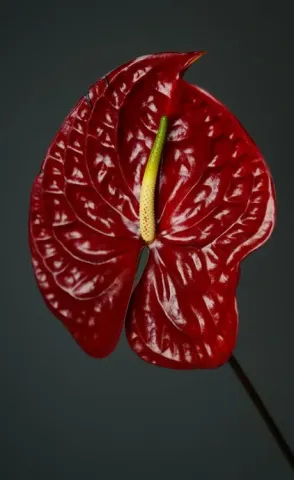
Anthurium andraeanum
Anthurium andreanum

Find all our tips in the Monstera application








